How often should you brush your dog’s teeth?
Brush your dog’s teeth every day. That is the frequency most veterinarians recommend, with three times a week as the minimum that still helps. Plaque starts hardening into tartar within days, so once-a-week brushing misses the window. If daily feels like a lot, start with three days a week and work your way up.
How often should you brush your dog’s teeth? If you have wondered this while holding a dog toothbrush and a very unimpressed puppy, you are in good company. The answer is simpler than most owners expect: once a day keeps teeth in the best shape, and three times a week is the floor worth standing on. Here is why that rhythm matters and how to stick with it.
Why the Schedule Matters More Than the Brush
Toothbrushes only do their job if they show up. After every meal, a soft film of bacteria settles on your dog’s teeth. That film is plaque, and it does not wait around. Veterinary sources including PetMD note that plaque begins hardening into tartar within days, and tartar cannot be brushed off at home. Once tartar forms, it needs a professional cleaning to remove.
This is why the gap between sessions matters so much. Brush daily and you clear plaque before it hardens. Skip a week and the tartar has already set, so your next brushing cleans around it rather than preventing it. PetMD reports that 80 to 90 percent of dogs over the age of 3 have some form of dental disease, which shows how quickly skipped days add up.
How Often You Should Actually Brush
Step 1: Daily brushing, the ideal target
One short brushing session a day is the gold standard. It removes plaque before minerals in saliva can harden it into tartar. Two minutes is plenty for most dogs. Focus on the outer surfaces of the back teeth, where buildup collects fastest. Ask “how often should you brush your dog’s teeth?” and most vets will name this daily routine first. If you are learning the ropes, our guide to how to clean your dog’s teeth at home walks through the technique.
Step 2: Three times a week, the realistic minimum
Most veterinary guidance sets the floor at two to three brushings per week. PetMD recommends at least two to three times a week, with daily being best. Below that frequency, plaque spends too many days hardening between sessions, so the brushing does less real work. A common follow-up question is “how often should I brush my dog’s teeth if I can’t manage daily?” Three times a week is the answer most guidance gives. It is a solid backup plan for busy weeks, not a goal to aim for permanently.
Step 3: Small breeds, stay with daily
Toy breeds like Chihuahuas and Yorkies build plaque and tartar faster than bigger dogs, so daily brushing matters even more for them. Veterinarians often point small-dog owners toward shorter, more frequent sessions. If your small dog is still getting used to handling, swapping training tips with other owners at small dog meetups can help, since calm social time makes mouth handling easier.
| Situation | Brushing frequency | Why |
|---|---|---|
| Ideal routine | Daily | Clears plaque before it can harden into tartar |
| Busy weeks | 3 times a week | The minimum frequency that still keeps plaque under control |
| Small or toy breeds | Daily | Faster plaque buildup and higher dental disease risk |
| Never brushed before | Start at 2 to 3 times a week | Builds the habit while the dog gets used to it |
| Once a week or less | Not enough | Plaque hardens between sessions, so tartar keeps forming |
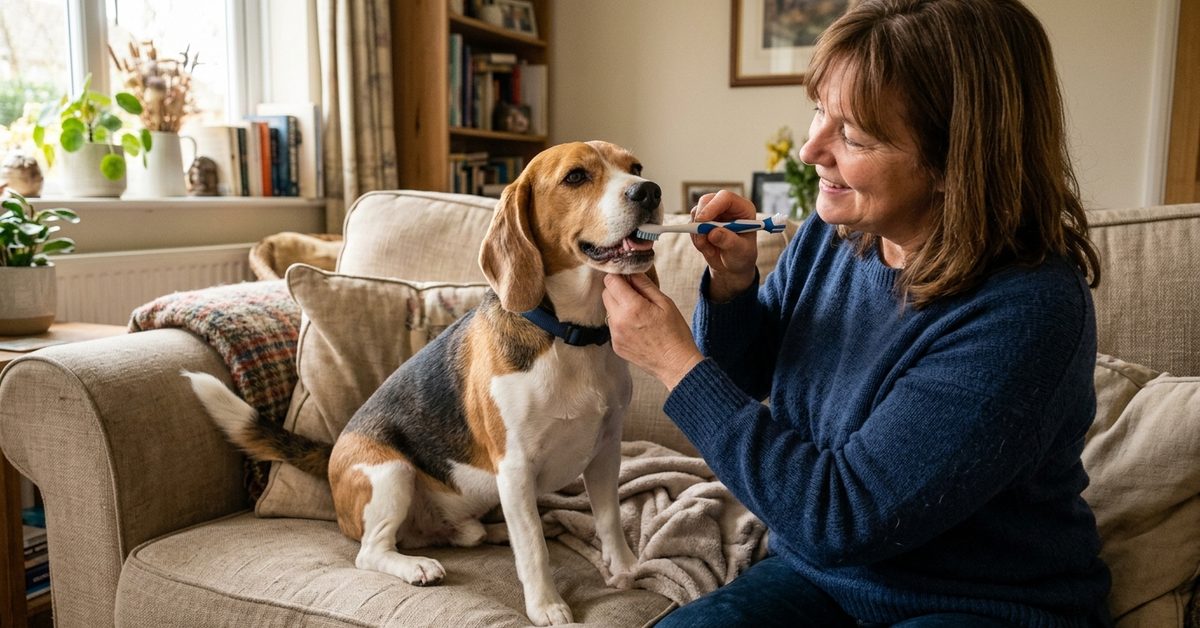
Pro Tip: Pair Brushing with Something You Already Do
Habits stick when they piggyback on existing routines. Brush your dog’s teeth right after the evening walk or just before your own bedtime teeth brushing. A consistent time and place turns it from a chore you remember into a routine you never think about.
What Happens When You Skip Brushing
Skipping a day here and there is not a disaster. Skipping weeks is a different story. Unbrushed plaque hardens into tartar, tartar traps bacteria against the gums, and the gums get red, swollen, and sore. Every answer to “how often should you brush your dog’s teeth” comes down to one thing: never let plaque sit long enough to harden. That early stage, gingivitis, is still reversible with good care and a professional cleaning. Left alone, it can progress to periodontal disease, loose teeth, and tooth loss.
At that point, brushing at home cannot fix it. Your dog will likely need a professional dental cleaning under anesthesia, which is far more expensive than any toothbrush. Our breakdown of how much a dental cleaning costs for dogs shows why prevention is the cheaper path by a wide margin.
Should You Brush Your Dog’s Teeth at All?
Should you brush your dogs teeth if your dog hates it, if you missed months, or if a professional cleaning already handled the tartar? Yes, with one exception. Brushing is the only home routine that clears plaque from the gumline before it hardens, and no chew, wipe, or water additive replaces it. The exception is pain: if your dog shows mouth pain, bleeding that does not settle, or a swollen face, stop and call your vet first, because brushing a painful mouth can make things worse. Otherwise, start short, stay consistent, and let the habit, not perfection, do the work.
Building a Brushing Habit That Actually Lasts
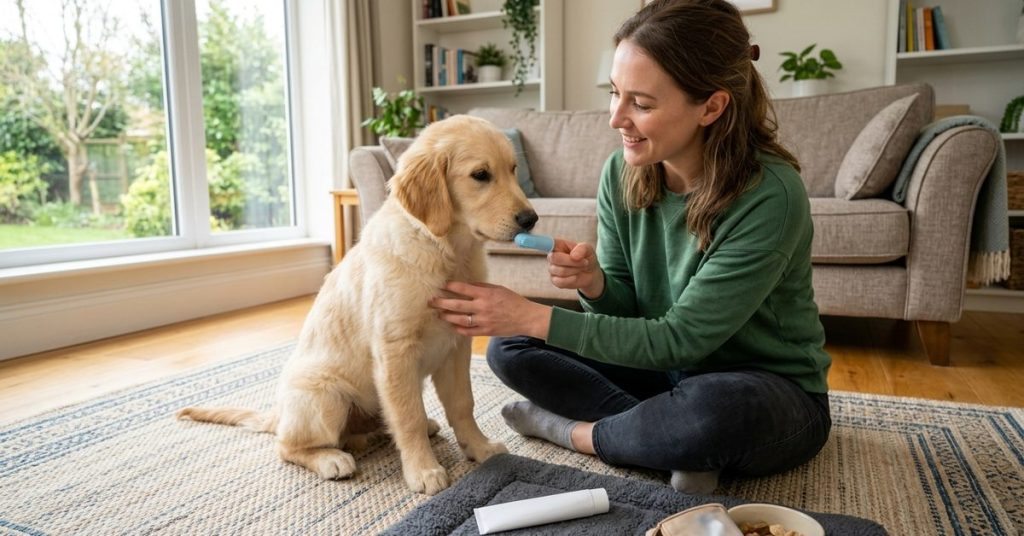
The best brushing schedule is the one you will follow. Start short, even ten seconds per side, and grow the session as your dog relaxes. Use a toothbrush and paste made for dogs, since human toothpaste is not safe for dogs to swallow. Reward with praise or a small treat right after so your dog links brushing with good things.
For puppies, fold mouth handling into play and cuddles. Lift their lips, touch their gums with your finger, and let them taste the dog toothpaste as a treat. Our puppy socialization checklist treats gentle handling like this as a core skill. On days when brushing truly will not happen, ways to clean your dog’s teeth without brushing, like dental chews and water additives, fill the gap. They do not replace brushing, but they beat doing nothing. And if your routine involves other dog lovers, chatting with them at pet events is a good place to pick up tips that make stubborn brushers easier.
Is it too late to start brushing my senior dog’s teeth?
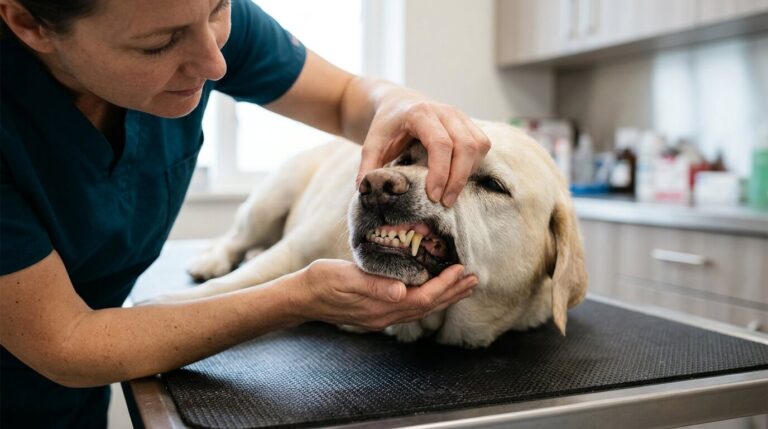
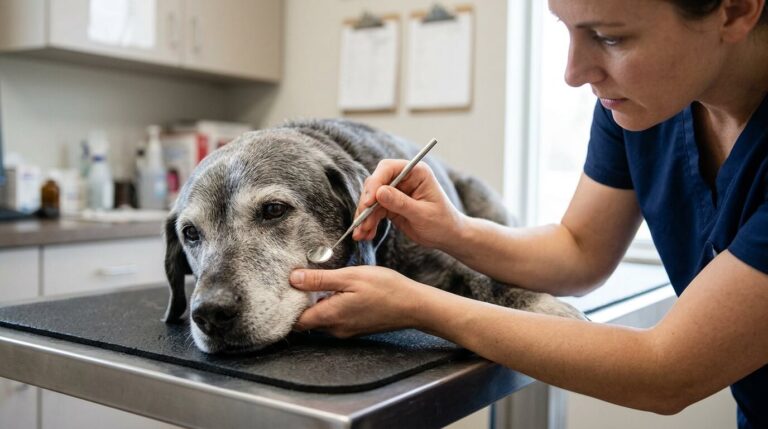
No, you can start at any age. Senior dogs benefit from regular brushing just as much as puppies. The only difference is that an older dog may already have tartar that brushing cannot remove, so book a dental checkup first. Your vet can assess whether a professional cleaning is needed, then you maintain the results with daily brushing at home.
Do I need to brush the inside surfaces of my dog’s teeth too?
The outside surfaces matter most. Plaque and tartar collect fastest on the outer faces of the upper teeth, especially the back molars near the gumline. The inner surfaces build up far less because the tongue constantly wipes them. If your dog only tolerates a short session, spend it on the outside of the upper teeth.
Can dental chews replace brushing entirely?
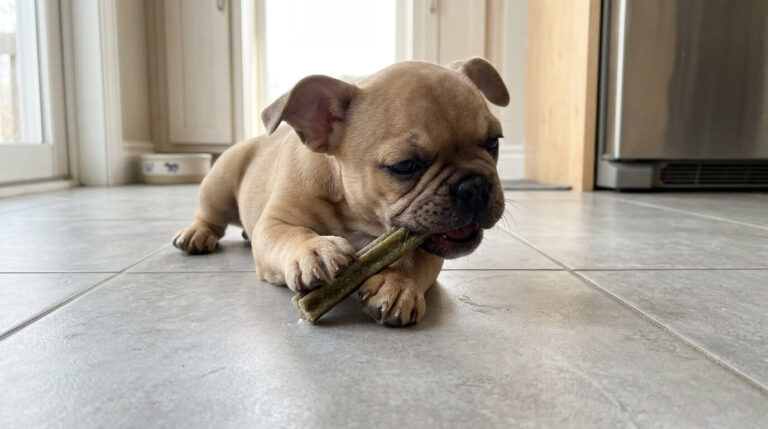
No. Chews scrape some plaque as the dog gnaws, and products with the VOHC seal have evidence behind their claims, but they do not clean the gumline the way bristles do. Think of chews as a supplement for busy days or between professional cleanings, not a substitute. If brushing is a struggle, alternate methods help, but nothing matches a toothbrush.
How do I know if my dog already has tartar buildup?
Look at the back teeth. Tartar usually appears as a yellow or brown crust near the gumline. That said, dark teeth are usually tartar but not always. Food staining can also discolor teeth, and one dark tooth can sometimes signal a damaged tooth. If you see heavy buildup, bleeding gums, or bad breath, see your vet rather than guessing.
Need Local Pet Support or an Open Vet Near You?
Use DaisyDu's free neighborhood tools to find 24/7 open emergency animal hospitals, arrange local playdates, or broadcast a lost pet SOS alert.