Dogs teeth worn down
Dogs teeth worn down are usually caused by years of chewing hard objects, with tennis balls a surprisingly common culprit, and most mild wear needs monitoring rather than treatment. Worn teeth need a vet check if the center of a tooth shows a dark or pink dot, if eating hurts, or if wear is rapid.
Dogs teeth worn down often show up first in the front teeth, so lift your dog’s lip and look there. It is easy to miss, because wear happens slowly, and dogs keep eating through it. This guide explains what normal age related wear looks like, what speeds it up, when wear becomes a dental problem, and how to stop it getting worse.
What Worn Teeth Look Like
Young adult dogs have pointed canine teeth and front incisors with small cusps, like tiny flower petals. With age, the tips flatten and smooth out. That gradual flattening is normal wear, and on its own it is not a disease. Vets judge wear by how far it has gone: surface enamel wear is common and often painless, while wear that reaches the darker dentin underneath, or exposes the pulp chamber in the center of the tooth, is a problem that needs treatment.
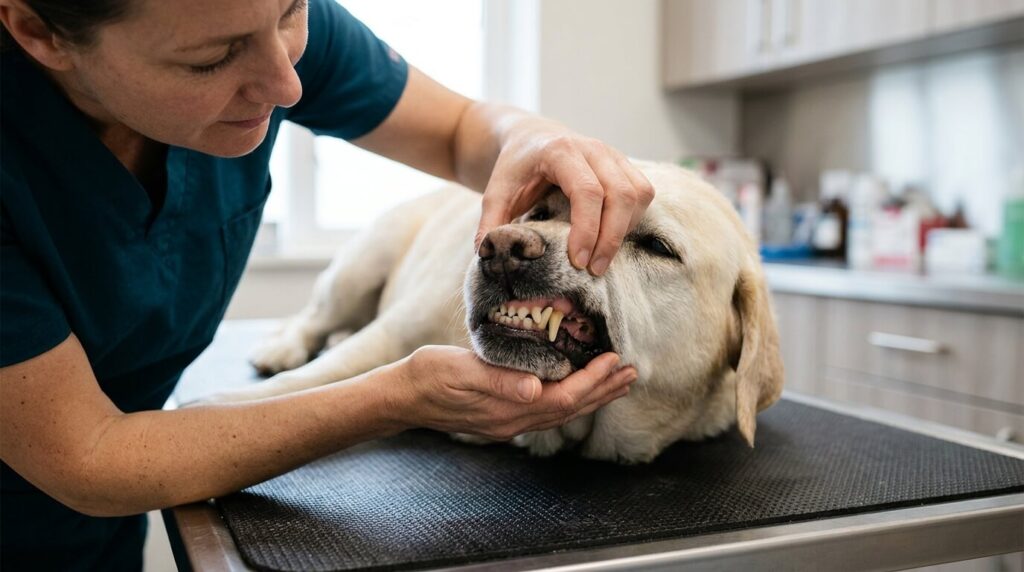
Worn down teeth in dogs are not always easy to spot from the front. Check the canines, the long pointed teeth at the corners of the mouth, and the incisors, the small teeth across the front. Look for flat tips, a yellowish or brownish center, chips, and teeth that look shorter than their neighbors. Compare left and right sides: wear that is much worse on one side can point to a chewing habit, a painful tooth on the other side, or a jaw problem worth mentioning to your vet.
Canine Teeth and Front Teeth: The Usual Victims
Canine teeth worn down are a common finding in dogs that carry things in their mouths all day, from balls to sticks to cage bars. The canine tips take the force of gripping and carrying, so they blunt first. Dog incisors worn down, sometimes called front teeth worn flat, are the classic picture in older dogs and in dogs that chew on hard surfaces, gnaw cage bars, or strip tennis balls. Incisor wear alone, without pain or pulp exposure, is often monitored rather than treated, but it still deserves a note at the next dental check.
Why do front teeth wear faster than back teeth? Incisors and canines do the gripping, tearing, and carrying, while molars do the crushing. A dog that obsessively chews a tennis ball, worries a bone, or chews cage bars loads the front of the mouth thousands of times a day. Back teeth wear too, but usually from hard food and hard chews, and they show it as flattened chewing surfaces rather than shortened tips.
Tennis Balls: The Wear Culprit Most Owners Miss
Tennis ball wear deserves its own section, because it surprises almost everyone. The fuzzy felt on a tennis ball picks up dirt and grit, and that gritty surface acts like sandpaper across tooth enamel as the dog grips and carries the ball. Vets regularly see dogs with severely worn canines and incisors from years of daily tennis ball play, sometimes in dogs only a few years old. The damage is gradual and painless at first, which is why owners rarely connect the ball to the teeth.
You do not have to ban fetch. Swap felt tennis balls for smooth rubber fetch balls made for dogs, which do not trap grit the same way, and save any tennis ball play for short sessions on clean grass rather than sandy or muddy ground. If your dog already has visible wear, mention the tennis ball habit to your vet, so the worn teeth can be checked for pulp exposure before the next fetch game.
Other Causes of Wear
- Hard chews: antlers, marrow bones, hooves, and hard nylon bones are harder than tooth enamel and wear teeth down, or crack them outright.
- Chewing rocks, sticks, and cage bars: repetitive hard chewing loads the same teeth thousands of times.
- Age: enamel thins naturally over years, so older dogs show more wear even with gentle habits.
- Tooth grinding: some dogs grind their teeth from stress, pain, or jaw problems, wearing flat surfaces across many teeth at once.
- Acid erosion: frequent vomiting or acid reflux can soften enamel, making normal chewing wear teeth faster. Repeated vomiting needs a vet visit in its own right.
The pattern of wear often tells the story. Whatever the pattern, dogs teeth worn down by a single habit usually stop worsening once that habit changes. Even wear across the front teeth suggests a carrying habit like tennis balls. Wear on one side suggests chewing mainly on that side, sometimes because the other side hurts. Wear on back teeth points to hard food or hard chews. Your vet reads that pattern along with dental X-rays to decide whether wear is cosmetic, or a tooth at risk.
A Note on the Term Dental Attrition
You may see the phrase dental attrition in vet notes or articles about worn teeth. In dentistry, attrition means tooth wear from tooth to tooth contact, as opposed to abrasion, which is wear from outside objects like tennis balls or cage bars, and erosion, which is chemical wear from acid. Most dog tooth wear is a mix, with abrasion usually doing the most damage. The term itself is mainly a human dentistry label, so it is useful for understanding a vet report, not a diagnosis to search for on its own. What matters for your dog is the cause, the depth of wear, and whether the pulp is exposed.
When Worn Teeth Need a Vet Promptly
A dark or pink dot in the center of a worn tooth, swelling along the jaw or under the eye, bleeding from the mouth, refusal to eat hard food, or sudden face pawing can signal pulp exposure or infection. Do not wait for the next routine visit if you see these signs. Find an open vet near you on DaisyDu’s Live Vet Map
Treatment and How to Stop Wear Getting Worse
Treatment depends on depth. Surface wear with no pulp exposure usually needs monitoring, a dental check every 6 to 12 months, and removal of the cause. Wear that exposes the pulp needs a root canal or extraction, because an exposed pulp becomes infected and painful, even if the dog keeps eating. Your vet decides from an exam and dental X-rays, since the outside of a tooth does not show how close wear is to the pulp.
Prevention is mostly about what goes in the mouth. Replace felt tennis balls with smooth rubber fetch toys, retire antlers and hard bones, and choose chews that give slightly under a thumbnail press. Keep up brushing with dog toothpaste, because worn teeth collect tartar faster once enamel is gone, and tartar brings gum disease on top of wear. Our guides cover how to clean dogs teeth at home and how to clean dog teeth without brushing, plus how much a dental cleaning costs when professional care is needed.
Worn teeth are a record of your dog’s habits, and habits can change. Swap the ball, soften the chews, and get the worn teeth checked, and most dogs keep comfortable, functional mouths for years after wear is first noticed. Dogs teeth worn down do not have to mean a mouth in pain. They mean a mouth that needs a closer look, a few habit changes, and regular checks from here on.
Are worn down teeth in dogs painful?
Surface wear is often painless, which is why dogs keep eating normally. Pain usually starts when wear reaches the pulp chamber in the center of the tooth, showing as a dark or pink dot, or when a worn tooth cracks. Any sign of eating pain, face pawing, or swelling means a prompt vet check.
Can worn dog teeth grow back or be repaired?
Teeth do not grow back, and enamel does not regenerate. A vet can protect a worn tooth with a root canal if the pulp is exposed, or extract it if it is infected or fractured. For surface wear without pulp exposure, monitoring and removing the cause are usually enough.
Should I stop playing fetch if my dog’s teeth are worn?
No, but change the ball. Smooth rubber fetch balls made for dogs do not trap grit the way felt tennis balls do, and they are far kinder to enamel. Keep sessions on clean grass, avoid sandy ground, and have worn teeth checked before continuing heavy daily fetch.
Do worn front teeth mean my dog is old?
Not necessarily. Wear increases with age, but young dogs with heavy tennis ball or hard chew habits can show front teeth worn flat within a couple of years. Wear is a clue about habits and age together, not an age test on its own, and a vet can give a better age estimate from the whole mouth.
Need Local Pet Support or an Open Vet Near You?
Use DaisyDu's free neighborhood tools to find 24/7 open emergency animal hospitals, arrange local playdates, or broadcast a lost pet SOS alert.