Puppy Socialization Checklist: The Quick Answer
This puppy socialization checklist gives you a week-by-week plan for the critical 8 to 16 week window: new people, sounds, surfaces, handling, and outings, all paired with treats so every encounter feels safe. Aim for three calm new exposures a day, keep sessions short, and never force a scared puppy to “tough it out.”
Picture an eight-week-old puppy meeting an umbrella for the first time. One pup sniffs it, gets a treat, and files it under “harmless.” Another pup gets startled, gets no guidance, and files it under “suspicious forever.” Same umbrella, two very different futures. The difference is not luck. It is what happens during the next eight weeks, and this guide turns it into a plan you can actually follow.
Why the 8 to 16 Week Window Matters So Much
Puppies go through a sensitive period, roughly 3 to 14 weeks of age, when their brains are wiring up permanent attitudes about the world. The American Veterinary Medical Association’s position statement on puppy socialization treats this window as the single biggest influence on adult behavior: positive exposures now build confidence, and missed or scary ones become the fears and reactivity owners fight later. That is why the socialization checklist matters more than any single trick you teach.
The American Animal Hospital Association (AAHA) goes further, recommending that puppies attend well-run classes before 12 weeks of age, after their first vaccine dose and parasite control, because the behavioral benefits outweigh the infection risks when the environment is managed. You do not wait until vaccinations are finished to start. You socialize early and smart.
The Puppy Socialization Checklist, Week by Week
Print, screenshot, or bookmark this puppy socialization checklist and tick items off as you go. Owners in the UK often search for the same plan under the spelling puppy socialisation checklist, and it is the same week-by-week plan, just spelled the British way. Work in short sessions, pair every new thing with something your puppy already loves, and move at your pup’s pace, not the calendar’s.
Step 1: Weeks 8 to 10 (settle in, start small)
Your puppy just left everything they know. This phase is about gentle firsts around the home and yard.
- People variety: men, women, kids (always supervised), people with beards, hats, sunglasses, and different clothing like hoodies and uniforms.
- Household sounds: vacuum, hair dryer, washing machine, doorbell, clapping, music at low volume.
- Surfaces: grass, concrete, tile, carpet, gravel, wet pavement after rain.
- Handling: touch paws, ears, mouth, and belly for a few seconds, then treat. Peek in the mouth the way a vet would.
- Objects: umbrellas, bags, brooms, boxes, a gently rocking skateboard left on the ground.
- Other animals: calm, known-vaccinated dogs only, plus any resident cats or small pets from a safe distance.
Step 2: Weeks 11 to 13 (expand the world)
Confidence is growing. Take the show on the road, still choosing low-risk spots.
- Car rides: short trips that end somewhere fun, not just the vet.
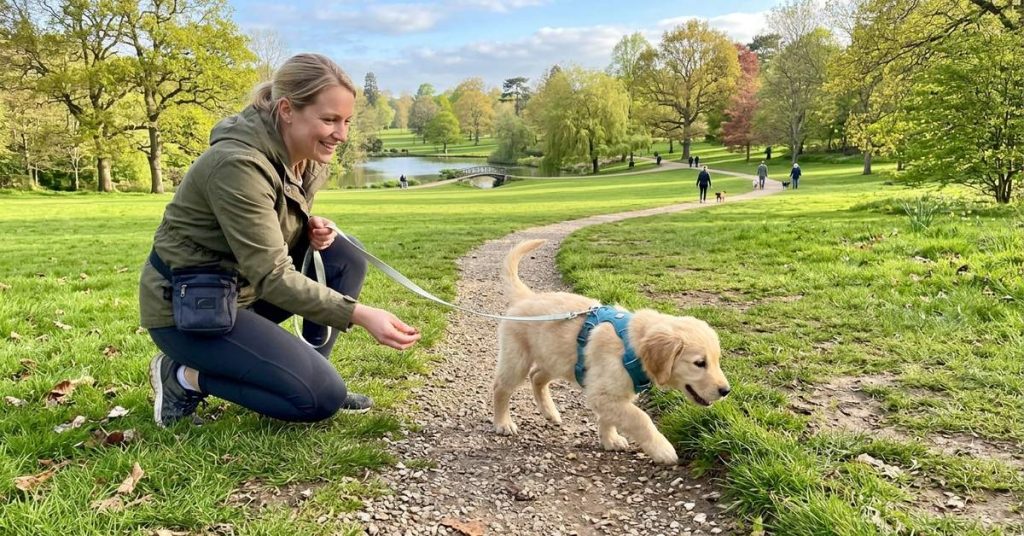
- New environments: quiet park edges, pet-friendly store parking lots, a friend’s house, sidewalks at off-peak hours.
- Vet clinic happy visits: pop in, get treats from the staff, leave. Your pup’s next real visit then starts at neutral instead of stressed.
- People variety, level two: people using canes, wheelchairs, or strollers; joggers passing at a distance; a baby carrier with a (supervised) baby.
- Grooming prep: brief brushing, running a nail clipper near (not on) the paws, gentle ear lifts.
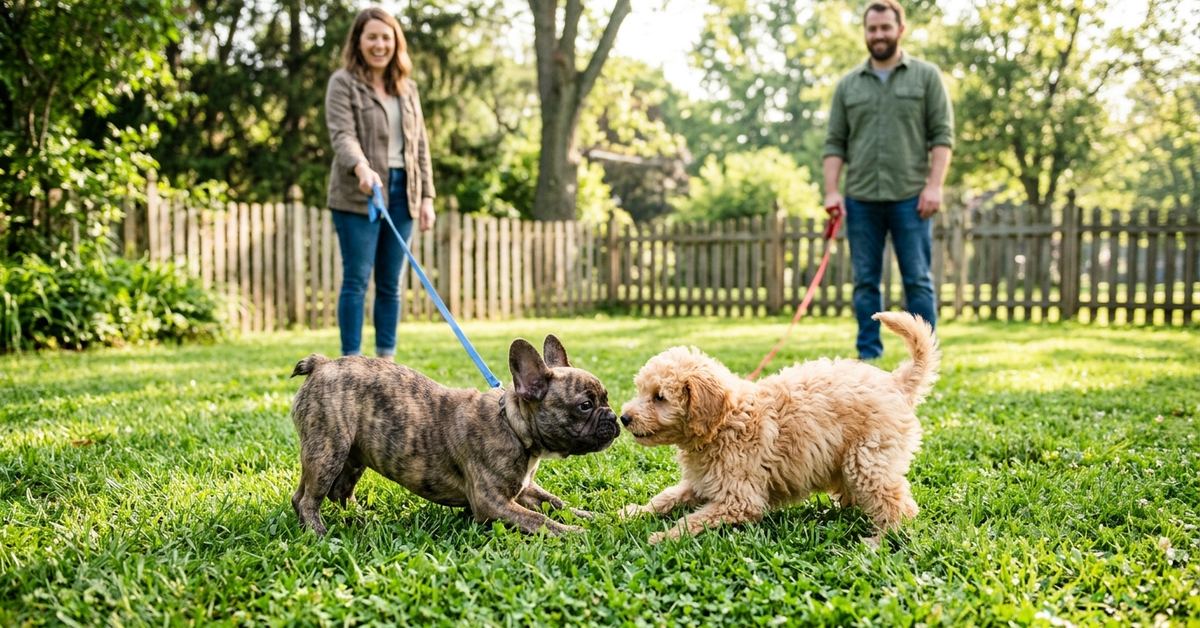
- Playdates: one-on-one with a calm, vaccinated puppy or dog. Short, supervised, and ended while everyone is still happy.
Step 3: Weeks 14 to 16 (busier, braver, more independent)
The window is starting to close. Fill remaining gaps and add mild challenges.
- Busier environments: a farmers market edge, a busier street at a comfortable distance, outdoor café seating.
- Weather variety: rain, wind, puddles, snow if the season allows.
- Alone practice: brief separations behind a baby gate, building the independence that later prevents separation anxiety (see our puppy separation anxiety crate training guide).
- Handling level two: full-body checks like a vet exam, wearing a cone for a minute, standing on a scale or table.
- Calm crowds: let your puppy watch the world from your lap or a mat, rewarding relaxed watching instead of frantic greeting.
Book treats, not time. A five-minute exposure where your puppy gets ten treats beats a thirty-minute outing where they get stressed. End every session while your puppy is still happy, and you will have a pup who trusts your judgment when things get weird.
The 10-Minute Daily Rule
A puppy socialization checklist only works if you use it every day, so keep it simple: three new exposures a day, ten minutes total. New things count broadly, and one calm thing with a treat at each meal hits the target.
| Category | Easy wins at home | Level up outside |
|---|---|---|
| People | Guest in a hat and sunglasses | Kids playing at the park (from a distance) |
| Sounds | Recorded sirens or fireworks, low volume at mealtime | Real traffic, construction noise, skateboards |
| Surfaces | Cardboard, baking tray, doormat textures | Metal grates, gravel, wet grass |
| Handling | Paws, ears, mouth for 3 seconds plus treat | Vet staff handling during happy visits |
| Dogs | Watch a calm dog from the window | Supervised one-on-one playdate |
Finding safe playdate partners gets easier with the community: find a puppy playdate near you or browse puppies looking for friends on DaisyDu when you want supervised, matched introductions instead of random dog-park chaos.
What to Do When Your Puppy Gets Scared
A frightened reaction mid-checklist is normal and not a failure. What you do in the next thirty seconds decides whether the fear sticks.
- Increase distance from the scary thing until your puppy relaxes. Distance is the main tool.
- Let them watch from that safe distance while you feed treats. You are building a new association: scary thing predicts snacks.
- Never drag them closer and never comfort with frantic coddling. Stay calm and matter-of-fact, which tells your pup there is nothing to panic about.
- End on a win: ask for a known cue like “sit,” reward it, and walk away. Come back to this item another day at an easier level.
If your puppy suddenly becomes fearful of things they used to handle fine, that shift can sometimes signal pain or illness rather than a training problem. Note when it started and what changed.
When Fear Means a Vet Visit
A sudden personality change, fear paired with limping, flinching when touched, loss of appetite, or a puppy who was confident and suddenly is not deserves a medical rule-out before more training. Find an open vet near you on DaisyDu’s Live Vet Map →
3 Mistakes That Undo Good Socialization
- Flooding. Dropping a shy puppy into a crowded dog park is not socialization, it is overwhelm. Every new thing should start easy and far away, then get closer as confidence grows.
- Forced greetings. “Go say hi” to every stranger teaches your puppy that strangers are unavoidable, not safe. Let your pup choose to approach, and let strangers offer a treat instead of a looming hand.
- Waiting until 16 weeks. The most common mistake of all. Owners wait for the last vaccine, and by then the sensitive period is closing. Controlled, low-risk exposures during the vaccination series beat a perfectly vaccinated but undersocialized puppy.
Teething usually arrives right in the middle of all this. Our puppy teething timeline shows what is normal and when, and if those needle teeth are landing on your hands, how to survive the puppy biting phase keeps your socialization sessions fun instead of painful.
Does a puppy socialization checklist replace puppy classes?
No, it works alongside them. A checklist structures your home exposures, but a good class adds things you cannot stage alone: a trainer reading your puppy’s body language, plus supervised practice meeting strange dogs calmly. The AAHA recommends starting classes before 12 weeks of age once your puppy has first vaccines and parasite control, choosing a class with positive methods.
My breeder already socialized my puppy. Do I still need the checklist?
Yes, because your breeder covered weeks zero to eight, and your job covers weeks eight to sixteen. Good breeders expose pups to household sounds, surfaces, and handling, so ask for their exposure log at pickup. It shows what is already familiar and where your gaps are, so you fill the hard exposures instead of repeating the easy wins.
Can I socialize my puppy before vaccinations are finished?
Yes, with controlled low-risk exposures. Veterinary guidance, including the AAHA life stage guidelines, supports starting during the vaccination series rather than waiting. Stick to vaccinated known dogs, clean low-traffic areas, and carry your puppy through busy spots. Skip dog parks and heavy unknown-dog traffic until your vet confirms the series is complete.
My puppy is past 16 weeks and missed socialization. Is it too late?
The sensitive window narrows after about 14 to 16 weeks, but learning never stops. You shift from prevention to remedial work: the same gradual exposures, just slower, with more distance and higher-value rewards. If your puppy shows real fear or reactivity, bring in a certified trainer early, since fixing rehearsed fear takes longer than preventing it.
Need Local Pet Support or an Open Vet Near You?
Use DaisyDu's free neighborhood tools to find 24/7 open emergency animal hospitals, arrange local playdates, or broadcast a lost pet SOS alert.