Can dogs use human toothpaste?
No. Human toothpaste contains fluoride, foaming agents, and sometimes xylitol, all of which are unsafe for dogs because dogs swallow instead of spitting. Use an enzymatic toothpaste made for dogs, a soft brush or finger brush, and brush for about a minute a day.
Can dogs use human toothpaste? It seems harmless enough. The tube is right there on the sink, your dog’s breath could strip paint, and toothpaste is toothpaste. Except it really isn’t. Everything that makes human toothpaste work for us, from the fluoride to the foam, is something your dog should not swallow. And dogs swallow all of it.
Why Human Toothpaste Is Unsafe for Dogs
Three ingredients do the damage, and they are the entire reason the answer to “can dogs use human toothpaste” is a firm no. Fluoride in the amounts found in human toothpaste can cause stomach upset and, in larger swallowed quantities, fluoride toxicity. Repeated daily swallowing over months can lead to more serious problems, so even a small daily dab is a habit worth breaking. Xylitol, found in many “natural” and sugar-free toothpastes, is extremely toxic to dogs even in small amounts. And foaming agents like sodium lauryl sulfate irritate a dog’s stomach lining. VCA Animal Hospitals lists xylitol among the common household toxins dog owners should keep away from pets entirely.
What to Use Instead
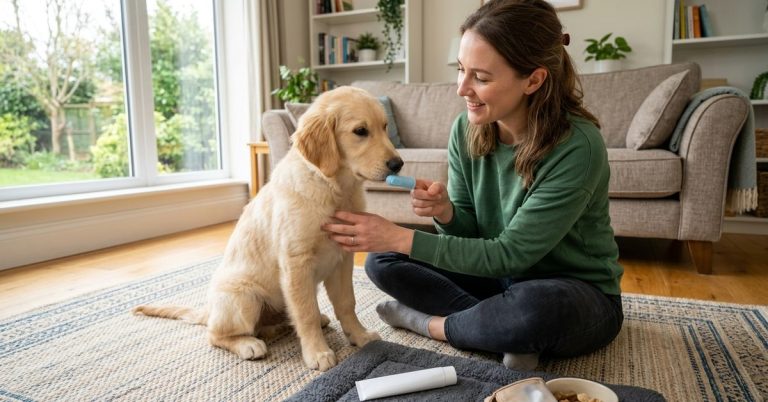
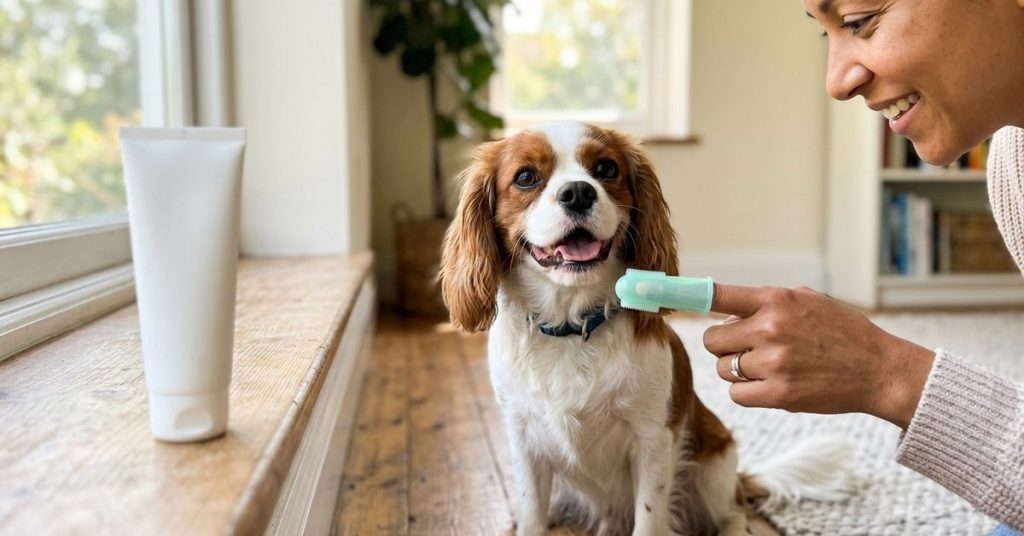
Buy a toothpaste formulated for dogs. The reason people ask whether dogs can use human toothpaste so often is that the alternative feels like extra work. It isn’t. Enzymatic dog toothpastes come in flavors dogs actually like: poultry, peanut butter, and vanilla mint, and they are designed to be swallowed safely. Look for products carrying the Veterinary Oral Health Council (VOHC) seal, which means the dental benefit has been independently verified. Pair it with a soft-bristled dog toothbrush or a silicone finger brush, whichever your dog tolerates better.
The 60-Second Brushing Routine
Step 1: Let them taste it
Squeeze a pea-sized dab of dog toothpaste on your finger and let your dog lick it off. Praise calmly. The goal of day one is simply “toothpaste equals treats,” not actual brushing.
Step 2: Lift the lip
With your dog relaxed, gently lift one side of the lip to expose the outer surfaces of the upper teeth. These outer faces are where most plaque builds up, so they matter more than the inner surfaces.
Step 3: Brush the gumline
Using small circular motions, brush where each tooth meets the gum for a few seconds per tooth. Work from front to back on one side, then switch. About 30 seconds per side is plenty.

End every session while it is still going well, even if you only brushed four teeth. Quitting on a win is what turns brushing into a habit instead of a wrestling match.
What If My Dog Already Ate Human Toothpaste?
A single licked dab of regular fluoride toothpaste usually causes nothing worse than mild stomach upset. This is the scenario behind most can dogs use human toothpaste searches at midnight: the dog got into the bathroom. Watch for drooling, vomiting, or loss of appetite over the next few hours. The exception is xylitol: if the ingredient label lists xylitol or birch sugar, treat it as an emergency and call your vet immediately, since xylitol poisoning escalates fast. Our chocolate guide covers the same xylitol danger in foods, because the toxin and the response are identical.
Xylitol Ingestion Is an Emergency
If your dog swallowed toothpaste containing xylitol (birch sugar), do not wait for symptoms. Call your vet or ASPCA Animal Poison Control at (888) 426-4435 right away. Find an open emergency vet near you on DaisyDu’s Live Vet Map →
Make It a Daily Habit
Daily brushing is the gold standard, though even a few times a week beats nothing. Pair brushing with something your dog already loves, right before the evening walk or after dinner, so it slots into the routine. For the full technique breakdown, see how to clean your dog’s teeth at home, and check how often to brush for a realistic schedule.
What happens if a dog licks human toothpaste once?
Usually nothing serious. A single lick of standard fluoride toothpaste may cause mild drooling or brief stomach upset at most. Monitor your dog for a few hours and switch to dog toothpaste going forward. The one exception is xylitol-containing toothpaste, which warrants an immediate vet call regardless of amount.
Can I use baking soda to brush my dog’s teeth?
Not recommended. Baking soda is abrasive on enamel, tastes terrible to dogs, and its high sodium content is a problem if swallowed regularly. A five-dollar tube of enzymatic dog toothpaste solves all three issues at once and most dogs like the taste, which makes the whole routine easier.
Is xylitol in all human toothpastes?
No. Xylitol shows up mainly in “natural,” sugar-free, or “healthy” branded toothpastes, not in most conventional ones. Always read the ingredient label and look for xylitol or its alias, birch sugar. When in doubt about any product your dog may have eaten, call your vet with the label in hand.
Do dogs really need their teeth brushed?
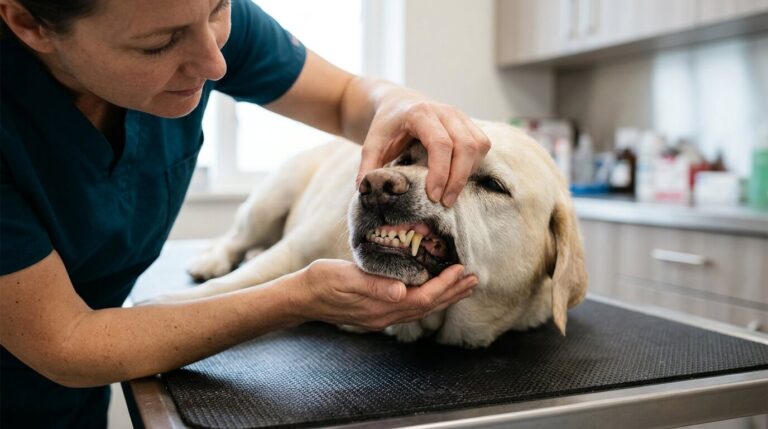
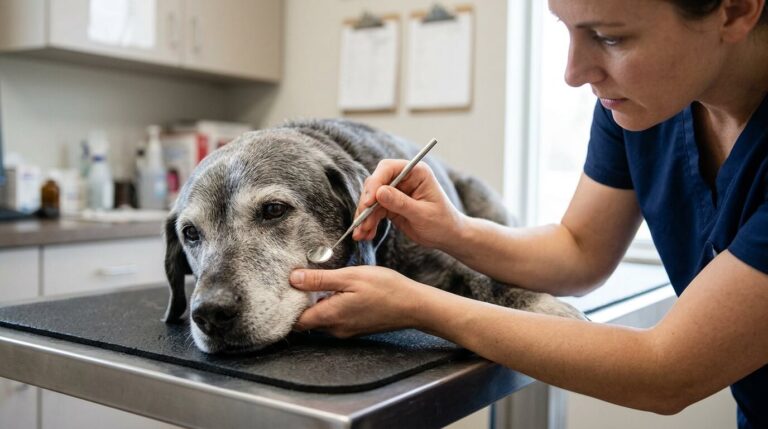
Yes. Dental disease is one of the most common conditions veterinarians diagnose, and it causes real pain long before owners notice. Tartar buildup leads to gum infection, tooth loss, and bacteria entering the bloodstream. A minute of daily brushing prevents most of it, which beats a costly professional cleaning later.
Need Local Pet Support or an Open Vet Near You?
Use DaisyDu's free neighborhood tools to find 24/7 open emergency animal hospitals, arrange local playdates, or broadcast a lost pet SOS alert.