How to clean dogs teeth at home?
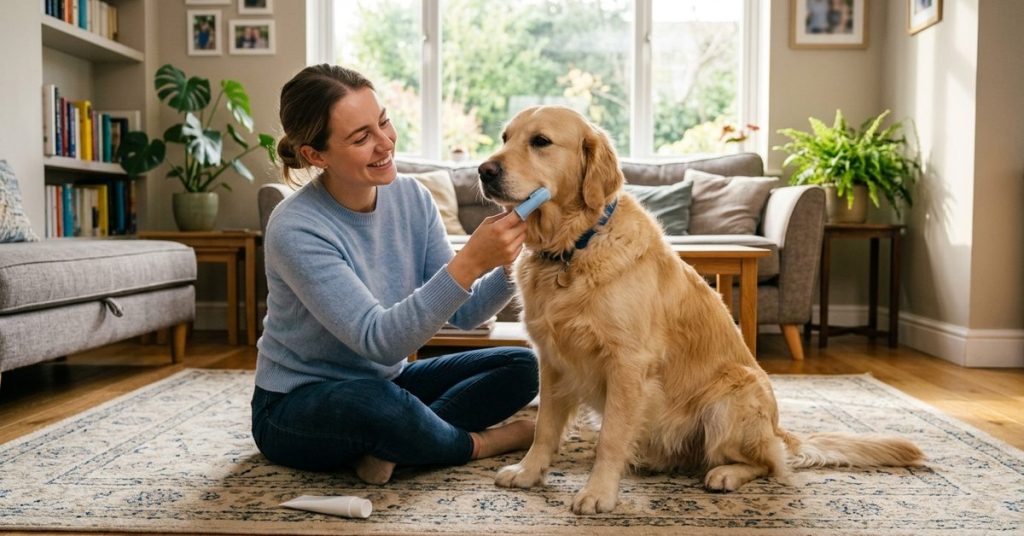
Brush daily with dog toothpaste (never human toothpaste) and a soft brush or finger brush, using small circles along the gumline for about a minute. Focus on the outer surfaces of the upper teeth. Start with short sessions and tasty toothpaste so your dog cooperates, and see a vet for professional cleaning when tartar hardens.
Learning how to clean dogs teeth at home takes less time than you think: about two minutes a day with the right toothpaste and a soft brush. No special skills, no wrestling match. Just a simple routine, done consistently, that prevents most of the dental disease vets see every week.
Why Brushing Matters More Than You Think
Dental disease is the most common health problem veterinarians see in dogs. The American Veterinary Medical Association reports that nearly 80% of dogs show signs of periodontal disease by age three, often hiding below the gumline where it causes pain, infection, and tooth loss. The good news doubles as the point of this guide: it is one of the most preventable problems your dog will ever face, and a toothbrush is the main tool.
Step 1: Get the Right Tools
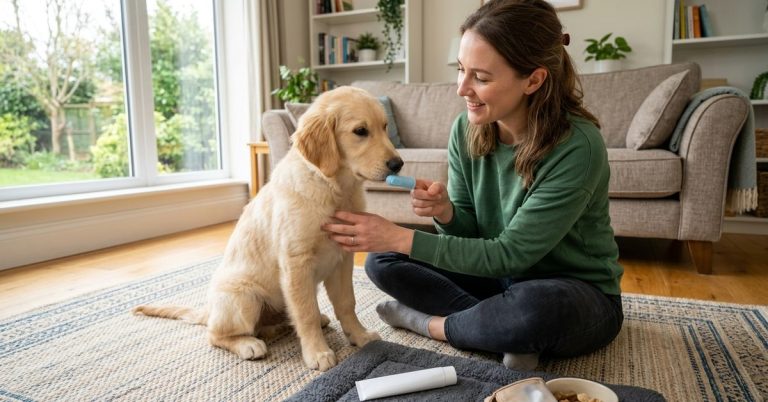
You need two things, and the first rule of how to clean dogs teeth at home is the toothpaste: it must be made for dogs. Human toothpaste’s fluoride and foaming agents are unsafe for dogs, as explained in why dogs can’t use human toothpaste. Pick an enzymatic dog toothpaste in poultry or peanut butter, plus a soft-bristled dog toothbrush or silicone finger brush. No brush yet? A square of clean gauze wrapped around your finger works as a starter tool: rub it along the gumline the same way until your dog graduates to bristles.
Step 2: Master the Technique
The outer surfaces of the upper teeth collect the most plaque, so start there. The core skill of how to clean dogs teeth at home is the gumline: lift the lip, angle the brush where tooth meets gum, and use gentle circles, a few seconds per tooth, working front to back.
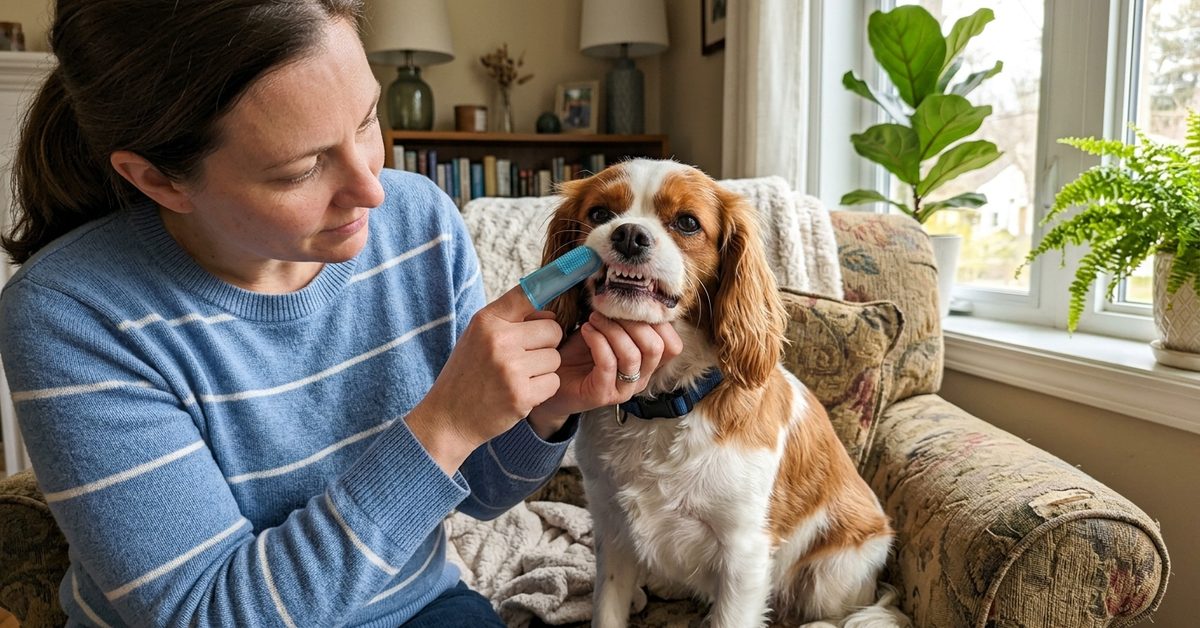
Brush at the same time daily, right before the evening walk works well. Dogs learn routines fast, and a predictable slot turns brushing into “just something we do” within two weeks.
Step 3: Brush Often Enough to Matter
Daily is the gold standard because plaque hardens into tartar within days, and tartar can’t be brushed off at home. If daily feels impossible, aim for at least three to four times a week; anything regular beats sporadic marathon sessions. See how often to brush your dog’s teeth for a realistic schedule that fits busy weeks.
Step 4: Win Over a Resistant Dog
Most “impossible” dogs were just rushed. Back up to whatever step they accepted: licking toothpaste off your finger, then lip lifts with praise, then one tooth, then four. Keep sessions under a minute and always end on a win. If brushing truly isn’t happening, cleaning without brushing covers dental chews, water additives, and wipes that help, though none fully replace the brush.
Step 5: Know When Home Care Isn’t Enough
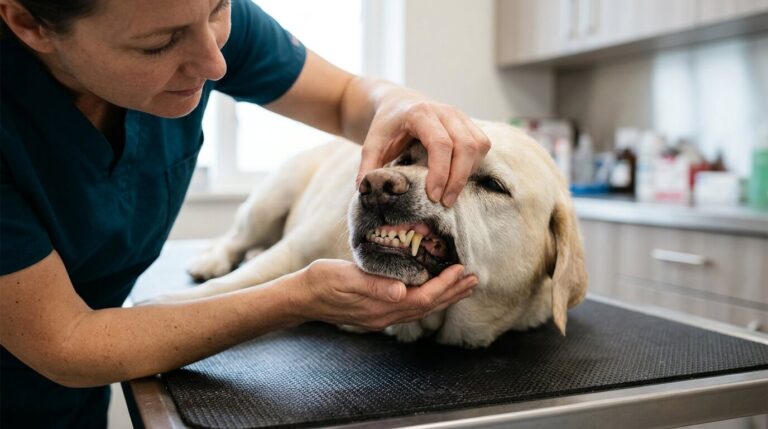
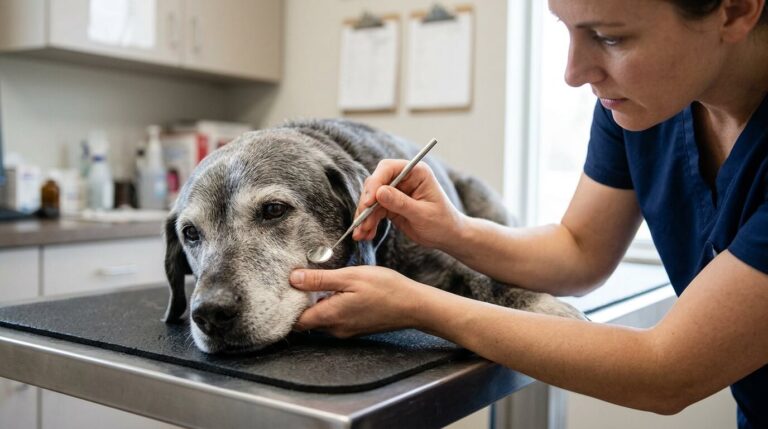
Brushing prevents buildup; it doesn’t remove hardened tartar, red inflamed gums, or broken teeth. If you see brown crust at the gumline, bleeding, or persistent bad breath despite brushing, book a professional cleaning. Check what a dental cleaning costs so the estimate holds no surprises. And if you notice swelling, drooling, or pawing at the mouth, find a vet near you promptly rather than waiting for the next cleaning.
How often should I brush my dog’s teeth?
Every day is ideal, since plaque starts hardening into tartar within a couple of days. Real life intervenes, so treat three to four times a week as the honest minimum. Consistency beats intensity: five calm one-minute sessions a week prevent far more disease than one stressful ten-minute scrub.
Can I use coconut oil to clean my dog’s teeth?
Coconut oil is safe in small amounts and most dogs love the taste, which makes it a fine vehicle for getting a brush into the mouth. But the oil itself does little; the brushing motion does the work. Think of it as flavoring, not medicine, and don’t skip real enzymatic toothpaste on the days you use it.
What age should I start brushing my dog’s teeth?
As early as possible. Puppies accept handling far more readily than adult dogs meeting a toothbrush for the first time. Start with finger rubs along the gums and tasty toothpaste during the first months home, then graduate to a brush. Early positive experiences pay off for the dog’s entire life.
Do dental chews replace brushing?
No. Dental chews reduce some plaque and most dogs enjoy them, but they can’t match the mechanical cleaning of a brush at the gumline. Use chews as a supplement between brushings, not a substitute. Look for the VOHC seal so you know the chew’s claim was actually tested.
Need Local Pet Support or an Open Vet Near You?
Use DaisyDu's free neighborhood tools to find 24/7 open emergency animal hospitals, arrange local playdates, or broadcast a lost pet SOS alert.