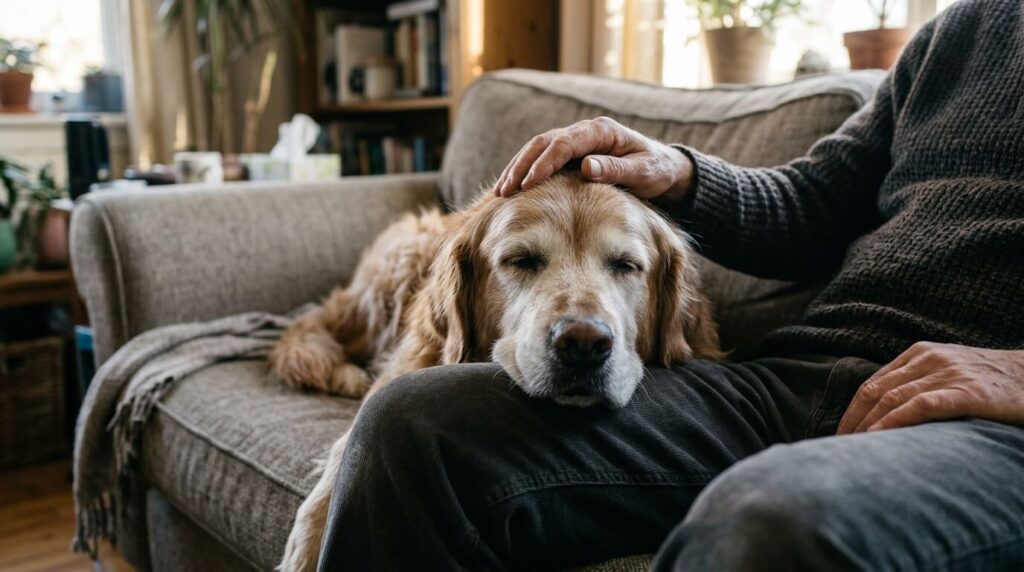
Signs your dog is dying
Most dogs near the end of life sleep far more, eat and drink much less, withdraw from family and favorite activities, and grow weak or unsteady. Breathing may turn slow or uneven, and bladder or bowel control may slip. No single change proves the end is near, so a vet should judge the whole picture with you.
Signs your dog is dying are rarely one dramatic moment. More often they arrive quietly, a little at a time, and owners look back and realize the pattern only later. This guide walks through the changes vets watch for, the lookalike problems that can mimic them, a simple quality of life check, and how to keep a declining dog comfortable while you make decisions with your vet.
When to Call the Vet Right Away
Call your vet or an emergency clinic now if your dog struggles to breathe, cannot stand at all, collapses, has uncontrolled bleeding, or seems in severe distress. Sudden decline is not always the end of life, and some causes can still be treated. Find an open emergency vet near you on DaisyDu’s Live Vet Map →
The Early Changes Most Owners Notice First
The first signs your dog is dying may be easy to miss, because they look like ordinary aging. The earliest shifts are usually about energy and interest. A dog who once raced to the door may stay on the bed. Walks get shorter, play stops early, and naps stretch through most of the day. Appetite often fades in steps: first treats go untouched, then meals, then even favorite foods. Thirst can fade too, or swing the other way if kidney or hormone disease is involved.
Behavior changes belong on the same list. Some dogs grow clingy and follow their owner from room to room. Others withdraw to a quiet corner and seem unbothered by visitors, other pets, or sounds that once excited them. Confusion can appear as staring at walls, getting stuck in corners, or seeming not to recognize familiar people. Restlessness at night, pacing, or panting when nothing is wrong can signal pain or discomfort rather than the dying process itself, so tell your vet about any of these.
Body Changes as the End Draws Nearer
As the body weakens, physical signs become clearer. Weight and muscle melt away even when a dog still eats a little, because illness burns energy faster than food replaces it. The coat may look dull or unkempt as grooming stops. Legs grow wobbly, stairs become hard, and a dog may need help standing or slip on smooth floors.
Breathing often changes late in the process. Breaths may grow slow, shallow, or uneven, with long pauses between them. Animal hospice guidelines describe this pattern, along with twitching, pale gums, cold paws, and loss of bladder or bowel control, as part of the final phase. Twitching here differs from the shaking covered in our guide to why dogs shake and tremble. None of these signs alone gives a timeline. Vets are clear that the dying process cannot be predicted exactly, and a dog can hold steady for a while or change quickly.
Signs a dog is dying of old age look much like this slow fade, but age alone is not a diagnosis. Old dogs develop kidney disease, heart disease, cancer, and arthritis, and each shapes the picture differently. A vet visit can separate what is age related wear from what is a treatable problem hiding inside the decline.
Changes That Can Look Like Dying but Are Treatable
This is the section owners most need, because several treatable problems mimic end of life signs. Dental pain can stop a dog eating. Nausea from kidney disease, pancreatitis, or medication can do the same. Arthritis pain can end walks and play. Anemia, low thyroid, and infection can flatten energy. Even grief or a change at home can make a dog withdraw.
The practical rule is simple: sudden change deserves a prompt vet visit, whatever the age. A dog who stops eating or drinking, vomits repeatedly, has diarrhea, or cannot stand needs same day advice. If appetite loss is the main worry, our guide to how long a dog can go without eating explains the causes vets check first. Many of these problems improve with treatment, and ruling them out is what lets you trust the bigger picture if the decline truly is end of life.
A Simple Quality of Life Check
When the question turns from what is happening to whether your dog is suffering, vets often use a quality of life checklist. It scores the everyday things that make a dog’s life good, and it works best when one person scores it honestly every few days and watches the trend.
| Area to score | What good looks like | What decline looks like |
|---|---|---|
| Hurt and pain | Comfortable at rest, pain controlled | Panting, restlessness, crying, flinching at touch |
| Hunger and thirst | Eats and drinks with interest | Refuses food and water most days |
| Hygiene | Stays clean with a little help | Soils bedding and cannot be kept clean |
| Happiness | Greets family, enjoys some moments daily | No interest in people, toys, or treats |
| Mobility | Moves around the house, gets outside | Cannot stand or walk without major help |
| Good days vs bad days | More good days than bad ones | Bad days clearly outnumber good ones |
No single bad score decides anything. The pattern matters: a dog with more bad days than good ones, whose pain cannot be controlled, or who has lost interest in everything is telling you something important. Take the scores to your vet. They turn a painful gut feeling into a conversation with evidence behind it.
Keep a short daily note for one week: appetite, mobility, comfort, and one good moment. Owners under stress remember the worst day or the best day, not the average. A week of notes shows the trend your vet needs.
Comfort Care in the Final Weeks
Comfort care is about small things done well. Keep the bed in a warm, quiet spot near family, with water close by and a nonslip path to the door. Offer small, tasty meals often rather than one big bowl, and warm food slightly to lift its smell. Help with stairs, ramps, and toileting without fuss, and keep grooming gentle and brief.
Pain control is the most important part of comfort care, and it belongs to your vet. Never give a dog human pain medicine without vet advice, since common human drugs can seriously harm dogs. If panting, restlessness, or crying continues despite treatment, say so plainly at the next visit. Adjusting pain relief is normal, and it is not a failure to ask.
The signs your dog is dying rarely arrive all at once, and that is what makes this stage so hard to read. Holding the whole pattern in view, the appetite, the mobility, the interest in life, and the comfort, gives you a steadier guide than any single symptom.
The Decision, and What Comes After
Many owners ask how they will know when it is time. There is no single test, and vets will not usually give a date. The decision most often rests on suffering that cannot be relieved, a body that can no longer do the basics, and a life with more bad days than good ones. Ask your vet directly what they would watch for in your dog’s specific illness, and what a peaceful end would look like. If an emergency trip becomes necessary, our guide to emergency vet visit costs explains what to expect. Knowing the plan in advance removes some of the panic from the hardest day.
Afterwards, grief hits owners in waves, and guilt often rides with it. Second guessing a decision made with love and vet guidance is common, and it is not evidence that you chose wrong. Lean on family, a pet loss group, or your vet team if the grief stays heavy. The love that makes this stage painful is also what made your dog’s life good.
Do dogs know when they are dying?
Nobody can know what a dog understands about death, and any confident answer would be guesswork. What vets do observe is that sick dogs sense their own bodies changing: they tire faster, hurt more, and seek rest or closeness. Some grow clingy, others withdraw. Treat those behaviors as signals about comfort, not as proof of what your dog understands.
How long does the dying process take in dogs?
There is no reliable timeline. Some dogs decline over weeks or months with a slow loss of strength and appetite. Others change over days once an organ begins to fail. Speed depends on illness, age, and care available. Your vet can describe what to expect for a specific disease, but not a date.
Should a dying dog be kept at home or taken to the vet?
Most dogs are calmer at home in a familiar bed with familiar people, and many vets support home comfort care with regular check ins. Hospital care makes sense when pain, breathing, or hydration cannot be managed at home. Ask your vet what home care can realistically cover, and agree in advance on the signs that mean a trip in.
Is it kinder to let a dog pass naturally or to choose euthanasia?
Natural passing can be peaceful, but it can also involve distress owners cannot see or relieve, which is why vets discuss euthanasia openly. It is not a shortcut or giving up. It is a medical decision to prevent suffering when comfort can no longer be achieved. Your vet can explain how it works and help you weigh it without pressure.
Need Local Pet Support or an Open Vet Near You?
Use DaisyDu's free neighborhood tools to find 24/7 open emergency animal hospitals, arrange local playdates, or broadcast a lost pet SOS alert.