Diarrhea medication for dogs: what’s safe at home?
For mild dog diarrhea, rest the gut: offer small bland meals of boiled chicken and white rice, keep fresh water available, and skip treats for a day or two. Never give human medication without your vet’s direction. Call the vet for blood, black stool, puppies, lethargy, or diarrhea lasting over 48 hours.
When you’re searching for diarrhea medication for dogs at 6 a.m., here’s the reassuring truth: most mild cases need no medication at all. A calm gut protocol of bland food, hydration, and rest resolves the majority of episodes within a couple of days. Here’s exactly how to run it.
The Bland Diet Protocol
This is the closest thing to a standard diarrhea medication for dogs that exists, and it comes from your kitchen, not a pharmacy.
Step 1: Pause regular food for 12 to 24 hours
Give the gut a rest. Adult dogs only: puppies should not fast, so call your vet for puppy-specific guidance instead. Keep fresh water available the whole time.
Step 2: Start small bland meals
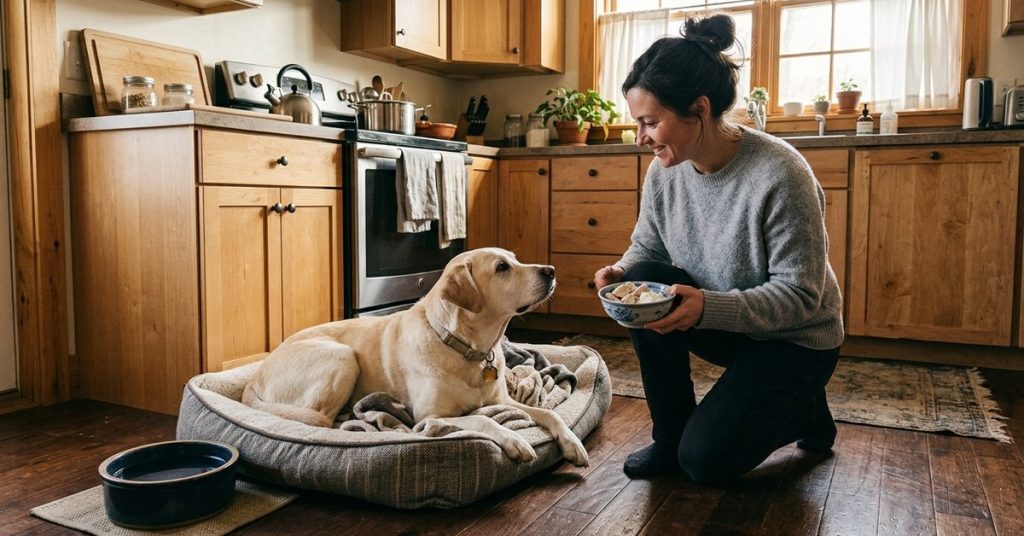
Offer small, frequent meals of plain boiled boneless chicken breast and white rice (roughly two parts rice to one part chicken), or plain canned pumpkin (pure pumpkin, not pie filling). Four to six tiny meals beat two normal ones.
Step 3: Transition back slowly
After two to three days of firming stool, mix increasing amounts of regular food into the bland meals over another two to three days. A sudden switch back can restart the whole episode.
Skip all treats, chews, and table scraps until stools are normal for a full day. One “harmless” treat can undo two days of gut rest.
Keep Them Hydrated
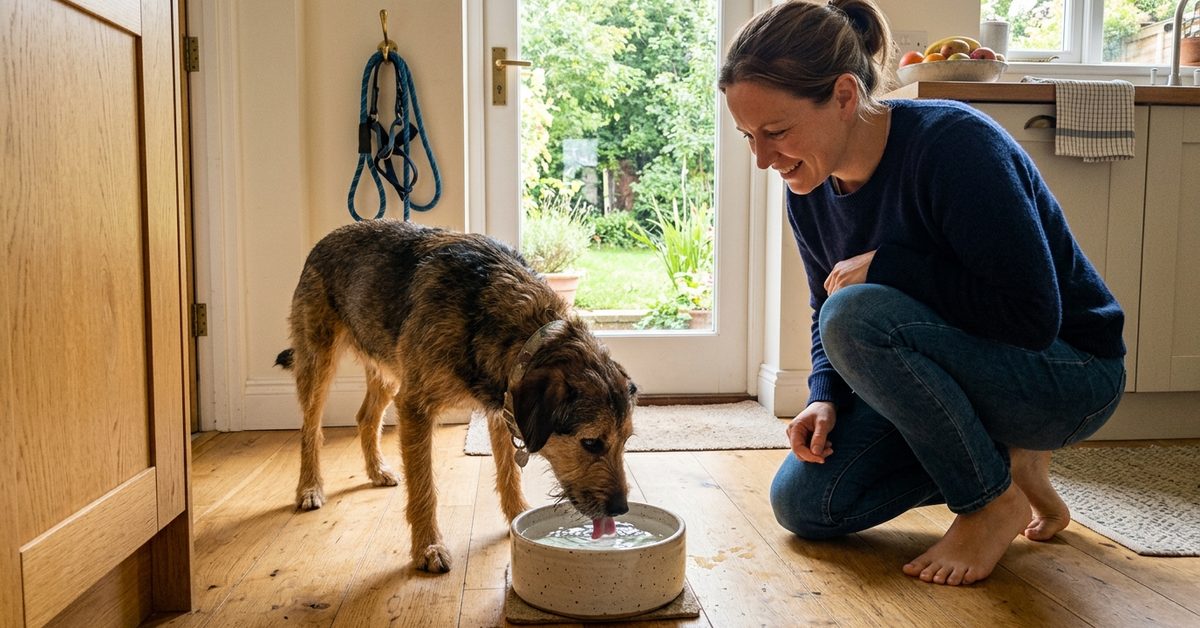
Diarrhea dehydrates, and dehydration is the real danger in most cases. Keep fresh water down at all times and encourage drinking. Watch for dehydration signs: dry or sticky gums, skin that stays tented when gently pinched, sunken eyes, or unusual lethargy. A dog that won’t drink at all needs a vet call, not more home treatment.
What Never to Give
This is the most important section on the page. Never give your dog human anti-diarrhea or stomach medication on your own, and never guess a dose from a human label. Some human drugs are toxic to dogs, and even the safer ones can be dangerous for certain breeds, sizes, or health conditions. The only safe diarrhea medication for dogs is one your own vet prescribes or explicitly approves for your specific dog. If vomiting arrives alongside the diarrhea, treat the combination more seriously, since fluid loss stacks up fast. And if your dog has also gone off food entirely, here’s how long a dog can safely go without eating and when appetite loss becomes its own emergency.
What About Actual Diarrhea Medication?
If you came here looking for diarrhea medication for dogs in a bottle, here is the honest version. Pet-specific anti-diarrheal liquids do exist: they are usually kaolin and pectin based, which coat the gut lining and help firm things up, and they are sold over the counter for dogs. But available without a prescription is not the same as safe to guess with. Only use one if your own vet recommends it for your specific dog, and follow their directions exactly. Everything in the never-give section above still applies.
When Diarrhea Is an Emergency
Call the Vet Now If You See These
Get veterinary help immediately if: there’s blood (red) or a black, tarry look to the stool; your dog is a young puppy; they’re lethargic, refusing water, or vomiting too; their belly is painful or swollen; or diarrhea lasts more than 48 hours despite home care. Puppies dehydrate dangerously fast. Find an open emergency vet near you on DaisyDu’s Live Vet Map → For after-hours urgent care, try walk-in pet urgent care →
If your dog is recovering but you can’t be home to monitor water intake and let them out, DaisyDu’s sitter board can connect you with someone nearby for midday check-ins.
How long does dog diarrhea usually last?
Mild, uncomplicated diarrhea typically resolves within 24 to 48 hours of bland diet and rest. If it’s still going at 48 hours, or if it ever worsens instead of gradually improving, call your vet. Diarrhea that waxes and wanes for weeks is a different problem entirely and needs a workup, not more chicken and rice.
Can I give my dog Pepto-Bismol or Imodium?
Only if your own vet explicitly tells you to, with a dose calculated for your dog. Never dose from a human label or internet chart. Some human stomach drugs are dangerous for certain breeds and health conditions, and masking symptoms can hide something serious. When in doubt, the bland diet protocol above is the safe default.
Does pumpkin really help dog diarrhea?
Yes, plain canned pumpkin (pure pumpkin, not pie filling) is one of the most vet-recommended home aids. Its soluble fiber absorbs excess water in the gut and firms stool. A spoonful or two mixed into bland meals is plenty. It’s a helper alongside the bland diet, not a replacement for it.
My puppy has diarrhea. Same home treatment?
No, puppies play by stricter rules. Don’t fast a puppy, and don’t wait 48 hours: puppies dehydrate much faster than adults and can crash quickly. Call your vet the same day for any puppy diarrhea, especially with lethargy, vomiting, or missed vaccinations. Parvovirus is a real risk in unvaccinated puppies.
Need Local Pet Support or an Open Vet Near You?
Use DaisyDu's free neighborhood tools to find 24/7 open emergency animal hospitals, arrange local playdates, or broadcast a lost pet SOS alert.