Why is my dog throwing up?
Most often, a dog throws up because they ate something they shouldn’t, ate too fast, or have a mild stomach upset. Withhold food briefly, offer small amounts of water, and watch them. Call your vet if vomiting repeats, contains blood, or comes with lethargy, bloat signs, or diarrhea.
If you’re asking why your dog is throwing up, start with the most likely answer: they ate something they shouldn’t have. Dietary indiscretion, the vet term for garbage gut, causes the majority of one-off vomiting episodes. Here’s how to tell a minor upset from a real emergency.
The Most Common Causes
Run through this list before you panic. Nearly every mild answer to why is my dog throwing up is on it, and the first three explain the vast majority of cases.
- Dietary indiscretion: garbage, table scraps, a new treat, or something dead found on a walk. The classic one-time vomit.
- Eating too fast: gulped food comes back up mostly undigested, minutes after the meal. A slow-feeder bowl usually fixes it.
- Sudden diet changes: switching kibble overnight upsets many stomachs. Transitions should take a week or more.
- Mild gastritis: a generally sensitive stomach, sometimes with no clear trigger.
- Motion sickness: common in puppies and young dogs, often improves with age.
- Intestinal parasites: more likely in puppies or dogs with patchy deworming history, sometimes with visible worms.
- Swallowed objects: socks, toys, corn cobs, and rocks can lodge in the stomach or intestines and block them. A dog that keeps trying to vomit but brings little or nothing up, especially a known chewer, needs a vet immediately. VCA Animal Hospitals lists intestinal obstruction from foreign bodies as a serious cause of vomiting, and it is a surgical emergency, not a wait-and-see situation.
What the Color and Texture Can Tell You
This is a rough guide, not a diagnosis. Only your vet can say what’s actually going on, but what you see helps them get there faster.
| What you see | Often suggests | Your move |
|---|---|---|
| Undigested food, soon after eating | Ate too fast or too much | Slow-feeder bowl; monitor |
| Yellow bile or foam | Empty stomach irritation | Usually mild; try smaller, more frequent meals |
| White foam | Mild upset or cough-related | Watch; vet if it repeats |
| Red streaks | Throat or stomach irritation | Call your vet |
| Dark brown, like coffee grounds | Digested blood | Vet immediately |
| Worms or rice-like segments | Intestinal parasites | Vet visit and deworming plan |
Take a photo of the vomit before you clean up. It’s gross, but it helps your vet enormously: color and contents narrow the possibilities fast.
Vomiting vs. Regurgitation: Know the Difference
Not everything that comes back up counts as vomiting. VCA Animal Hospitals draws a clear line between the two: vomiting is active, with abdominal heaving and effort, while regurgitation is passive, with no warning and no contractions, often happening right after eating or drinking. Regurgitated food looks undigested, sometimes tube-shaped from the esophagus. The distinction matters because the two point to different problems. Sorting out which one you’re seeing is step one in answering why is my dog throwing up, so tell your vet exactly what you observed.
What to Do Right Now
For a dog who’s otherwise acting normal, VCA Animal Hospitals outlines a calm home protocol: rest the stomach by withholding food for a short period, then reintroduce small amounts of water (don’t let them gulp a whole bowl), followed by small bland meals. Keep them quiet and comfortable. Most searches for “why is my dog throwing up” end right here: one bad episode, a rested stomach, back to normal within a day. If diarrhea shows up alongside the vomiting, follow our diarrhea home-care guide too, since the two together dehydrate a dog faster.
Could It Be Something Toxic?
If you saw your dog eat something suspicious, or vomiting starts alongside drooling, wobbliness, or collapse, treat it as poisoning until proven otherwise. Chocolate is one of the most common culprits (our chocolate guide walks through exactly what to do). Don’t wait for more symptoms. Call your vet or a pet poison helpline immediately with the details of what was eaten and when.
When to Call the Vet
Red Flags: Don’t Wait on These
Call your vet or emergency clinic immediately if: there’s blood in the vomit; your dog can’t keep water down; they’re retching without producing anything and their belly looks swollen or hard (possible bloat, a life-threatening emergency); they’re extremely lethargic or have pale gums; they’re a young puppy or senior; or you suspect they ate something toxic. Find an open emergency vet near you on DaisyDu’s Live Vet Map →
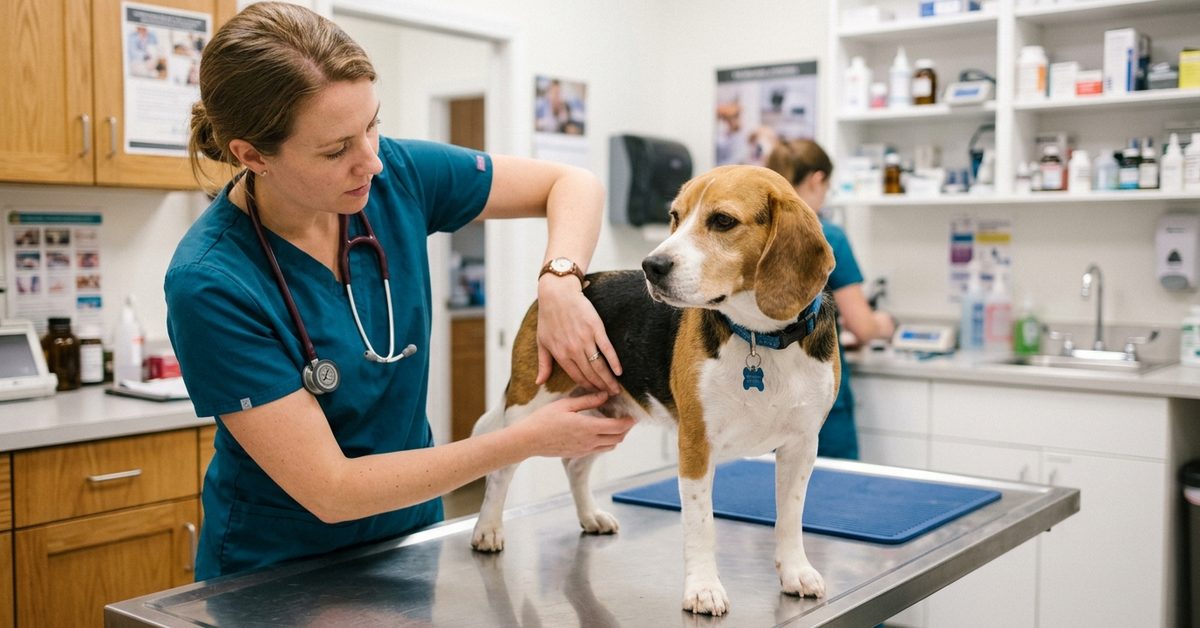
If none of the home steps explain your dog’s vomiting, the vet visit will. Bring notes on when vomiting started, how often, what it looked like (that photo helps), and anything they might have eaten. That history is half the diagnosis.
My dog threw up once and is acting totally normal. Do we need the vet?
Probably not. A single vomit followed by normal energy, appetite, and behavior is usually a minor stomach upset, often from eating too fast or scavenging. Skip one meal, offer water, then resume bland food. Call your vet if vomiting repeats, or if lethargy, diarrhea, or appetite loss joins in.
Why does my dog throw up yellow bile in the morning?
Yellow bile usually means your dog’s stomach sat empty too long overnight. Bile irritates an empty stomach, triggering the vomit. Try a small bedtime snack and an earlier breakfast to shorten the overnight fast. If bile vomiting becomes daily or comes with appetite loss, see your vet, since it can signal other issues.
Can stress or excitement make a dog throw up?
Yes. Excitement, anxiety, car rides, and big routine changes can all upset a dog’s stomach enough to cause vomiting. Stress vomiting is usually a one-off and stops when the trigger passes. If it happens repeatedly around the same trigger, talk to your vet about motion sickness or anxiety management.
My dog eats grass and then throws up. Should I stop them?
Grass eating is common and usually harmless. Many dogs graze out of habit, not illness, and the vomiting afterward is often just the grass irritating the stomach. Discourage grazing on treated lawns, since pesticides are the real danger. If grass eating becomes frantic or daily, mention it to your vet.
Need Local Pet Support or an Open Vet Near You?
Use DaisyDu's free neighborhood tools to find 24/7 open emergency animal hospitals, arrange local playdates, or broadcast a lost pet SOS alert.