Can Dogs Eat Tomatoes
Yes, in small amounts, but only ripe red tomatoes served plain. The American Kennel Club states that ripe tomatoes are considered non-toxic to dogs, while leaves, stems, and unripe green tomatoes carry tomatine and solanine and should never be fed. Keep tomatoes occasional, remove every green part, and call your vet if your dog eats plant material.
Can dogs eat tomatoes from your salad bowl? The short answer is yes, with one firm condition: the tomato must be fully ripe and red, and every leaf, stem, and green part must be removed first. A ripe tomato shared as an occasional treat is a very different thing from a dog raiding a tomato plant in the garden.
This guide follows the verdict given by the American Kennel Club, which draws a clear line between ripe flesh and green plant parts. It also covers tomato sauce, cherry tomatoes, and what to do if your dog gets into the wrong part of the plant. For the full safe and toxic lists, see our pillar on what human foods dogs can eat.
Ripe Tomatoes vs Green Parts: The Verdict
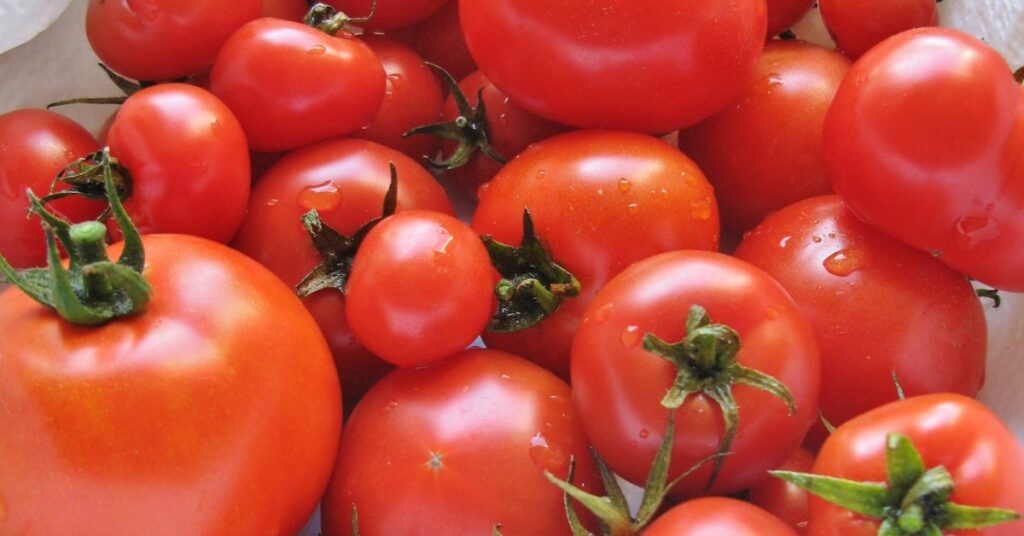
Ripe red tomatoes are the only tomato part to offer a dog. The American Kennel Club states that ripe tomatoes are considered non-toxic and can be fed in moderation as an occasional snack, and that they provide fiber, potassium, vitamin C, and vitamin K. That verdict is about the ripe flesh only. It is not a verdict on the whole plant.
So can dogs eat tomatoes safely? Yes, if you stick to ripe flesh only. Leaves, stems, vines, blossoms, and young green tomatoes contain tomatine and solanine, toxins found mostly in the green parts of the tomato plant, according to the American Kennel Club. Your dog should never eat those parts. Tomatine poisoning is rare, the American Kennel Club notes, and most dogs that experience it fully recover, but it can still cause serious symptoms when a large amount is eaten, so green parts are a firm no rather than a grey area.
Green Tomato Plant Warning
If your dog eats leaves, stems, or unripe green tomatoes, watch for loss of coordination, muscle weakness, tremors, vomiting, diarrhea, or lethargy, and call your veterinarian promptly. If you need a vet quickly, use our live vet map to find one near you. Do not try a home remedy first.
How to Prepare Tomatoes for Dogs
Preparation is simple, and every step exists to keep the green parts and the acidity under control. Wash the tomato, remove the stem and any leaves, and cut the ripe flesh into small pieces sized for your dog.
Step 1: Pick a fully ripe tomato
Choose a tomato that is fully red and soft, not green or partly green. If it is still green, save it for your own cooking and do not offer it to your dog.
Step 2: Remove every green part
Cut away the stem, leaves, and any green shoulder near the top. Only the red flesh goes in the bowl.
Step 3: Dice it small and serve plain
Dice the flesh into small pieces, especially for small dogs, and serve it plain with no salt, dressing, or seasoning. Offer one small piece first and watch for stomach upset before offering more another day.
Cherry tomatoes follow the same rule: ripe ones are fine in moderation, but cut them in half first. A whole cherry tomato is a choking risk for a small dog, and the stem must come off.
Can Dogs Eat Tomato Sauce or Ketchup?
No, not as a dog treat. The American Kennel Club warns that tomato sauce on pizza or pasta likely contains extra ingredients such as garlic and onions, which can cause stomach upset in dogs. Shop bought sauces and ketchup also tend to carry salt and sugar that dogs do not need. A plain ripe tomato is the safe version. Sauce, soup, salsa, and ketchup are not, because you cannot control what else is in them.
The same caution applies to cooked tomatoes in human dishes. Plain cooked ripe tomato is not the problem. The garlic, onion, salt, fat, and spices around it usually are. If a dish has more than plain tomato in it, keep it away from your dog.
How Much Tomato Can a Dog Have?
Keep tomatoes inside the general treat rule that vets use: treats of all kinds should stay within about 10 percent of your dog’s daily calories, with the rest coming from a complete and balanced dog food. In practice, that means a few small pieces as an occasional treat, not a daily bowlful and never a meal replacement.
Start small on the first try, since acidity can upset a sensitive stomach even when the tomato is ripe. If your dog has a sensitive stomach, reflux, or a condition that needs a controlled diet, ask your vet before offering tomatoes at all. This article gives general guidance only, and your vet knows your dog’s history.
Puppies, Seniors, and Dogs With Health Conditions
Puppies and small breeds need extra caution around tomato plants, because a smaller amount of plant material can cause poisoning in a small body, according to the American Kennel Club. Keep puppies away from garden plants entirely, and fence off tomato plants so a curious puppy cannot sample leaves or unripe fruit.
Senior dogs and dogs with stomach problems may react more to acidity, so a small taste and a watchful day afterward matter more than the treat itself. Dogs on a prescription diet should not get foods outside that diet unless their vet says it is fine, a caution PetMD repeats across its people-food guides. When in doubt, skip the tomato and ask your vet.
What to Do If Your Dog Eats the Wrong Part
If your dog eats a large amount of tomato plant material, or a lot of unripe green tomatoes, call your veterinarian for guidance right away and describe what was eaten and roughly how much. Note the time and watch for loss of coordination, muscle weakness, tremors, vomiting, diarrhea, lethargy, drooling, or dilated pupils, the symptoms the American Kennel Club lists for tomatine poisoning.
Do not induce vomiting at home and do not offer a home remedy unless your vet tells you to. If your dog only ate a small piece of ripe tomato, that is the normal treat case, not an emergency, but still watch for stomach upset over the next day. If you are unsure which part your dog ate, treat it as the plant case and call your vet.
Where Tomatoes Fit in a Dog’s Diet
Can dogs eat tomatoes every day? No, they are an occasional treat, not a staple. Tomatoes work best as a rare, plain, ripe treat alongside a balanced diet, not as a health supplement. They are not needed for a healthy dog, and no dog misses out by never tasting one. The safest approach is also the simplest: ripe, red, plain, small, and occasional. For other fruits with the same plain-and-peeled logic, see our guides on oranges and pineapple.
Are green tomatoes ever safe for dogs?
No, unripe green tomatoes should not be fed to dogs. The American Kennel Club states that young green tomatoes carry the same plant toxins as leaves and stems, and a small amount may cause no serious harm while larger amounts can bring vomiting, weakness, or tremors. Garden fencing matters because a dog can reach green fruit long before it ripens.
Can dogs eat sun dried tomatoes?
Plain sun dried tomatoes are usually sold with oil, salt, or seasonings, and many packs add garlic, so they are a poor choice for dogs. Oil adds fat that can upset digestion, and seasoned packs may hide unsafe ingredients. A fresh ripe tomato, plain and diced, is safer.
Do tomatoes help a dog’s coat or digestion?
Ripe tomatoes contain fiber and vitamins, but they are not a coat or digestion treatment, and no vet source in this guide presents them as one. Dogs on a complete food already get balanced nutrition, so a tomato is a treat, not a supplement. If coat or digestion is a concern, ask your vet about the cause.
Should I fence off tomato plants from my dog?
Yes, fencing off tomato plants is the step the American Kennel Club recommends for gardens, along with keeping indoor plants out of reach and watching your dog while you cook with tomatoes. A fence removes the chance of a dog sampling leaves, stems, or green fruit when no one is watching, which is when most plant eating happens.
Need Local Pet Support or an Open Vet Near You?
Use DaisyDu's free neighborhood tools to find 24/7 open emergency animal hospitals, arrange local playdates, or broadcast a lost pet SOS alert.