When Can Puppies Eat Wet Food?
The answer to when can puppies eat wet food is about 3 to 4 weeks old, when weaning begins. At that age the food is served as a soft gruel, a mix of wet puppy food with water or milk replacer, and puppies are usually fully weaned onto solid food, wet or dry, by about 8 weeks.
The breeder hands you an eight week old puppy, a bag of dry kibble, and a feeding schedule, and your first question at home is whether that kibble is really right for a mouth full of needle sharp baby teeth. It is a fair question, and the answer starts earlier than most new owners expect. Wet food is not a later stage treat for puppies. It is the first solid food most puppies ever eat.
The Weaning Window: 3 to 8 Weeks
Puppies and wet food meet during weaning, the gradual move from mother’s milk to solid food. Purina’s weaning guide states that at about four weeks of age, as a puppy is being weaned from mother’s milk, owners should start adding small meals of a quality puppy food, either in wet form or a moistened version of dry puppy food. Other breeder and vet reviewed guides put the start at 3 to 4 weeks, when the first baby teeth begin to erupt and puppies start showing interest in food beyond milk.
That early food is not served straight from the can. It is served as gruel, and the next section explains exactly what that means. By about 8 weeks, most puppies are fully weaned, which means they can eat solid food on their own, whether that food is wet, dry, or a mix. If you bring a puppy home at 8 weeks, it is already ready for wet food as its main diet. You are not introducing something new. You are continuing something that started weeks earlier.
One caution for that first month: the food must be made for puppies, not adult dogs. Puppy food carries the growth stage nutrition a young dog needs, and adult food does not match it. The wet versus dry question is about texture and moisture. The puppy versus adult question is about nutrition, and it matters far more.
Puppy Gruel: The First Solid Meals
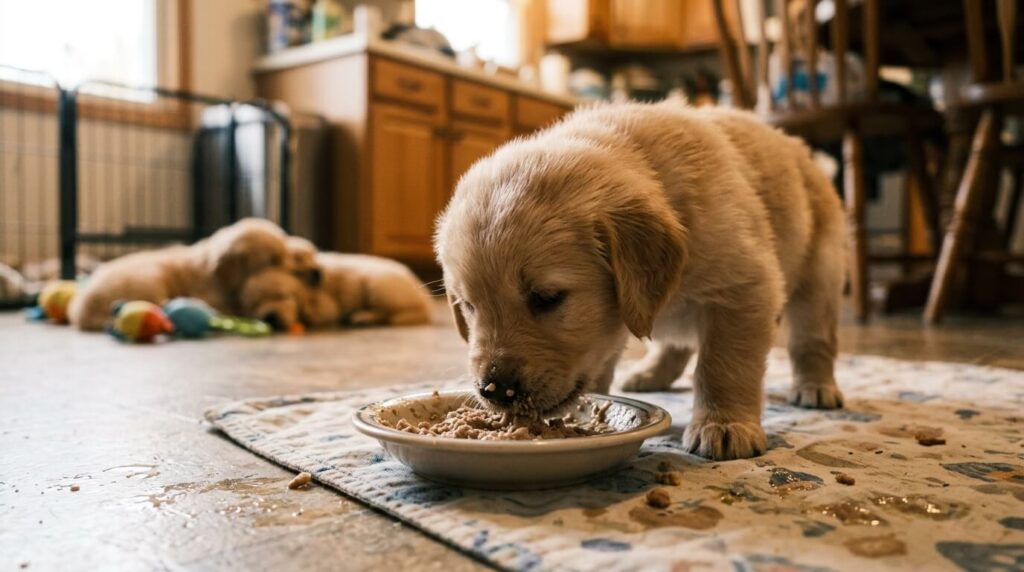
Puppy gruel is the bridge between milk and solid food. It is wet puppy food mashed or blended with warm water or puppy milk replacer into a thin, porridge like mixture that a very young puppy can lap up rather than chew. Breeders typically start with a very runny gruel and thicken it gradually over the weaning weeks as the puppies learn to lap, then to bite, then to chew.
Serve gruel in a shallow, stable bowl that a small puppy can reach without stepping into it, though some stepping in is inevitable and part of the mess of weaning. Offer small amounts several times a day, and throw away uneaten wet food rather than leaving it out, since wet food spoils faster than kibble once opened and served. Fresh water should always be available alongside, in a shallow dish, because weaning puppies are replacing some of the hydration they used to get from milk.
As the weeks pass, reduce the added liquid step by step. By 6 to 7 weeks, most puppies are handling thicker gruel and soft pieces. By 8 weeks, they can eat wet food straight from the can or tin, or softened kibble, without the extra liquid. If a puppy in your litter is slower than its siblings, do not rush it. Keep its gruel a little thinner for a few extra days and let it catch up at its own pace.
Wet Food, Dry Food, or a Mix?
Owners asking when can puppies eat wet food often follow up by asking whether wet or dry is better. Once weaning is done, the choice between wet and dry puppy food is a practical one, not a nutritional verdict, provided both foods are complete puppy foods. Wet food brings moisture, a soft texture that suits small mouths and picky eaters, and a strong smell that tempts reluctant eaters. Dry food brings convenience, easier storage, a lower cost per meal in most cases, and a crunch that some owners prefer for dental routine, though dry food alone does not replace toothbrushing.
A mix is a popular middle path: wet food for one meal and dry for another, or a spoonful of wet food mixed into kibble. If you mix, keep the total daily amount in line with the feeding guide, since adding wet food on top of a full kibble portion is an easy way to overfeed. Our guide to when puppies lose their baby teeth explains why teething puppies sometimes go off harder food for a few days, and softening kibble with warm water during those spells is a sensible temporary step.
Switching between wet and dry, or between brands, should be gradual over several days to avoid stomach upset. If a switch brings vomiting or diarrhea that lasts more than a day, our guide to dog diarrhea home treatment explains when to call the vet. And if a puppy refuses food entirely, read how long a dog can go without eating before deciding how long to wait.
How Much Wet Food, and How Often?
Young puppies eat little and often. During weaning, breeders offer gruel several times a day in small amounts. After weaning, most guides settle on three to four meals a day up to about 6 months, dropping to two meals a day after that. The exact amount depends on the food’s calorie density, your puppy’s weight, and its growth rate, so the feeding guide on the pack is your starting point, not your final answer.
Weigh your puppy regularly and adjust with your vet at checkups. A puppy that is gaining too fast needs a smaller portion, and a puppy that is thin or lagging needs more, or a vet check to rule out a health cause. Do not judge by the bowl alone: some puppies eat fast and still want more, and some graze. Body condition, steady growth, and firm stools tell you more than appetite does.
Storage matters with wet food. Once opened, refrigerate leftovers and use them within the time the pack states, and never serve wet food that has sat out for hours, especially in warm weather. Wash bowls daily. A clean bowl is a small habit that prevents a surprising number of stomach upsets in young puppies.
How Long Does a Puppy Eat Puppy Food?
Wet food timing and puppy food timing are two different questions, and owners often mix them up. Wet food can start at 3 to 4 weeks and can continue for life if you choose it. Puppy food, wet or dry, is a life stage food, and puppies stay on it until they reach adult size, which varies by breed. Small breeds often switch to adult food at around 12 months, while large and giant breeds may stay on puppy food longer, sometimes to 18 months or beyond.
Your vet is the right person to set the switch date for your puppy, since breed, growth rate, and any health issues all affect it. When the switch comes, make it gradual over a week or so, mixing increasing amounts of adult food into the puppy food. The same gradual rule applies if you ever change wet food brands. A sudden change is the most common cause of a puppy’s upset stomach, and it is also the most avoidable.
So the short version is simple: when can puppies eat wet food is answered at 3 to 4 weeks, not at 8 weeks, and it starts as gruel. It is fully established by 8 weeks. It can stay in the diet as long as you like, provided the food itself is made for puppies until your vet says it is time to move to adult food. Start soft, thicken gradually, keep portions guided by the pack and your vet, and let your puppy’s growth, not the calendar alone, tell you how it is going.
Can a 3 week old puppy eat wet food straight from the can?
Not quite straight from the can. At 3 to 4 weeks, wet food should be mashed with warm water or puppy milk replacer into a thin gruel that the puppy can lap. Straight canned food is too thick for a puppy that is still learning to eat. Thicken the mix gradually over the weaning weeks.
Is wet food better than dry food for puppies?
Neither is universally better, provided both are complete puppy foods. Wet food offers moisture and a soft texture that suits young mouths and picky eaters, while dry food offers convenience and easier storage. Many owners use a mix. The more important choice is puppy food versus adult food, and the portion size, both of which your vet can confirm.
Can I soften dry puppy food instead of buying wet food?
Yes. Soaking dry puppy food in warm water until soft gives a similar texture to wet food and is a common weaning method. Purina’s weaning guide explicitly lists a moistened version of dry puppy food as an option for first solid meals. Serve freshly softened food, discard leftovers, and reduce the soaking gradually as your puppy learns to chew.
How long should a puppy stay on puppy food?
Until it reaches adult size, which depends on breed. Small breeds often move to adult food at around 12 months, while large breeds may need puppy food for longer. Ask your vet to set the date at a checkup, and switch gradually over about a week.
Need Local Pet Support or an Open Vet Near You?
Use DaisyDu's free neighborhood tools to find 24/7 open emergency animal hospitals, arrange local playdates, or broadcast a lost pet SOS alert.