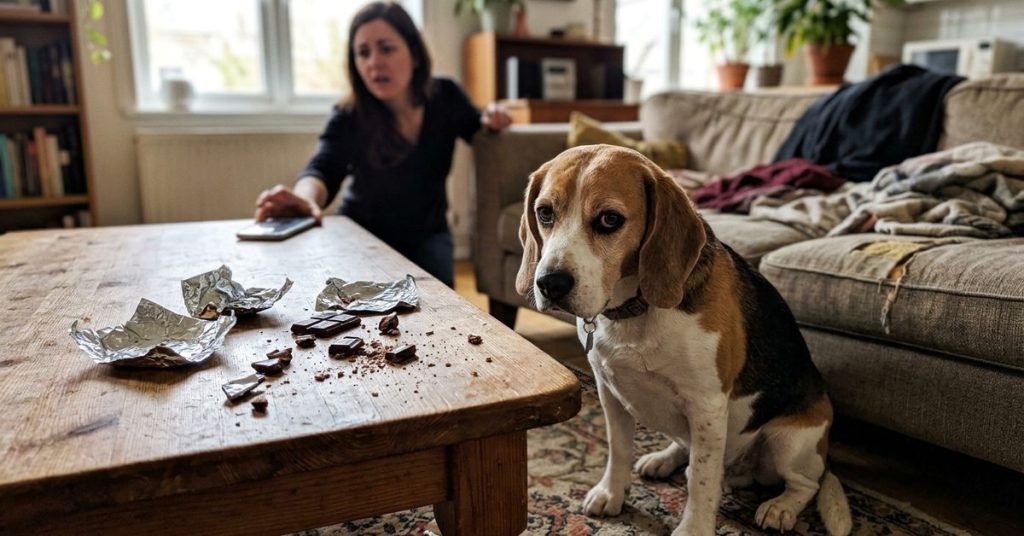
Dog ate chocolate: what to do?
Don’t wait for symptoms. Figure out what kind of chocolate, how much, and when your dog ate it, then call your vet or a pet poison helpline immediately. Dark and baking chocolate are the most dangerous. Never induce vomiting unless your vet tells you to.
If it’s after hours: find an open emergency vet near you on DaisyDu’s Live Vet Map →
Your dog ate chocolate: what to do in the next few minutes matters more than anything else. Don’t panic, but don’t take the “wait and see” approach either. Most dogs who eat a little milk chocolate are fine, yet chocolate can be genuinely dangerous, and the difference comes down to fast, correct action. Here is exactly what to do.
The First Few Minutes: What to Do Right Now
Work fast and in this order. Everything your vet needs to help you comes from these three steps.
Step 1: Gather the facts
What kind of chocolate was it (dark, milk, white, baking cocoa, cake)? How much is missing? When did your dog eat it, and how much does your dog weigh? Check the wrapper for the cocoa percentage and snap a photo of the ingredient label. Guessing wastes time later.
Step 2: Call your vet or a pet poison helpline immediately
Do this before symptoms appear. Your vet (or the ASPCA Animal Poison Control Center) will calculate the risk from the chocolate type, amount, and your dog’s weight, then tell you whether to come in, monitor at home, or induce vomiting. This call is the single most important thing you do today.
Step 3: Do NOT induce vomiting on your own
Hydrogen peroxide vomiting is only safe when a vet directs it, for the right substance, at the right time. Done wrong, it causes more harm than the chocolate. Wait for professional instructions.
What Your Vet Will Ask You
Have these answers ready so the call takes two minutes instead of ten: the type of chocolate and its cocoa content, the estimated amount eaten, your dog’s weight, when it happened, and any symptoms so far (restlessness, drooling, vomiting, diarrhea). The vet uses all five to decide whether this is a monitor-at-home situation or a rush-to-the-clinic one.
Why Dark Chocolate Is More Dangerous
The culprit is theobromine, a compound dogs metabolize very slowly. VCA Animal Hospitals explains that darker, more bitter chocolate contains far more theobromine than milk chocolate, which is why a small square of baking chocolate can be riskier than a whole milk chocolate bar. White chocolate carries very little. Smaller dogs face higher risk from the same amount because the dose is concentrated in less body weight.
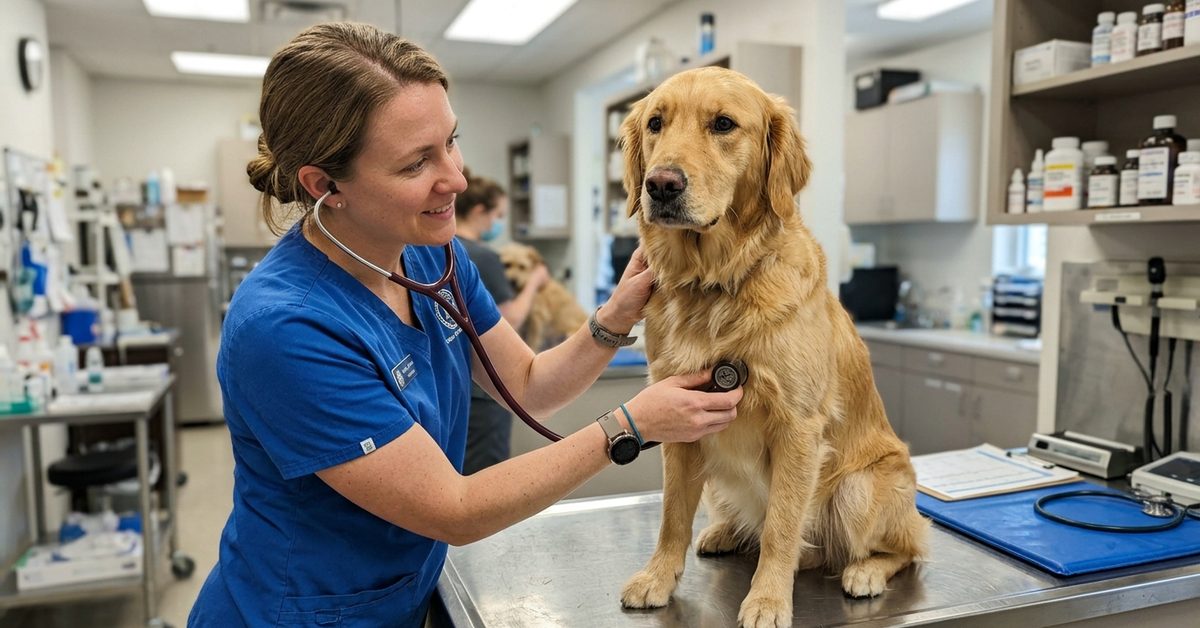
Symptoms to Watch For Tonight
Signs usually build over several hours, so keep watching even if your dog seems fine at first. Call your vet back immediately if you see vomiting or diarrhea, unusual restlessness or hyperactivity, rapid breathing or panting, muscle tremors, or collapse. If your dog starts having a seizure, follow our seizure guide while someone calls the vet. Repeated vomiting on its own also warrants a call, since dehydration stacks onto the toxicity risk. Most people searching dog ate chocolate what to do land here at night, when the vet’s office is closed and worry is highest. Save this page.
When to Rush to the Vet
Seizures, collapse, or a racing heartbeat after chocolate ingestion are emergencies. Do not drive around hoping it passes. Find an open emergency vet near you on DaisyDu’s Live Vet Map →
My Dog Ate Chocolate but Seems Fine
Call anyway. Theobromine absorbs slowly, and symptoms often take 6 to 12 hours to appear. A dog that looks perfectly happy at hour two can be in trouble by hour eight. Your vet may still want to see your dog, or may clear you to monitor at home with specific instructions on what to watch for and when to come in.
What About Chocolate Cake, Cookies, or Cocoa Powder?
Baked goods contain less concentrated cocoa, but they bring their own hazards. Check the label for xylitol (birch sugar), a sugar-free sweetener that is extremely toxic to dogs even in tiny amounts, plus coffee, espresso, and macadamia nuts. Cocoa powder is the most concentrated chocolate of all, so treat it like baking chocolate. When in doubt, call with the ingredient list in hand.
Prevent the Next Scare
Dogs explore the world with their mouths, so anything not dog-safe needs to live behind a closed door. That includes chocolate in all forms, and while you’re at it, human toothpaste, which is also toxic to dogs. Secure trash cans with locking lids, keep counters clear before you leave the kitchen, and teach a rock-solid “leave it” for dropped food on walks. The best dog ate chocolate what to do guide is the one you never need.
Save your vet’s number and the ASPCA poison helpline in your phone now, before you need them. In a panic, nobody wants to be Googling a phone number.
How much chocolate will kill a dog?
There is no single number: it depends on the chocolate type, the amount, and your dog’s weight. Dark and baking chocolate are dangerous in much smaller amounts than milk chocolate. Never try to math it out yourself. Call your vet with the wrapper details and let them calculate the risk for your specific dog.
My dog ate chocolate hours ago and seems fine. Are we in the clear?
Not necessarily. Theobromine absorbs slowly, so symptoms often appear 6 to 12 hours after ingestion. If several hours have passed with no signs, that is encouraging, but still call your vet to confirm. Keep monitoring through the night for restlessness, vomiting, or rapid breathing.
Can a dog survive eating chocolate?
Yes. Most dogs survive chocolate ingestion, especially with prompt veterinary care. VCA Animal Hospitals notes that with early treatment, the prognosis is generally good. The danger grows when treatment is delayed, the amount is large, or the chocolate is dark. Fast action is what separates a scare from a tragedy.
What should I do if my dog ate chocolate cake?
Treat it seriously and call your vet with the ingredient list. Cake has less concentrated cocoa than a chocolate bar, but watch for xylitol in sugar-free recipes, which is far more toxic than chocolate itself. Coffee, espresso, and macadamia nuts in baked goods are separate hazards worth mentioning on the call.
Need Local Pet Support or an Open Vet Near You?
Use DaisyDu's free neighborhood tools to find 24/7 open emergency animal hospitals, arrange local playdates, or broadcast a lost pet SOS alert.