
What to do if your dog is having a seizure?
Stay calm and start timing it. Clear furniture away, dim the lights, and keep your hands away from their mouth. Don’t hold them down. If it lasts more than five minutes, call your vet or emergency clinic immediately.
The first rule of what to do if your dog is having a seizure is counterintuitive: freeze, and put your hands in your pockets. Never grab their tongue, never pin them down, never panic. Do the opposite of every panicked instinct, and you’ll keep both of you safe.
Step 1: Stay Calm and Start Timing
Your reaction sets the tone. Take a breath and start a timer on your phone the moment you notice the seizure. Duration is the single most important detail for your vet: most seizures last one to two minutes and stop on their own. Knowing exactly how long it lasted turns a scary blur into useful medical information.
If someone else is home, have them time while you clear the area. Two calm people beat one panicked person trying to do everything.
Step 2: Clear the Area Around Them
Gently slide furniture, sharp objects, and anything breakable away from your dog. Dim the lights and lower the noise if you can. Move other pets to another room: a curious dog or cat crowding a seizing dog can cause a bite or trigger more stress. You are making the space safe, not holding the dog still.
Step 3: Keep Your Hands Away From Their Mouth
This is the myth that hurts people. You may have heard you should pull the tongue out or wedge something between the teeth. Don’t. Dogs cannot swallow their tongues during a seizure. A jaw locked in spasm can clamp down with enormous force, and a bitten hand helps no one. The bravest part of what to do if your dog is having a seizure is doing nothing with your hands.
Step 4: Don’t Hold Them Down
Let the seizure run its course. Restraining a seizing dog doesn’t shorten the episode. It risks injuring both of you and can escalate their panic when they come around. Stay nearby, speak in a low, calm voice, and wait. Most seizures burn out within a couple of minutes.
When It’s an Emergency: Get Help Now
Call your vet or emergency clinic immediately if: the seizure lasts more than five minutes (veterinarians call this status epilepticus, and VCA Animal Hospitals flags it as life-threatening); your dog has two or more seizures within 24 hours; they have trouble breathing; the seizure happens in water; or your dog is diabetic, pregnant, or a young puppy. Find an open emergency vet near you on DaisyDu’s Live Vet Map →
After the Seizure: The Confused Minutes
What follows is called the post-ictal phase. Your dog may pace, stumble, drool, seem blind, or not recognize you. This looks alarming but is normal, and it usually passes within the hour. Keep the room dim and quiet, offer water once they’re steady on their feet, and keep them away from stairs. Just be present.
The Vet Visit: What Happens Next
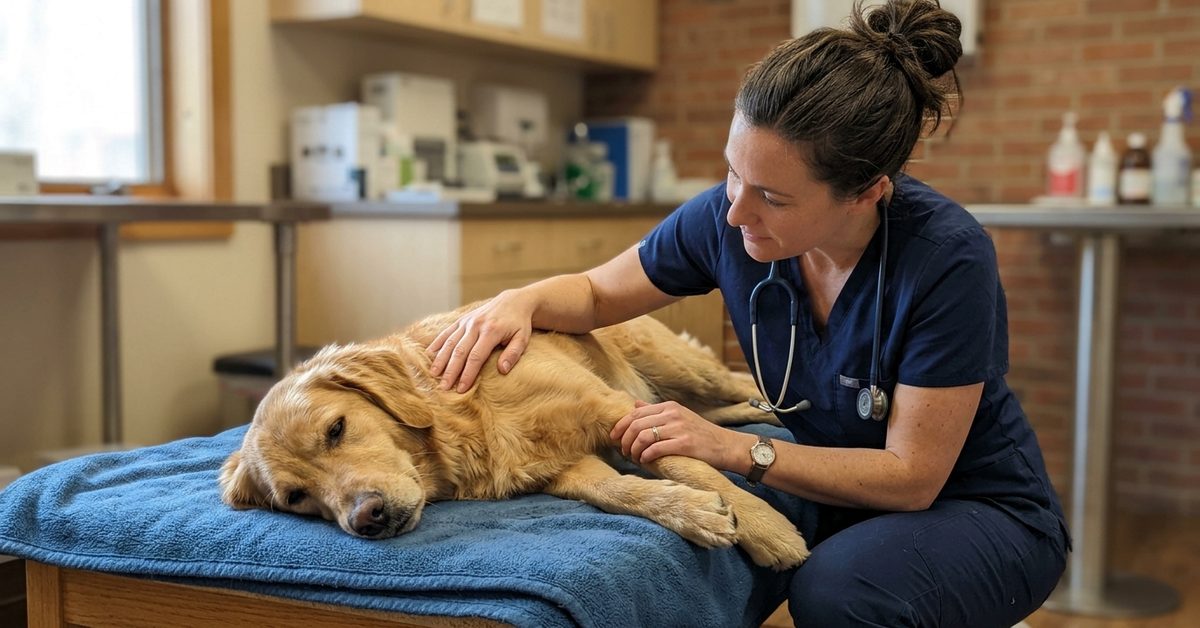
See your vet after any first seizure, and after any change in an existing pattern. Bring your timing notes and any video you captured. Your vet will likely ask: how long did it last, how often do episodes happen, was there anything unusual beforehand (a missed medication, possible toxin exposure, a head injury), and how long did recovery take. Bloodwork often follows to rule out liver, kidney, or toxin-related causes.
If your dog may have eaten something poisonous, tell the vet immediately, and read what to do if your dog ate chocolate while you wait. To understand why seizures happen in the first place, see why dogs have seizures.
Keep a Seizure Diary From Now On
Knowing what to do if your dog is having a seizure also means preparing for the next one. Log every episode: date, time of day, duration, and what happened right before and after. Patterns in the diary (always after excitement, always at night) help your vet choose treatment. Many dogs with epilepsy live full, happy lives on daily medication.
Ask your vet about emergency rescue medication to keep at home if your dog has cluster seizures. For some dogs it is a genuine lifesaver, and having it on hand turns a terrifying night into a manageable one.
Should I put my hand in my dog’s mouth during a seizure?
No, never. Contrary to the old myth, dogs cannot swallow their tongues during a seizure. Your hand near those jaws is the real danger: a seizing dog can bite down with tremendous force without knowing it. Keep your hands well clear and focus on timing the seizure and keeping the area safe instead.
Should I video my dog’s seizure?
Yes, if you can do it safely from a few feet away. A short video is one of the most useful things you can bring your vet: it helps distinguish true seizures from fainting or tremors and shows exactly what the episode looked like. Prop your phone up, keep your hands off the dog, and keep filming until it ends.
My dog seems blind and confused after a seizure. Is that normal?
Yes, this is the post-ictal phase, and it can look alarming. Dogs may pace, stumble, seem blind, or not recognize you for minutes to an hour after a seizure. Keep the room dim and quiet, speak softly, and let them recover at their own pace. If confusion lasts far beyond an hour, call your vet.
Can a single seizure cause brain damage in dogs?
A single brief seizure rarely causes lasting harm. The real risk comes from prolonged seizures (over five minutes) or cluster seizures, where the brain overheats and oxygen drops. That’s why timing every episode matters: it tells your vet whether you’re dealing with a one-off event or an emergency pattern.
Need Local Pet Support or an Open Vet Near You?
Use DaisyDu's free neighborhood tools to find 24/7 open emergency animal hospitals, arrange local playdates, or broadcast a lost pet SOS alert.