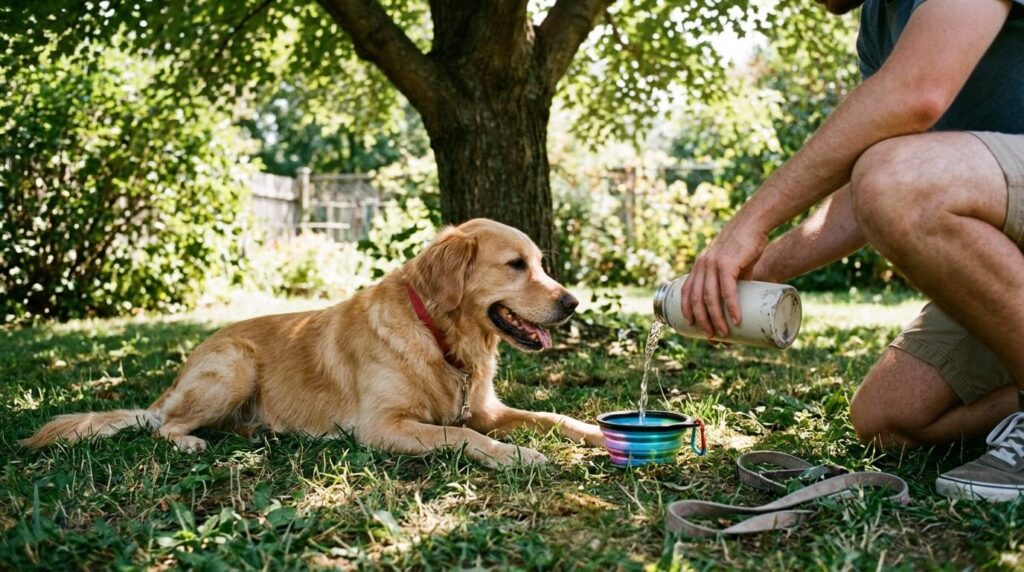
Signs of Overheating in Dogs
The early signs of overheating in dogs are heavy frantic panting that does not settle, thick drool, bright red gums or tongue, restlessness, and weakness or wobbliness. Move the dog to shade, offer small sips of cool water, wet the coat with cool water, and call your vet at once, since overheating can turn into heat stroke fast.
It is the hottest part of the afternoon, your dog has been chasing a ball for ten minutes, and the panting is not slowing down. That is the moment to act, not the moment to throw the ball one more time. Dogs cool themselves mostly by panting, and on a hot or humid day that system can fall behind fast. The good news is that the early signs are loud and visible, if you know what to look for, and fast cooling plus a vet call can stop a scary afternoon from becoming a medical emergency.
Emergency: Call the Vet Now
Call your vet or an emergency clinic at once if your dog collapses, has a seizure, cannot stand, vomits repeatedly, or has gums that look pale, gray, or purple. Cool first while you call: move to shade, wet the coat with cool water, and keep air moving with a fan. Do not force water into the mouth of a dog that cannot swallow safely. Find an open emergency vet near you on DaisyDu’s Live Vet Map
The Early Signs: Catch It Before It Escalates
The signs of overheating in dogs usually arrive in a cluster, and the first ones are easy to spot once you know them. The American Kennel Club lists frantic or excessive panting, extreme salivation or thick saliva, bright red gums or tongue, labored breathing, weakness or inability to stand, and vomiting or diarrhea. Chewy’s vet reviewed guide adds restlessness, stumbling, and seeking shade or water to that picture.
Compare what you see to your dog’s normal panting after play. Normal panting slows down within a few minutes of rest in the shade. Overheating panting stays frantic, sounds harsh, and does not settle. Thick drool that strings from the mouth, a tongue that looks unusually bright red, and a dog that keeps moving restlessly instead of lying down to rest are all early warnings. A dog that suddenly stops playing, lies flat, or seems confused about where it is has already moved past the early stage.
Some dogs are at higher risk, and the AKC names them clearly: flat faced breeds that already work harder to breathe, puppies, senior dogs, dogs with thick or double coats, dark coated dogs that absorb more sun, and overweight dogs. If your dog falls into one of these groups, your margin for error on a hot day is smaller, and you should stop play earlier than you think you need to.
Heat Exhaustion or Heat Stroke in Dogs?
Owners often ask whether their dog has heat exhaustion or full heat stroke, and in the moment the label matters less than the response. Think of it as one sliding scale. Early overheating brings heavy panting, drool, red gums, and restlessness. As it progresses, you see weakness, vomiting or diarrhea, stumbling, and confusion. At the severe end, the AKC notes that a dog’s temperature may exceed 106 degrees Fahrenheit, with gray or purple gums, seizures, collapse, or coma.
That is why the advice in this guide is the same at every stage: stop the activity, start cooling, and call the vet. Do not try to grade the emergency yourself while your dog is getting worse. Signs of heat exhaustion in dogs and signs of heat stroke in dogs overlap heavily, and only a vet with a thermometer and an examination can tell you how far along the scale your dog is. Even a dog that seems to recover after cooling needs a vet check, because internal damage can show up hours later, a point the AKC stresses.
First Aid: Cool First, Then Transport
If you see signs a dog is overheated, act in this order:
- Stop all activity at once and move the dog to shade or air conditioning.
- Offer small sips of cool water. Do not force drinking, and do not let a very hot dog gulp large amounts at once.
- Wet the whole coat with cool water, focusing on the belly, armpits, and inner thighs, and keep air moving with a fan or air conditioning.
- Place damp towels on the dog if you have them, and rewet them as they warm up.
- Call your vet while you cool, and keep cooling during transport unless your vet tells you otherwise.
Use cool water, not ice water, and do not pack the dog in ice. Very young, senior, flat faced, or collapsed dogs are especially vulnerable to overcooling, and PetSafe’s vet reviewed guidance advises wetting the coat thoroughly and using a fan for those dogs rather than full ice water immersion. Never put a dog in a cold bath and walk away, and never cover a hot dog with a dry blanket, which traps heat. The goal is steady, gentle cooling while help is on the way.
Once at the clinic, the vet will check temperature, hydration, and organ function, and may give fluids and monitor the dog for delayed problems. Dog heat exhaustion symptoms can look better long before the body has fully recovered, so follow the vet’s monitoring instructions even if your dog seems back to normal by the evening. Watch for vomiting, diarrhea, dark urine, unusual tiredness, or loss of appetite in the day after an episode, and report them promptly.
What Causes Overheating in the First Place
Exercise on a hot or humid day is the most common trigger, but it is far from the only one. A dog left in a parked car can overheat in minutes, even with windows cracked, because the inside of a car heats far faster than the air outside. Never leave a dog in a parked car. A dog in a sunny yard with no shade or water, a dog walked on hot pavement at midday, and a dog exercised right after eating a large meal are all at risk too.
Humidity matters as much as temperature, because panting cools by evaporation, and humid air slows evaporation down. A day that feels merely warm to you can be dangerous for a flat faced dog working hard in humid air. Our guide to hot pavement and dog paws covers the ground temperature side of summer walks, and how far to walk your dog helps you set sensible limits for your dog’s age and fitness. If your dog has a seizure during an overheating episode, our guide to what to do if your dog is having a seizure covers the during event steps. For the cost side of an emergency trip, see emergency vet visit cost.
Preventing Overheating: The Summer Rules That Work
Prevention is mostly about timing and shade. Walk in the early morning or late evening when the heat has eased, and keep midday outings short and shaded. Carry water on every warm weather walk, and offer it often rather than waiting for your dog to ask. Give your dog a shaded rest spot and a cool surface to lie on, and watch brachycephalic, senior, and overweight dogs extra closely.
Build fitness gradually in spring so your dog is not going from winter couch to summer sprint in one weekend. Never rely on a fur trim to fix heat risk: a coat also insulates against sun, and shaving a double coated dog can make things worse, so ask your vet or groomer before changing your dog’s coat for summer. And make a car rule with no exceptions: if the dog cannot come inside with you, the dog does not come on that trip. Knowing the signs of overheating in dogs before summer starts is what lets you stop play early instead of reacting late.
Overheating is one of the few emergencies where minutes genuinely matter and where the owner is the first responder. Learn the early signs, stop early, cool steadily, and call the vet every time, even when the dog looks fine again. That habit is what turns a frightening afternoon into a story you tell later, instead of a crisis you wish you had caught sooner.
Can dogs overheat indoors?
Yes. A hot room with no airflow, a crate in direct sun through a window, or a dog left in a warm garage can all cause overheating without any exercise. Keep indoor rest spots shaded and ventilated, give constant access to fresh water, and never leave a dog in a room that keeps heating up through the day.
Is it safe to pour cold water on an overheating dog?
Cool water is the right choice; ice cold water and ice packs are not the first step for most dogs. Wet the coat thoroughly with cool water, focus on the belly and inner thighs, and keep air moving with a fan. For very young, senior, flat faced, or collapsed dogs, avoid full ice water immersion.
How long does it take a dog to recover from overheating?
Mild cases may look normal within an hour of cooling, but recovery is not complete when the panting stops. Vets often monitor for delayed organ effects, and owners should watch for vomiting, diarrhea, tiredness, or appetite loss over the next day. Follow your vet’s recheck advice even if your dog seems fully recovered.
Do short nosed dogs overheat more easily?
Yes. Flat faced breeds work harder to move air through shorter airways, so panting cools them less efficiently and heat builds faster. The AKC warns that anything making these dogs breathe harder adds stress to their airways. Keep their exercise short, their rest spots cool, and your threshold for stopping much lower than for other dogs.
Need Local Pet Support or an Open Vet Near You?
Use DaisyDu's free neighborhood tools to find 24/7 open emergency animal hospitals, arrange local playdates, or broadcast a lost pet SOS alert.