How hot is too hot to walk a dog?
If you can’t press the back of your hand to the pavement for 7 seconds, it’s too hot for your dog’s paws. As a rough guide, air temperatures above the mid-80s°F make most pavement risky. Walk early or late, stick to grass, and check paws after every summer outing.
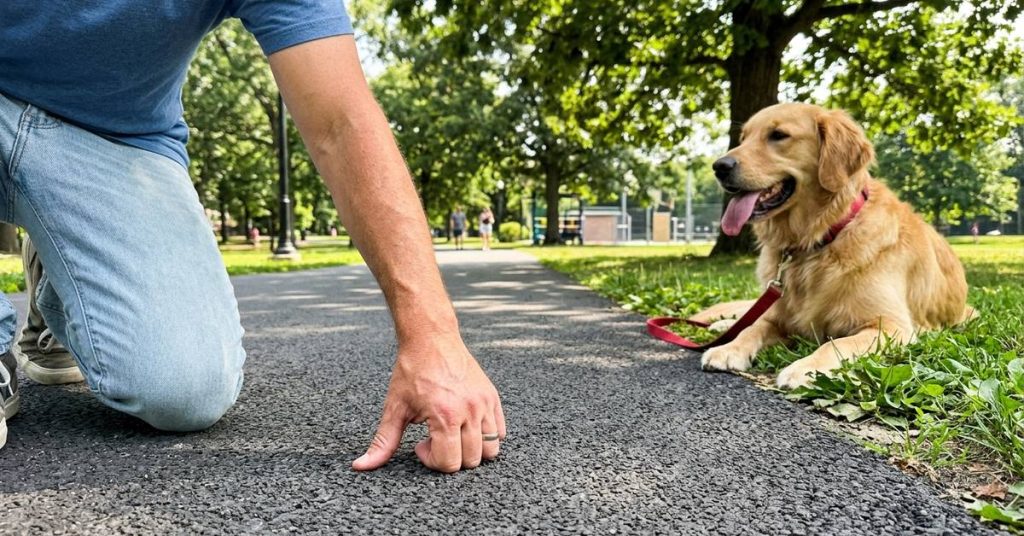
Figuring out how hot is too hot to walk a dog starts with a moment like this: your dog stops mid-stride, lifts one paw, and looks back at you. That look means the ground is already hurting. The good news is you can know before the first step, with a test that takes seven seconds and zero equipment.
How to Do the 7-Second Test
Here’s the exact method. Press the back of your hand flat against the pavement and hold it there for a full seven seconds. Not the palm: the back of your hand has thinner, more sensitive skin, closer to what your dog’s paw pads feel. If you have to pull away at any point, the walk waits.
Test the actual surface you’ll walk on, in the sun, not the shaded patch by your door. Asphalt runs hottest, concrete is a step cooler, and pale surfaces reflect more heat. Test again if you’ve been out a while: pavement keeps absorbing heat well into the afternoon.
Make it a habit, not a one-off. Test every summer walk, even on days that “don’t feel that hot.” Air temperature lies; the ground tells the truth.
Why This Simple Test Works
Your dog’s paw pads are tough, but they’re skin, not shoes. They have no insulation against conducted heat, and dogs barely sweat through them, so heat builds fast. Meanwhile pavement is a heat battery: dark asphalt absorbs sunlight all day and can run far hotter than the air above it. Your hand is a decent stand-in for a paw pad because both are bare skin meeting the same surface. That’s the whole logic behind how hot is too hot to walk a dog: bare skin, hot surface, no protection.
Pavement Temperature: A Rough Guide
Hot pavement dog paws temperature is the part everyone wants as a number. This table is a rough guide, not a guarantee: surface color, shade, and humidity all shift the real numbers. When in doubt, trust the hand test over the chart.
| Air temp (approx) | Asphalt in direct sun (approx) | Verdict |
|---|---|---|
| 77°F / 25°C | ~125°F / ~52°C | Caution: test before every walk |
| 87°F / 30°C | ~135°F / ~57°C | Risky: grass routes or early/late walks only |
| 95°F / 35°C | ~140°F+ / ~60°C+ | Skip pavement: burns can happen fast |
5 Signs Your Dog’s Paws Are Burning
Dog paw burns in summer are easy to miss until they’re serious. Watch for these:
- Lifting paws or hopping between steps, as if the ground is lava.
- Sudden limping on a walk that started fine.
- Obsessive licking or chewing at the paws afterward.
- Red, darkened, or peeling pads, or visible blisters between the toes.
- Refusing to keep walking or pulling hard toward grass and shade.
Check pads after every hot-weather walk, the same way you’d check your own feet after a beach day. Caught early, most pad irritation heals with rest. Ignored, it blisters.
Too Hot? Walk Like This Instead
A failed hand test doesn’t cancel the walk, it reschedules it. Once you can judge how hot is too hot to walk a dog at a glance, summer becomes a scheduling game instead of a guessing game.
- Walk at dawn or after sunset, when pavement has had hours to cool.
- Stick to grass, dirt trails, and shaded paths. Natural surfaces stay dramatically cooler than asphalt.
- Shorten the outing and make up the exercise with indoor play or training games. Here’s how far to walk your dog by age and breed so you can adjust without guessing.
- Carry water and offer it often; hot days dehydrate dogs faster than you’d expect.
Boots and Paw Wax: Real Protection
When the route can’t avoid pavement, protect the paws directly. Dog boots are the most reliable option: they put a physical barrier between pad and asphalt. Fit matters more than brand. Measure the paw, choose breathable summer styles, and let your dog practice indoors first, because every dog walks like a newborn deer in boots for the first ten minutes.
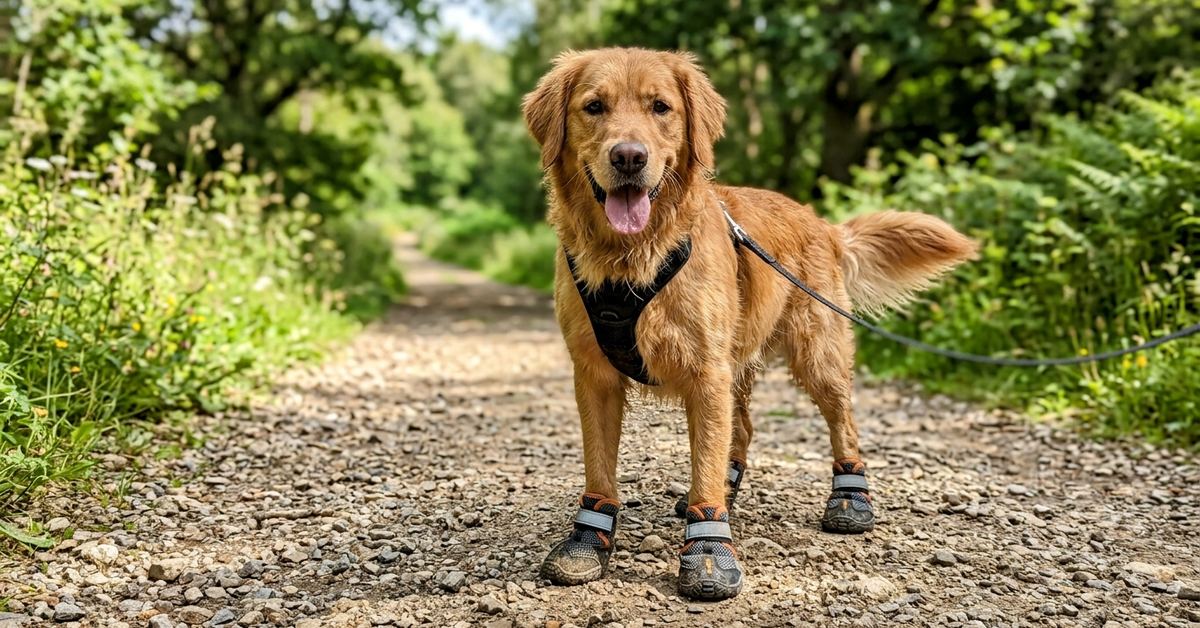
Paw wax is the lighter alternative: a balm rubbed into the pads that adds a thin protective layer and moisturizes against cracking. It won’t match boots on truly scorching pavement, but for warm (not blazing) days it’s far better than nothing. Check straps and wax wear halfway through long outings.
Heatstroke Warning
Hot pavement and heatstroke go together. VCA Animal Hospitals lists excessive panting, thick drooling, bright red gums, vomiting, and collapse as heatstroke signs, and it can turn fatal fast. Move your dog to shade, offer cool (not ice-cold) water, and get help immediately. Find an open emergency vet near you on DaisyDu’s Live Vet Map →
Learn the full picture in our heatstroke signs and treatment guide before summer hits its stride.
Find Shaded Routes With DaisyDu
The easiest hot-weather win is route choice. Browse dog-friendly trails on DaisyDu to find shaded, natural-surface walks near you, then track your outings with the GPS walk tracker so your cool-route rotation is always one tap away.
Can dogs walk on hot pavement at all?
Brief crossings are fine: driveway to grass, sidewalk to park. What paws can’t handle is sustained walking on sun-baked asphalt. Distance and duration are what cause burns, so test the pavement every time, keep hot-surface stretches short, and reroute onto grass whenever you can.
Do dog boots actually work in summer heat?
Yes, when they fit properly. Boots put a real barrier between pad and pavement, which wax alone can’t match on the hottest days. Choose breathable styles, measure the paw rather than guessing by breed, and do practice laps indoors first. Check for rubbing after the first few outings.
What temperature burns a dog’s paws?
Pavement around 125°F can burn paws within about a minute of contact, and dark asphalt reaches that on days in the low 80s°F air temperature. At 140°F-plus, which asphalt hits when air temperatures climb into the 90s, damage happens even faster. These are rough figures, which is exactly why the 7-second hand test beats memorizing numbers.
My dog burned their paws on hot pavement. What should I do?
Soak the paws in cool (not ice-cold) water, keep your dog off pavement until healed, and keep the pads clean and dry. Don’t apply ointments unless your vet advises it. If you see blistering, peeling, or limping that doesn’t ease within a day, get to a vet: pad burns infect easily and hurt more than they look.
Need Local Pet Support or an Open Vet Near You?
Use DaisyDu's free neighborhood tools to find 24/7 open emergency animal hospitals, arrange local playdates, or broadcast a lost pet SOS alert.