Can Puppies Eat Cat Food?
The short answer to can puppies eat cat food is no, not as a regular food. A single stolen mouthful is unlikely to harm a healthy puppy, but cat food is made for cats, not growing dogs, and feeding it regularly can cause stomach upset, excess weight, and gaps in the nutrition a puppy needs to grow properly.
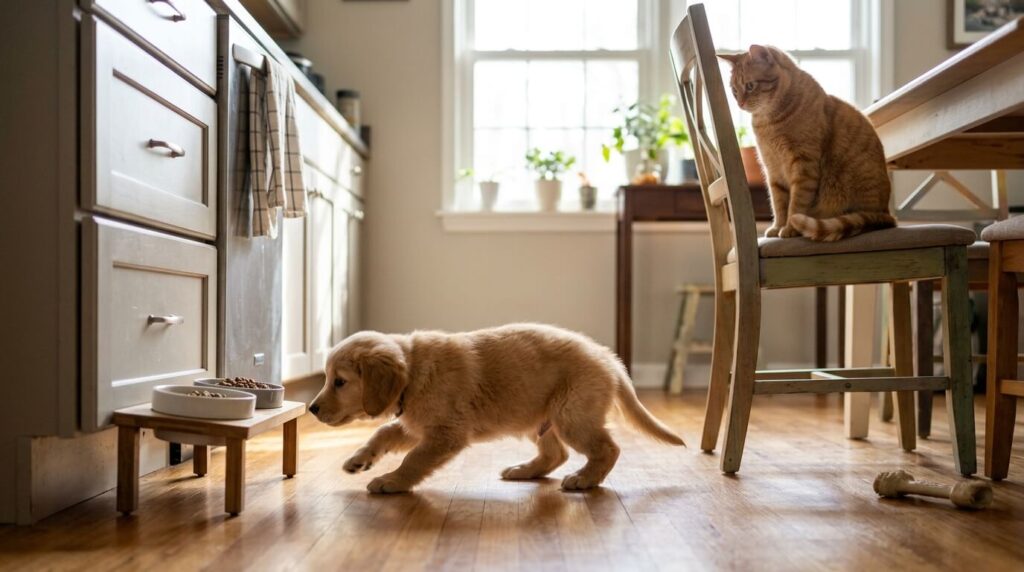
Cat food and dog food sit side by side on the shelf, they smell similar, and your puppy clearly prefers the cat’s bowl. That is exactly why this question comes up in so many multi pet homes. The two foods look interchangeable, but they are built for two very different animals, and a puppy is the worst candidate for swapping one for the other, because a puppy’s growth leaves no room for nutritional guesswork.
Why Cat Food Does Not Fit a Puppy
Cats are obligate carnivores, meaning their bodies are built to get their nutrition from meat, while dogs are omnivores that need a broader mix of nutrients. Cat food reflects that difference: it is typically richer in protein and fat than puppy food, and it is balanced for a cat’s needs, not a puppy’s growth. FirstVet puts it plainly: cat food should not be given to puppies, and it has a higher fat and protein content than dog food, making it harder for dogs to digest and increasing the risk of excess weight gain.
The mismatch is not about one ingredient. Puppy food is formulated with the calcium, phosphorus, vitamins, and overall balance that growing bones, brains, and immune systems need at each stage. Cat food is formulated with a different balance, including nutrients cats must get from food, such as taurine, at levels set for cats. A puppy eating cat food day after day is therefore getting too much of some things, too little of others, and none of the growth stage balance its own food would provide. That is a slow problem, not an instant poisoning, which is why it is easy to miss until weight or digestion problems show up.
What Happens If a Dog Eats Cat Food
What happens if a dog eats cat food depends on how much and how often. One stolen bowl is the most common scenario, and for a healthy puppy it usually means, at worst, a soft stool or a brief upset stomach, because rich food is a shock to a young gut. Pawlicy notes the same pattern for dogs generally: an abrupt switch to a diet made for another species is very likely to cause diarrhea, and high fat diets can contribute to pancreatitis, a serious condition that needs vet care.
The picture changes with repetition. Is cat food bad for dogs when it becomes a habit? Yes, and the risks stack up: steady weight gain from the richer food, ongoing digestive upset, and nutritional imbalance over weeks and months. Pawlicy also flags dental effects, since small cat kibble does not give a medium or large puppy the chewing work its teeth and jaws need. Dogs with existing problems are at higher risk from even occasional cat food: dogs with sensitive stomachs, liver or kidney disease, or a tendency toward pancreatitis should be kept away from it entirely, and their owners should ask a vet rather than guessing.
Can dogs eat canned cat food specifically? The same answer applies. Wet or dry, the formulation is still made for cats, and wet cat food is often even richer and more tempting, which makes it harder to keep a determined puppy away from. The form does not fix the mismatch.
Is It Bad for Puppies to Eat Cat Food?
Is it bad for puppies to eat cat food once? Almost certainly not in a lasting way, and there is no need to panic over a single raid on the cat’s bowl. Watch for vomiting or diarrhea over the next day, keep fresh water available, and go back to normal puppy food at the next meal. Is it bad as a routine? Yes, clearly. That is the real answer to the question can puppies eat cat food every day: no. A puppy fed cat food as its main diet is missing the growth balance its body is counting on, while taking in extra fat and calories it does not need.
Can a dog eat cat food as an adult? A healthy adult dog handles an occasional mouthful better than a puppy does, but even for adults, cat food is not a good staple. The adult version of this question comes down to the same rule: occasional theft is a mess to clean up, regular feeding is a diet mistake. If your puppy keeps getting into the cat food, the fix is management, not a new feeding plan. Feed the cat and the puppy in separate rooms, pick up the cat’s bowl between meals if your cat will tolerate scheduled feeding, and put the cat’s bowl somewhere the puppy cannot reach, such as a high surface or behind a pet gate the cat can jump.
What to Feed Instead
Feed a complete puppy food made for dogs, matched to your puppy’s expected adult size where the label offers a size range, and follow the feeding guide on the pack as a starting point, adjusting with your vet as your puppy grows. Small breed and large breed puppies grow at different rates, and your vet can confirm whether your puppy’s food and portion still fit at each checkup. Keep treats, including any table food, to a small share of daily intake so they do not unbalance the main diet.
If your puppy has already been eating cat food for a while, switch back gradually over several days by mixing increasing amounts of puppy food into the cat food, rather than changing everything in one meal. That gentler switch reduces the stomach upset that a sudden change can cause. If your puppy has vomiting, diarrhea that lasts more than a day, blood in the stool, or seems lethargic after eating cat food, call your vet. Our guides to dog diarrhea home treatment and how long a dog can go without eating explain when gut symptoms and appetite loss need a vet rather than watchful waiting.
The Mirror Question: Can Cats Eat Dog Food?
Keep this section short, because it is a separate topic with its own full guide coming later. In brief, cats should not eat dog food as a staple either, and for cats the risk is sharper: dog food lacks the taurine and other nutrients cats must get from their food, and a cat fed dog food long term can develop serious heart and vision problems. A cat stealing the occasional piece of dog kibble is not an emergency, but a cat living on dog food is a real nutritional risk. The rule runs both ways: feed each species its own food, and treat cross species stealing as a management problem to solve, not a diet to adopt.
So when someone asks can puppies eat cat food, the honest answer stays the same: not as a food, only as an accident. Keep the bowls separate, keep the puppy on puppy food, and do not let a successful cat food raid convince you the foods are interchangeable. Your puppy chose the cat’s bowl because it smells richer, not because it knows what its growing body needs. That part is your job, and the simplest version of it is also the correct one: puppies eat puppy food, cats eat cat food, and everyone stays healthier for it.
Can puppies eat cat treats?
Cat treats are made for cats and are best kept away from puppies, though a single small treat is unlikely to cause harm. The issue is the same as with cat food: the nutritional balance is set for cats, and treats add calories without adding what a growing puppy needs. Use puppy treats instead.
What should I do if my puppy ate a whole bowl of cat food?
Stay calm and watch for vomiting, diarrhea, or a sore belly over the next 24 hours. Offer fresh water and return to normal puppy food at the next meal. Call your vet if vomiting or diarrhea persists, if you see blood, or if your puppy seems lethargic or refuses food.
Is kitten food also bad for puppies?
Yes, the same rule applies. Kitten food is formulated for growing cats, with a nutrient balance set for kittens, not puppies. It is richer than puppy food and misses the growth balance puppies need. Keep kitten food, adult cat food, and cat treats all out of your puppy’s reach, and feed your puppy a food made for puppies.
Why does my puppy prefer cat food to its own food?
Cat food is usually richer in fat and protein and smells stronger, which makes it more tempting, especially to a puppy that is still learning what food is. Preference is not nutritional wisdom. If your puppy refuses its own food, check freshness, try a different puppy food texture with your vet’s guidance, and rule out illness first.
Need Local Pet Support or an Open Vet Near You?
Use DaisyDu's free neighborhood tools to find 24/7 open emergency animal hospitals, arrange local playdates, or broadcast a lost pet SOS alert.