Dog Park Etiquette: The Rules in 60 Seconds
Dog park etiquette comes down to three things: bring only a healthy, vaccinated dog that genuinely enjoys other dogs; watch your dog for the entire visit; and step in early, before play turns into a problem. Nearly every rule posted at a park gate, from leash zones to cleanup, is a version of one of those three.
Picture a crowded Saturday at the park. A husky barrels into a nervous pug, an owner scrolls their phone in the corner, and nobody is quite sure who owns the toy everyone is now fighting over. Most of that chaos is preventable. The rules below are the written and unwritten ones that keep the park safe, and most of them take ten seconds to follow.
Before You Go: The Rules That Start at Home
Good dog park etiquette starts before you touch a leash. Four checks decide whether today is a park day at all, and getting these right avoids most of the conflicts that happen inside.
Rule 1: Vaccinations and License Up to Date
Most city-run dog parks in the US require a current rabies vaccination and a city or county dog license, and some require the tag on the collar while inside. Rangers rarely check at the gate, but if there is ever a bite, your paperwork is the first thing anyone asks for. Keep a photo of your license and vaccine records on your phone.
Rule 2: Leave Puppies Under Four Months at Home
Many parks post a minimum age of four months because young puppies have not finished their vaccine series yet. A crowded park is also a lot for a puppy brain to process. Short, calm meetings with one or two known adult dogs teach far more than a free-for-all, and our puppy playdates page lists gentler ways to socialize.
Rule 3: Sick Dogs and Females in Heat Stay Home
A cough, diarrhea, or anything that might be contagious means skipping the park until it clears up. The same goes for an unspayed female in heat, which changes the behavior of every intact male in the park and is how scuffles start. When in doubt, take a leashed walk instead. It is still a good day out.
Rule 4: Know Whether Your Dog Is a Dog-Park Dog
Not every dog enjoys the park, and that is fine. A dog that spends the whole visit hiding, barking nonstop at the fence, or freezing when approached is telling you something. One steady playmate or a structured walk can be a better fit, which we cover in the last section.
VCA Animal Hospitals suggests making your first visit without your dog. Walk the perimeter, check for hidden fence gaps, and watch how the regulars (human and canine) behave. Ten minutes of scouting tells you more than any review online.
At the Gate: Leash Zones and Entry Manners
Dog park etiquette really shows at the gate, where good entries set the tone for the whole visit. This is the part most newcomers get wrong.
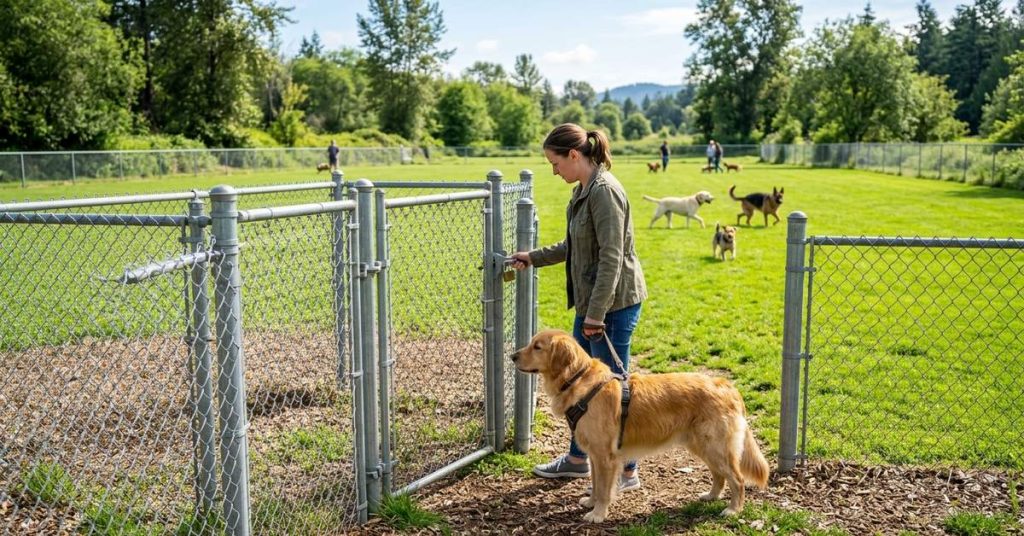
- Leash until you are inside the double gate. Keep your dog leashed through the parking lot and the transition area, then unleash once the gate closes behind you. A leashed dog meeting off-leash dogs can feel cornered, and that tension is how greetings go bad.
- Close one gate before opening the next. Never hold both gates open. Dogs bolt through open gates faster than you think.
- Call your dog away when newcomers arrive. If you are already inside, recall your dog while others enter. A crowd of excited dogs mobbing the gate is a classic recipe for a scuffle.
- Read the crowd before entering. If play looks rough or one dog is clearly being bullied, wait a few minutes or come back later. There is no prize for walking into a tense park.
Inside the Park: Watch Play Like a Referee
Once you are in, your job is simple: eyes on your dog, phone in your pocket. The single biggest etiquette breach at most parks is not aggression, it is owners who stop paying attention.
Rule 5: Learn the Body Language Basics
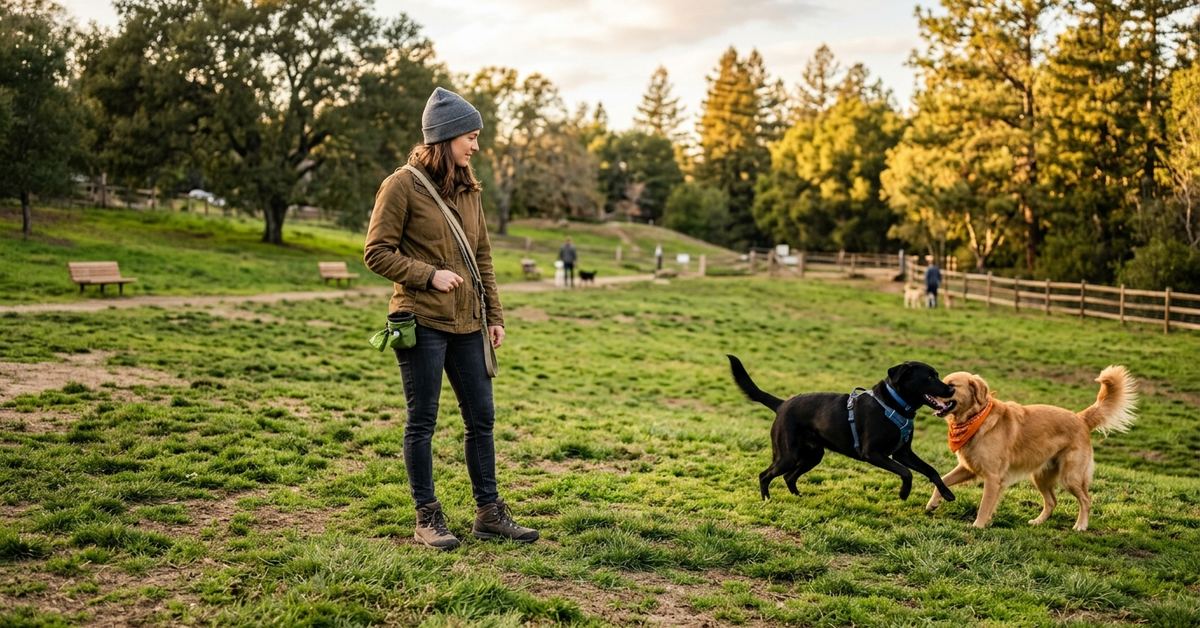
Healthy play is loose: play bows, bouncy movement, and dogs taking turns chasing each other. Warning signs include stiff bodies, hard stares, a dog that is always the pinned one, and mounting that does not stop after a redirect. If you want a deeper read, our guide on how to tell if dogs are playing or fighting breaks down the signals one by one.
Rule 6: Respect the Small-Dog Section
If the park is divided into small and large dog areas, use the one that fits your dog. The Finnish Kennel Club’s park guidance is direct on this: a large dog does not belong in the small-dog section, though a small dog may join the big dogs at the owner’s risk. Size mismatches are where injuries happen.
Rule 7: Pick Up Immediately
Bring your own bags, because the park dispenser is always empty when you need it. Picking up right away keeps the park usable and keeps other dogs from eating things they should not. Nobody wants to be the owner everyone is glaring at.
Rule 8: Skip the Toys and Treats
Leave the toy bag at home. VCA’s etiquette guidance notes that waving treats and toys around creates conflict between dogs, and you should never hand treats to someone else’s dog without their consent. Bring water and a bowl instead, your dog has living playmates for entertainment.
Rule 9: Kids Stay Close, If They Come at All
Many parks restrict young children, and VCA advises leaving them at home entirely. Even a dog-friendly dog can barrel over a toddler during a game of chase, and not every dog in the park is comfortable around kids. If your park allows children, keep them beside you and never let them run or wave food around.
Do a recall check-in every few minutes: call your dog to you, reward, release. It keeps you connected, gives overheated play a natural pause, and means your recall actually works on the day you really need it.
When to Leave: The Rule Most Owners Skip
Here is the dog park etiquette rule most owners skip: leave early. Leaving at the first sign of trouble is not giving up, it is the whole point. Dogs do not hold grudges about short visits, but they remember bad ones.
| Red flag | What to do |
|---|---|
| Your dog hides behind your legs or keeps heading for the gate | Call it a day. A short visit beats a bad one. |
| One dog is always the chaser and never the chased | Give both dogs a break. If it repeats, leave. |
| Mounting that continues after you redirect | Leash up and go. It usually escalates. |
| Play bows stop and bodies go stiff | Step in calmly and separate the dogs. |
| An owner ignores their dog’s aggressive behavior | Leave first. You can report the park to management later. |
When Can a Puppy Go to a Dog Park?
When can puppy go to dog park is a question with two answers: a legal one and a sensible one. Many parks post a minimum age of four months, and most vets advise waiting until the vaccine series is complete before mixing with unknown dogs in a busy park. Until then, short meetings with one or two known, vaccinated adult dogs teach far more than a crowded park, and our puppy socialization checklist shows how to build those early exposures step by step.
When your puppy is cleared for the park, make the first visits short, quiet, and supervised. Go at off-peak hours, stay near the gate for an easy exit, and leave while your puppy is still happy rather than waiting for overwhelm. A puppy that learns the park is calm and fun will grow into a dog that handles it well; a puppy flooded on day one may learn the opposite lesson.
Is the Dog Park Right for Your Dog?
If your dog finds the park overwhelming, that is information, not failure. Some dogs do far better with one steady playmate than twenty strangers. DaisyDu’s pet matchmaking lets you match dogs by size, age, and play style, so first meetings happen on friendly terms instead of at a chaotic gate. Or try a structured setting: the pet events calendar lists small-dog meetups and puppy playdates where groups stay small and supervised.
If your dog reacts strongly to other dogs, work through our guide on how to socialize a reactive dog before attempting the park. A dog park is the final exam, not the classroom.
Can I bring my intact dog to a dog park?
Usually, yes, unless your park posts a rule against it. Intact males often attract extra attention and testing from other males, and females in heat are almost always banned, because the scent can set off scuffles across the whole park. If your dog is intact, supervise closely and leave at the first sign of tension.
What should I do if another dog attacks my dog?
Get your dog out safely first, then swap contact details with the other owner while everything is fresh. Take photos of any injuries and visit your vet promptly, since puncture wounds hide under fur and infect fast. Report the incident to park management or animal control, and give your dog a few calm days before returning.
Why do some parks ban toys and tennis balls?
Toys are the number-one trigger for resource guarding, a dog that shares fine at home may snap over a ball at the park. Torn tennis balls also become a swallowing hazard. Many parks ban them outright, so leave the toy bag at home and bring water and a bowl instead; your dog has living playmates to entertain them.
Do I need a dog license to visit a dog park?
Often, yes. Most city-run parks require a current dog license and rabies tag, and some require the tag on the collar while inside. Rangers rarely check at the gate, but if a bite or fight happens, your paperwork is the first thing anyone asks for. Keep a photo of your license and vaccine records on your phone.
When can my puppy go to a dog park?
Most parks set a minimum age of four months, and most vets advise waiting until the vaccine series is finished before visiting a busy park with unknown dogs. Until then, use short, supervised meetings with known vaccinated dogs and follow a socialization checklist. First park visits should be brief, off-peak, and ended while your puppy is still happy.
Need Local Pet Support or an Open Vet Near You?
Use DaisyDu's free neighborhood tools to find 24/7 open emergency animal hospitals, arrange local playdates, or broadcast a lost pet SOS alert.