How to socialize a reactive dog
Work below your dog’s threshold, the distance where it notices a trigger but can still think and take a treat. Reward calm at that distance, end sessions before reactions start, and shrink the distance in small steps over weeks. Socializing a reactive dog is about changing how it feels, not forcing greetings.
Learning how to socialize a reactive dog starts with a walk that falls apart in three seconds: your dog spots another dog across the street, stiffens, barks, lunges, and you are both rattled for the rest of the block. The reframe that makes training work is this: your goal is not to make your dog love every stranger and dog it meets. It is to teach your dog that triggers at a distance predict good things, and that looking away and moving on pays better than reacting.
What Reactivity Really Means
Reactivity is an outsized reaction to something in the environment: barking, lunging, growling, spinning, or freezing at the sight of another dog, a stranger, a bike, or a loud sound. It is often driven by fear, frustration, or a mix of both, not by a dog being stubborn or badly behaved. A frustrated dog wants to get to the trigger. A fearful dog wants the trigger to go away. Both can look identical on a leash, which is why the first job is observation, not correction.
Watch your dog before the explosion. Common early signs include a closed mouth, ears pinned forward or back, a high stiff tail, hard staring, yawning, lip licking, and a sudden change in walking pace. Those signals are your early warning system. If you only notice the barking, you have already missed the moment when training was easiest.
One hard truth helps owners stay patient: socialization for a reactive dog does not mean flooding it with triggers until it gives up. Flooding, such as taking a reactive dog straight into a busy dog park, usually makes reactivity worse, because the dog practices the reaction again and again. The AKC and veterinary behavior sources consistently recommend gradual exposure paired with rewards instead (Evidence-informed).
Step One: Find Your Dog’s Threshold
Threshold is the line between noticing and reacting. Below it, your dog can see a trigger, hear you, and eat a treat. Above it, your dog cannot listen, will not eat, and is already reacting. Every plan in this guide lives below that line.
To find it, pick a quiet location with good sight lines, such as an empty parking lot or a wide field edge. Have a helper walk a calm dog or a person into view far away, or simply watch for triggers at a distance on a normal walk. Note the distance where your dog notices the trigger but stays loose enough to turn toward you for a treat. That distance is your starting point. It might be 50 feet, or it might be across a whole field. Both are fine.
Keep a simple log for a week: trigger type, distance, your dog’s body language, and whether it could take a treat. Patterns appear fast. Many dogs are fine with people but reactive to dogs, or calm with small dogs but not large ones, or only reactive on a narrow sidewalk where escape feels impossible.
Step Two: The Desensitization and Counterconditioning Plan
Desensitization means exposing your dog to a trigger at a low intensity, below threshold, again and again. Counterconditioning means pairing that trigger with something your dog loves, so the emotional response changes from dread to anticipation. Used together, they are the core method most behavior professionals recommend for reactivity (Evidence-informed).
Step 1: Set up at a safe distance
Start where your dog notices the trigger but can still respond to you. Keep the leash loose if you can, and position yourself so you can move away easily. Short sessions beat long ones: five to ten minutes of good work is plenty.
Step 2: Mark and reward calm
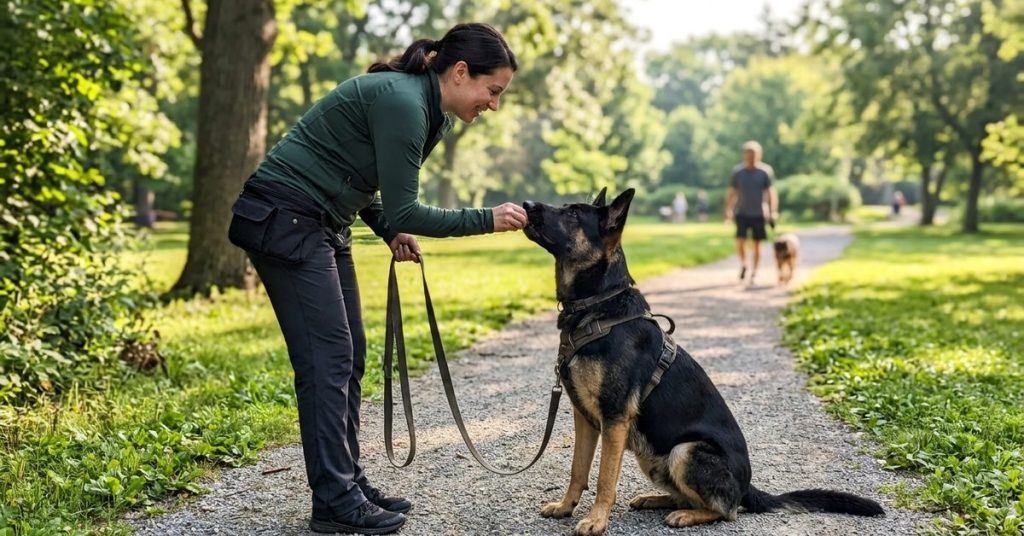
The moment your dog looks at the trigger and stays calm, or looks back at you, mark it with a word like “yes” and deliver a high value treat. Repeat every time the trigger appears. You are teaching a simple equation: trigger appears, good things happen.
Step 3: Shrink distance in small steps
When your dog is relaxed at one distance for several sessions, move a few feet closer, not halfway across the field. If reactions return, you moved too fast. Go back to the last distance where your dog succeeded and rebuild from there. Setbacks are data, not failure.
Step 4: Add movement and real life
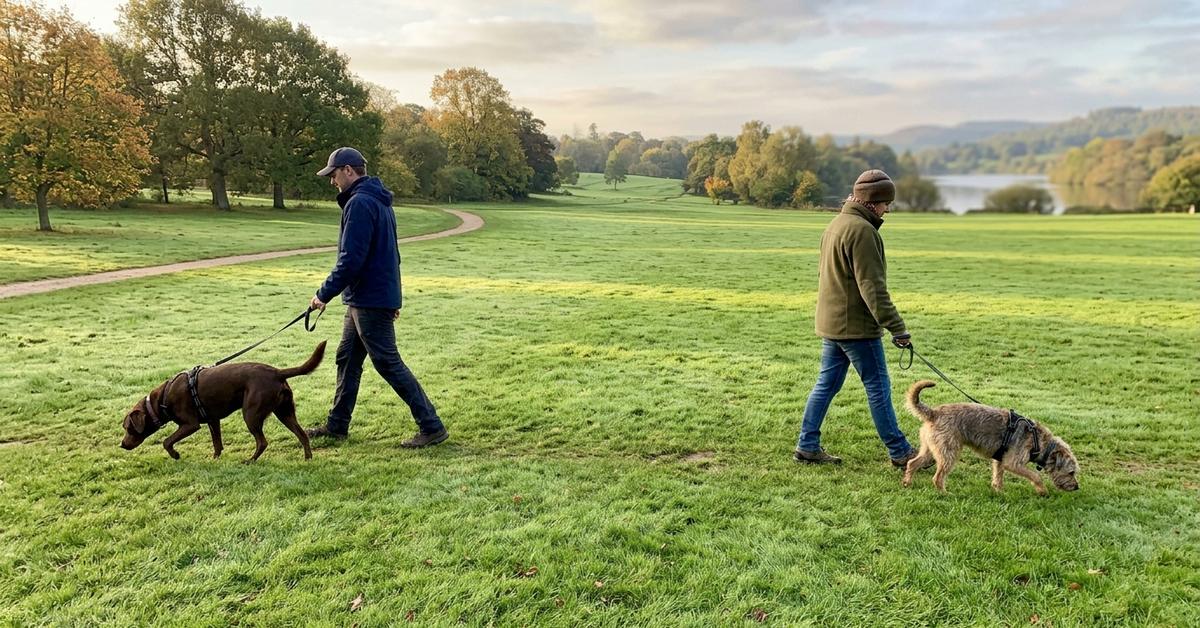
Once stationary work is solid, add parallel walks: walk in the same direction as a calm dog, far apart, with no greeting. Then add passing on a wide path, then brief encounters in quiet places. Each new variable, movement, noise, or a second trigger, is a new step, so reintroduce distance when you add one.
End every session on a success, even if that success is just walking away calmly before a reaction. A session that ends with your dog under threshold teaches more than a session that ends in a blowup. If a surprise trigger appears, increase distance fast, scatter treats on the ground, and leave. No training moment is worth a rehearsed reaction.
Leash Reactivity: The Most Common Case
Leash reactivity deserves its own section because the leash itself is part of the problem. On a leash, a dog cannot choose flight, so fight becomes the default. Tight leashes also transmit your tension straight down the line. This is why many dogs who play beautifully off leash explode on leash.
Learning how to socialize a reactive dog on leash starts with three skills away from triggers first. Teach a reliable “watch me” cue, a U-turn cue for quick exits, and a loose leash walk in boring places. A waist-worn hands-free leash can help some owners stay relaxed and keep hands free for treats; our guide to the best hands-free dog leash covers what to look for. Then apply those skills at threshold distance, as above.
Choose your walking routes like a trainer would. Wide paths, open sight lines, and quiet times of day give you room to manage distance. Narrow sidewalks, blind corners, and off-leash dogs running up to your dog are the hardest settings, so avoid them until your dog has real skills. Night walks add a visibility problem on top of reactivity; the safety basics in our dog walking safety tips for night guide still apply, but do your reactivity training in daylight first.
How to Train a Reactive Dog Without Making It Worse
How to train a reactive dog comes down to a few rules that protect your progress. Never punish a growl. A growl is a warning, and punishing it teaches a dog to skip the warning and go straight to a bite. Never force a greeting to prove your dog can handle it. Never train when your dog is already over threshold, tired, in pain, or stressed by something else that day.
Watch for trigger stacking. A dog who handled a garbage truck, a vet visit, and a stranger at the door may explode at a squirrel later that day, not because the squirrel was special, but because stress accumulated. On stacked days, shorten sessions or skip training and just walk somewhere quiet. Our guide to how far you should walk your dog can help you plan a walk that tires the body without overloading the mind.
Some dogs need professional help, and getting it early is smart, not a defeat. Look for a certified professional dog trainer or a veterinary behaviorist with specific experience in reactivity and fear, not just obedience. Ask how they work: they should talk about desensitization, thresholds, and body language, and they should never recommend punishment-based tools as a first step. If your dog has bitten, or is getting worse despite careful work, talk to your vet first, since pain and medical problems can drive reactivity.
Setbacks, Timelines, and How to Measure Progress
Progress when you are learning how to socialize a reactive dog is rarely a straight line. Expect good weeks and bad days, and measure progress in months, not sessions. Useful markers include a longer threshold distance shrinking over time, faster recovery after a surprise, a dog that looks back at you voluntarily, and reactions that are shorter and less intense than before.
| Situation | What to do | What to avoid |
|---|---|---|
| Dog notices trigger, stays calm | Mark, treat, keep working at that distance | Rushing closer while it is going well |
| Dog stiffens or fixates | Increase distance, scatter treats, redirect | Waiting to see if it blows over |
| Dog reacts | Move away calmly, let it decompress, end the session | Scolding, or trying the same setup again immediately |
| Off-leash dog approaches | Body block, toss treats away, leave the area | Letting an uncontrolled greeting happen |
| Progress stalls for weeks | Revisit threshold, check for pain or stress, get professional help | Adding more triggers to force a breakthrough |
How to socialize a reactive dog is a long game, and that is normal. Many owners see real change in a few months of consistent short sessions, while deeply fearful dogs may need a year or more of patient work, plus professional support. The goal is a dog that can move through the world without panic, not a dog that greets everyone. That calmer life is a genuine win, and it starts with the next walk you take below threshold.
Can an older dog still learn to be less reactive?
Yes, age alone does not close the door. Older dogs learn more slowly than puppies in some cases, and habits are more rehearsed, but desensitization and counterconditioning work at any age. Progress may be slower and the ceiling may differ, but most older reactive dogs can become calmer and easier to walk with consistent work below threshold.
Should I take my reactive dog to a dog park to get used to other dogs?
No, not as a training step. Dog parks are uncontrolled, high intensity, and full of surprise greetings, which is the opposite of threshold work. A reactive dog that is flooded in a dog park usually rehearses reacting. Use controlled setups with one calm dog, at a distance, instead, and save dog parks for later, if ever.
What treats work best for reactivity training?
Use small, soft, smelly treats your dog will choose over the environment, such as tiny pieces of cooked chicken, cheese, or a commercial soft treat. Keep pieces pea-sized so you can deliver many without filling your dog up. Rotate two or three high value options so the reward stays exciting across a session.
When should I get professional help for a reactive dog?
Get help if your dog has bitten, if reactions are escalating, if you cannot find a working threshold distance, or if careful work for a couple of months shows no change. A vet check comes first when behavior changes suddenly, since pain, thyroid problems, and other medical issues can sit underneath reactivity.
Need Local Pet Support or an Open Vet Near You?
Use DaisyDu's free neighborhood tools to find 24/7 open emergency animal hospitals, arrange local playdates, or broadcast a lost pet SOS alert.