Wondering how to tell if dogs are playing or fighting while your two dogs growl, mouth, and tumble across the living room floor is one of the most common worries dog owners have. It usually sounds far worse than it is. The difference comes down to body language, and once you know the signals, you can read the scene in seconds.
How to Tell If Dogs Are Playing or Fighting: The Quick Answer
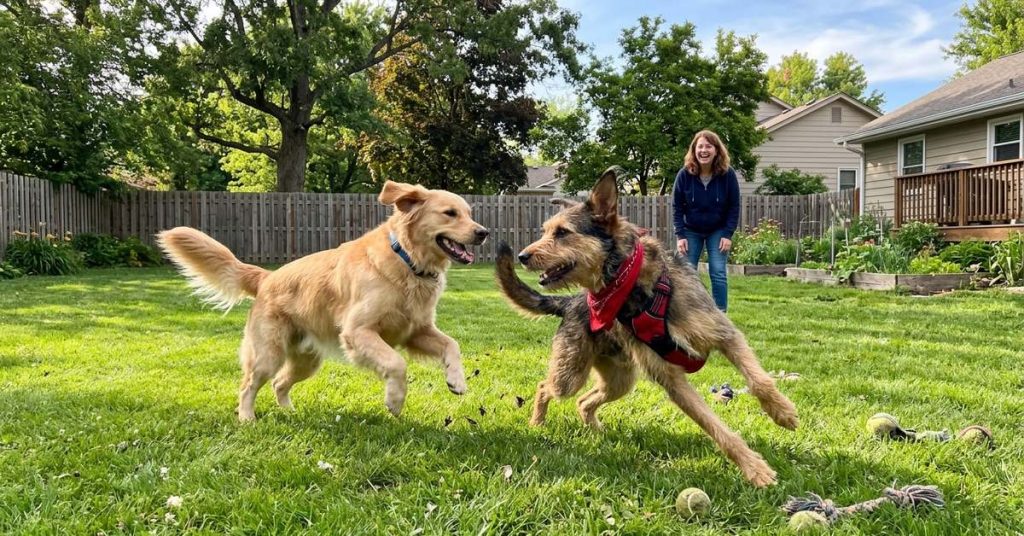
Most of the time, they are playing. The surest signs of play are a play bow (front end down, rear end up), loose wiggly bodies, and dogs taking turns being “on top.” A real fight looks stiff and serious: hard stares, frozen postures, raised hackles, and no role-swapping. If the growling stays low and nonstop and one dog cannot disengage, step in.
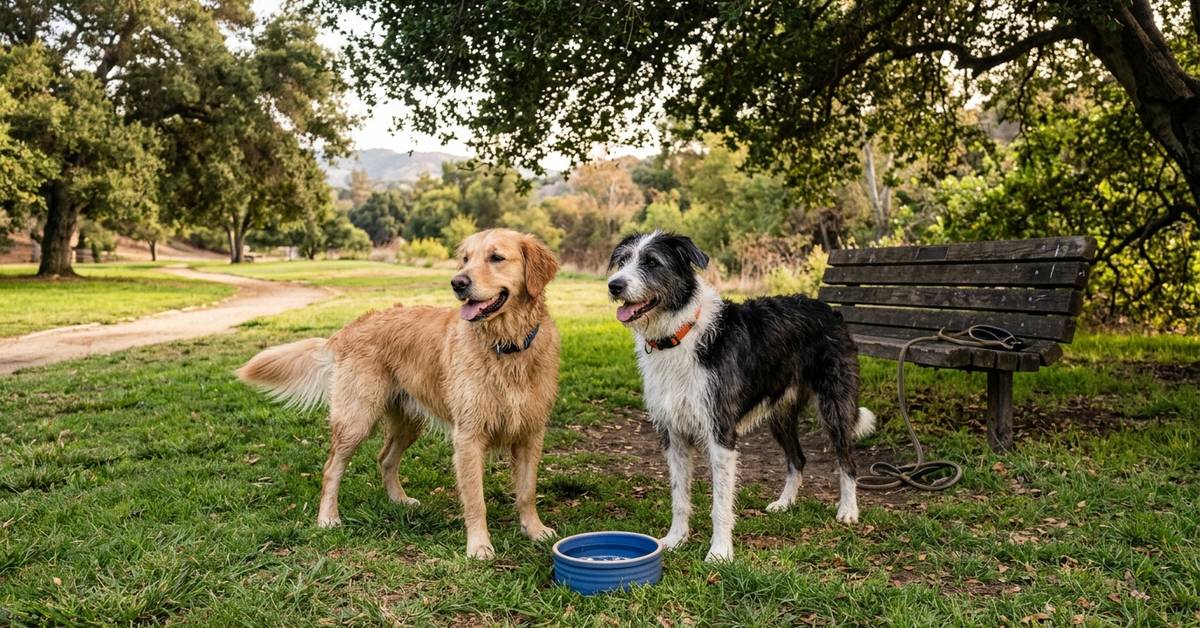
5 Signs Your Dogs Are Just Playing
Healthy play has a look and feel all its own. Watch for these five signals the next time you ask yourself are my dogs playing or fighting.
1. The play bow
A dog drops its front end low while the rear stays up, tail wagging. The AKC calls this the universal “let’s play” invitation, and it means everything that follows is a game. Some dogs toss in little fake-outs, bouncing sideways or darting away, just to keep the game going.
2. Loose, wiggly, bouncy bodies
Play movement looks sloppy and exaggerated. Dogs bounce, wiggle, flop over, and curve their bodies instead of charging in a straight line. A real fight, by contrast, looks efficient: straight lines, hard angles, no wasted motion.
3. They take turns
One dog chases, then the other does. One pins, then they swap. Big dogs often handicap themselves, lying down or rolling over so a smaller dog can “win.” This role-swapping is one of the strongest play signals there is. VCA Hospitals notes that balanced, back-and-forth play is a hallmark of healthy social interaction between dogs.
4. Soft mouths and silly sounds
Mouths hang open and relaxed. Growling during play is common and sounds short, bouncy, and higher-pitched. You may also hear play sneezes and happy snorts. Nobody breaks skin, and nobody is trying to.
5. They pause and come back for more
Playing dogs take breaks: a shake-off, a drink of water, a few seconds lying down. Then they circle back for another round. A dog that walks away and returns is choosing to keep playing, which is the clearest consent signal there is.
Pro tip: film 30 seconds of it
Play is hard to read in real time because it happens so fast. Film a short clip of your dogs wrestling, then watch it back in slow motion. You will spot play bows, loose bodies, and role-swaps you missed while it was happening.
5 Signs It Is a Real Fight
When you ask are my dogs playing or fighting and the scene looks tense instead of joyful, trust that instinct. These are the warning signs that play has crossed into aggression.
1. Stiff, frozen bodies
Movement goes rigid. Legs lock, tails go still, and the dog looks like it is braced for impact. A stiff body is one of the most reliable aggression signals in canine body language.
2. A hard, fixed stare
In play, eyes are soft and glance away often. In a fight, the dog locks eyes on the other dog with a tense, unblinking stare. A hard stare is a challenge, and it usually comes right before things escalate.
3. Closed mouths, curled lips, raised hackles
The jaw goes tight, lips curl to expose teeth, and the muzzle wrinkles. You may see the fur stand up along the back and shoulders (raised hackles). This is a dog making itself look bigger and more threatening, which is the opposite of relaxed play.
4. No role-swapping, and one dog will not quit
One dog keeps chasing, pinning, or standing over the other while the second dog tries to avoid, tuck away, or escape. When only one dog is “winning” and the other is trying to leave, it is not a game anymore.
5. Bite-and-hold instead of mouthing
Play mouthing is gentle and leaves no marks. Real fighting aims to injure: fast lunges, clamping onto the neck or legs, and shaking. Any bite that breaks skin means the interaction has moved past play.
The Dog Play Bow, Explained
The dog play bow is the clearest single signal in this whole guide, and it deserves its own section because owners misread it more than any other cue. A dog drops its front end low, elbows near the ground, while the rear stays up and the tail wags. The AKC calls this the universal play invitation, and it reframes everything that follows: the chasing, mouthing, and growling after a play bow are part of a game the dog just announced. Watch for the bounce too. Many dogs add little fake-outs, darting sideways or hopping away, to keep the game going. A play bow followed by loose, bouncy movement is play. A stiff body with no bow, no bounce, and no role-swapping is not.
Why Dogs Sneeze When Playing
Dogs sneeze when playing, and it is one of the most reassuring sounds in roughhousing. Play sneezes are short, sharp exhales through the nose, often in a little burst, and behaviorists read them as a calming signal: a dog’s way of saying this is still fun and I am not a threat. You will hear them mid-wrestle, right after a play bow, or when excitement spikes. They are different from allergy sneezing, which comes with a runny nose, watery eyes, or repeated sneezing outside of play. If the sneezing stops and the bodies go stiff, the game has changed, and that is your cue to call a break.
Play vs. Fight: Side-by-Side Comparison
Use this table whenever you need a fast answer to how to tell if dogs are playing or fighting in the moment.
| What to watch | Play | Fight |
|---|---|---|
| Body | Loose, wiggly, bouncy | Stiff, frozen, braced |
| Mouth | Open and relaxed | Closed and tight, lips curled |
| Eyes | Soft, glancing away | Hard, fixed stare |
| Roles | They swap who “wins” | One dominates, the other retreats |
| Sounds | Bouncy barks, short high growls | Low continuous growling, snarling |
| Breaks | Pauses, shake-offs, comes back | No pauses, keeps escalating |
| Biting | Gentle mouthing, no marks | Bite-and-hold, breaks skin |
How to Break Up a Real Fight Safely
If you are sure it is a real fight, learning how to stop dogs from fighting safely starts with one rule: act fast but stay calm. The single most important rule: do not grab either dog by the collar or reach between them. A frightened dog will bite whatever is closest, and that can easily be your hand.
1. Startle them apart with noise
Clap loudly, bang two pots together, or shout a sharp “HEY!” Sometimes a sudden loud sound is enough to break the tension so you can separate them. An air horn works well if you keep one near the yard.
2. Use the wheelbarrow method
If you have a helper, each of you grabs one dog’s hind legs and pulls backward like a wheelbarrow, then walks the dog away in an arc so it cannot turn and bite you. Without a helper, you can do this with the more aggressive dog first, then secure it behind a closed door.
3. Put a barrier between them
Slide a chair, a laundry basket, or a baby gate between the dogs. Even a large cushion breaks the visual lock and gives both dogs a moment to disengage.
4. Cool down, then check for injuries
Separate the dogs into different rooms for at least 30 minutes, because stress hormones take a while to fade. Then check both dogs for puncture wounds or swelling. Even small punctures can get infected, so call your vet if you find any.
Keep Play From Turning Into Fights
Most fights start as play that got too intense. A few habits keep roughhousing safe:
Match play styles and sizes. A rough, body-slamming dog and a timid dog are a bad mix. Dogs with similar energy levels and play styles stay friends longer, which is why finding compatible playmates matters. The pet radar can help you spot dogs with matching energy near you for play dates that are actually fun.
Teach a rock-solid “leave it” and recall. Dogs that respond to a call-off can be pulled out of play the moment arousal climbs too high. Practice when things are calm so the words work when things are not.
Build in breaks. Every 10 to 15 minutes, call both dogs over for a treat and a breather. Short resets keep excitement from boiling over into conflict.
Know the hot spots. At the dog park, fights most often break out near entry gates, water bowls, and favorite toys. Give those areas extra supervision, and brush up on dog park etiquette before your next visit.
When to Call a Trainer or Behaviorist
If you have worked through this guide on how to tell if dogs are playing or fighting and still see the patterns below, get professional help. Occasional rough play is normal, but some patterns need professional help. Call in a certified professional dog trainer (CPDT-KA) or a board-certified veterinary behaviorist (DACVB) if:
- Fights are getting more frequent, longer, or more intense
- Any fight draws blood or leaves puncture wounds
- One dog shows fear: hiding, avoiding rooms, refusing to go on walks
- Two dogs in the same home keep fighting despite your best management
- You cannot safely interrupt your dogs when they lock on
If your dog’s behavior around other dogs is tense even outside of play, our guide on how to socialize a reactive dog is a good starting point while you look for a trainer.
Frequently Asked Questions
Why does my dog growl while playing?
Growling is part of normal dog play. Play growls are short, bouncy, and higher-pitched, and they come with a loose body and soft eyes. A real warning growl sounds lower, runs longer without a break, and pairs with stiffness or a hard stare. If the growl changes pitch mid-play and the body stiffens, call your dog out for a break.
Should I let my dogs play fight every day?
Yes, as long as it stays supervised and balanced. Daily roughhousing teaches puppies bite inhibition and helps dogs learn social cues like when to back off. Keep sessions short, around 10 to 15 minutes, and end them while everyone is still happy. Stopping before arousal peaks teaches your dogs that calm behavior keeps the fun going.
Why did my dogs start fighting after years of getting along?
A sudden change often has a medical cause, so a vet check comes first. Pain, illness, vision or hearing loss, and age-related changes can all make a dog quicker to snap. Household changes, a new pet, or competition over food and sleeping spots can also light the fuse. Rule out health issues before treating it as a training problem.
Can two dogs that fought ever be friends again?
Often, yes. Give the dogs real time apart to decompress, then reintroduce them slowly in neutral territory with both on leash and high-value treats for calm behavior. For serious or repeated fights, a professional can tell you whether friendship is realistic or whether permanent management, like separate feeding areas and supervised time together, is the safer plan.
Need Local Pet Support or an Open Vet Near You?
Use DaisyDu's free neighborhood tools to find 24/7 open emergency animal hospitals, arrange local playdates, or broadcast a lost pet SOS alert.