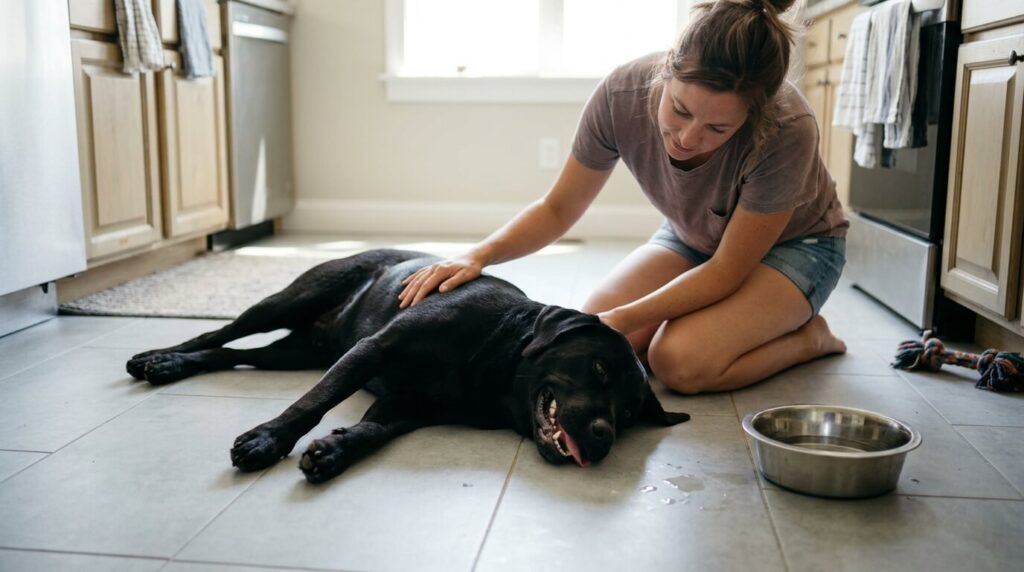
Dog breathing heavy
A dog breathing heavily after exercise, heat, or excitement is usually normal. The same breathing at rest, especially while asleep, is not. Count breaths while your dog sleeps: most vet sources put a resting dog at roughly 15 to 30 breaths per minute, and a rate that stays high at rest, or breathing that looks labored, needs a vet visit.
Dog breathing heavy is one of those worries that splits cleanly in two. After a run, on a hot day, or during a thunderstorm, heavy breathing is how dogs cool down and cope. At rest, with no heat, no exercise, and no excitement to explain it, the same breathing can be an early sign of heart disease, lung disease, or pain. This guide shows how to tell the two apart, how to count a resting rate, and what causes vets investigate.
Emergency Signs: Get Help Now
Call your vet or an emergency clinic at once if your dog breathes with its mouth open at rest, has blue or very pale gums, collapses, struggles for every breath, or cannot settle. Heavy breathing with no obvious cause is itself a reason to call promptly. Find an open emergency vet near you on DaisyDu’s Live Vet Map →
How to Count Your Dog’s Resting Breathing Rate
Count only when your dog is fully relaxed or asleep, not just lying down after play or on a hot day. Watch the chest rise and fall. One rise plus one fall is one breath. Count for 30 seconds and double it, or count a full minute if your dog stays asleep.
Most vet sources put a healthy resting dog at roughly 15 to 30 breaths per minute, though published ranges vary a little, with some clinics quoting up to the mid 30s. Do not fixate on a single count. The pattern matters more: a rate that stays high at rest across several nights, or that climbs week by week, is the signal. If one count looks high, wait until your dog is truly asleep and count again before calling, unless emergency signs are present.
Normal Panting vs Warning Breathing
Dogs do not sweat the way people do. They release heat through panting, so heavy breathing after exercise, in heat, or during excitement is normal and should settle as the dog cools and calms. Warning breathing looks different: it happens at rest, it does not settle, the chest or belly moves with visible effort, or it comes with other changes such as coughing, lethargy, loss of appetite, or restlessness.
| What you see | Usually normal | Needs a vet call |
|---|---|---|
| Heavy breathing after a walk or play | Settles within minutes of rest and water | Still heavy an hour later at rest |
| Panting on a hot day | Eases in shade with cool water | Continues indoors in a cool room |
| Breathing fast while asleep | Brief dreaming twitches and sighs | Sustained fast or labored breathing through sleep |
| Panting with other symptoms | Brief excitement panting, dog otherwise well | Panting plus cough, collapse, blue gums, or distress |
Why is my dog breathing heavy is the question that usually follows a worrying count. Like fast breathing in cats, it is a sign rather than a diagnosis, and the context, rest versus activity, heat versus cool room, and any companion symptoms, is what turns it into useful information for your vet. That context is what separates ordinary panting from dog breathing heavy that needs investigation.
Common Causes of Heavy Breathing
Heart disease is a leading cause. In left sided congestive heart failure, fluid builds up in the lungs, which is why PetMD lists labored breathing among its hallmark signs, along with coughing and exercise intolerance. Heartworm disease can also damage the heart and lungs and cause heavy breathing, which is one more reason year round heartworm prevention matters.
Lung and airway disease come next: pneumonia, bronchitis, and airway inflammation all make breathing harder and often bring coughing, nasal discharge, lethargy, and reduced appetite. Pain is an underrated cause. A dog with pancreatitis, arthritis, or an injury may pant or breathe heavily with no lung problem at all, so vets ask about pain, stiffness, and recent injuries when breathing changes. For older dogs, our guide to joint supplements for dogs with arthritis covers pain support options to discuss with your vet. Heat stroke, anemia, obesity, and some cancers affecting the airway or lungs round out the list your vet will work through. Heat is also the subject of our guide to hot pavement and dog paws, and if an emergency trip is needed, see emergency vet visit costs.
Dog Panting at Night: Why It Wakes Owners Up
Dog panting at night worries owners more than daytime panting, because there is no heat or exercise to blame. Night panting has the same cause list, with a few extras: pain that worsens when a dog lies still, anxiety or nighttime restlessness in older dogs, and heart or lung disease that shows up first when the dog is at rest. A dog who pants every night, paces, cannot settle, or wakes repeatedly needs a vet visit, not a fan pointed at the bed.
Before the visit, note the pattern: does panting start at a set time, follow an evening walk, or come with coughing, drinking more, or needing to go out? Does it stop if the dog changes position or goes outside? Those details help your vet separate pain, anxiety, and heart or lung causes, which can otherwise look identical at 2 a.m.
Count the sleeping breathing rate twice a week for a healthy dog and keep the numbers in your phone. A slow rise over months is easy to miss day to day and easy to spot in a list, and it is exactly the trend vets use to catch heart disease early.
Labored Breathing in Dogs: What It Looks Like
Labored breathing in dogs means breathing takes visible work: the belly pumps, the nostrils flare, the neck stretches, or the dog stands with elbows out to open the chest. It differs from simple fast breathing, which can be shallow and quick without much effort. Labored breathing is more urgent than fast breathing alone, and it should prompt a same day vet call even if your dog still walks and eats.
Dog breathing fast is often the first thing owners notice, and it overlaps with heavy breathing so much that vets treat the two as one picture: rate plus effort plus context. A fast, shallow rate after play is normal. A fast rate at rest, or any rate with real effort behind it, is not. When in doubt, film a minute of the breathing and show your vet. Video settles arguments that words cannot.
What the Vet Visit Usually Involves
Expect an exam focused on heart and lung sounds, gum color, temperature, and breathing effort, plus questions about exercise tolerance, coughing, appetite, and any pain or recent illness. Chest X-rays, bloodwork, heart ultrasound, or oxygen measurement may follow. Bring your resting rate counts, the night panting pattern, and any video you captured.
Heavy breathing at rest is your dog’s earliest warning system for several serious diseases, and it is also one of the easiest to check at home. Count while your dog sleeps, watch for effort, and call early. Vets would far rather reassure you about a healthy dog than meet a sick one a week late.
Is heavy breathing in dogs always a medical emergency?
No, but heavy breathing at rest should always be taken seriously. Panting after exercise or heat is normal and settles with rest. Heavy or labored breathing at rest, especially with blue gums, collapse, or distress, is an emergency. Between those extremes, a sustained high resting rate without other symptoms still deserves a prompt vet visit, not watchful waiting for weeks.
Why does my dog breathe fast when sleeping?
Brief fast breathing during dreams is normal: twitching paws and short bursts of quick breaths come and go. Sustained fast breathing through sleep, breathing with effort, or a resting rate that stays high night after night is different. Count a minute on a night and compare across nights. A pattern, not one dream, is what you report to your vet.
Can anxiety cause heavy breathing in dogs?
Yes. Thunderstorms, fireworks, separation, car rides, and vet visits can make a dog pant heavily, and breathing settles as the dog calms. Anxiety panting is usually tied to a trigger and a dog who is well. If panting happens with no trigger, at rest, or every night, look beyond anxiety and ask your vet to check heart, lungs, and pain.
Does a dog’s size change what breathing rate is normal?
Not much at rest. Small and large dogs share the same resting range, though puppies and very small dogs may run faster, and fit dogs may rest slower. What matters more than size is the trend: a dog whose resting rate climbs over weeks is signaling something, whatever its breed or size. That is why a baseline beats the chart.
Need Local Pet Support or an Open Vet Near You?
Use DaisyDu's free neighborhood tools to find 24/7 open emergency animal hospitals, arrange local playdates, or broadcast a lost pet SOS alert.