What to do if your dog runs away?
Do not chase. Note the direction and time, then search outward from that point while a friend alerts neighbors and posts online. Call nearby shelters and vets within the hour, set up a scent station at home, and keep searching at dawn and dusk when lost dogs move most.
What to do if your dog runs away is the question no owner wants to face while watching a leash trail behind a sprinting dog. Your heart is pounding, but the first ten minutes matter more than the next ten hours. Work the steps below in order and you give your dog the best possible chance of coming home.
The First 10 Minutes Matter Most
Panic makes people chase, shout, and run in the wrong direction. Do the opposite: slow down, think, and act in this order.
Step 1: Freeze. Do Not Chase.
A lost dog is in flight mode, not disobedience mode. Anything moving fast toward them, including you, reads as a threat. The AKC’s lost-dog guidance is blunt on this point: chasing almost always pushes the dog farther away, often toward roads. Stop moving, stay calm, and give the situation a few seconds to settle.
Step 2: Lure Instead of Grabbing
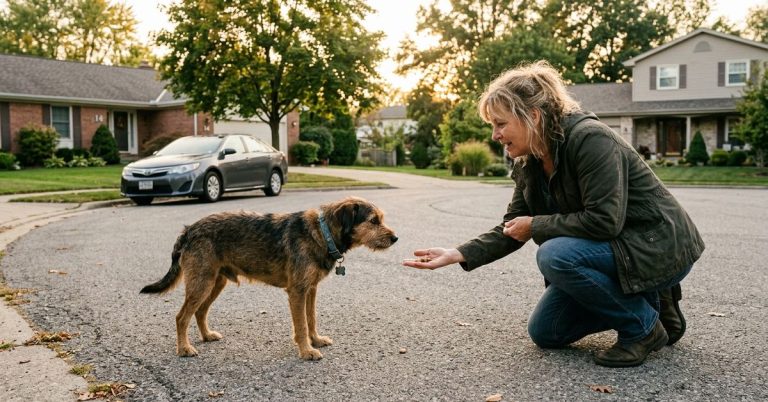
Crouch down, turn your body sideways, and switch to a happy, excited voice. Toss high-value treats, cheese, hot dog pieces, whatever you have, in an arc between you and the dog, landing gradually closer to you. Let the dog close the distance on their own terms. If you lunge, you reset the chase.
The Missing Animal Response Network adds two details that matter here: get low or even lie flat on the ground, and avoid direct eye contact. Both tell a panicked dog you are not a predator. Let the dog touch you first and never reach for them. Even your own dog, in full flight mode, may read a reaching hand as a threat and bolt.
Step 3: Mark the Last-Seen Point
If luring fails and the dog bolts, note exactly where, which direction, and what time. Text that pin to everyone helping you so the whole search works outward from one point instead of five people guessing. This single detail shapes everything that follows.
Search Outward From the Last-Seen Point
Start close and expand in widening circles. Walk your dog’s favorite routes, check the houses of dog friends, parks, schools, and anywhere with food smells. Restaurant dumpsters and picnic areas are classics. Search on foot where you can and drive slowly with the windows down where you cannot, calling in a calm, upbeat voice. Frantic shouting can push a scared dog deeper into hiding.
Dawn and dusk are your best windows. It is quieter, so your dog can actually hear you, and lost dogs tend to move more during the cooler, calmer hours. Bring a flashlight after dark and watch for eye shine along fence lines and under porches.
Alert Everyone Within Miles, Fast
Knowing what to do if your dog runs away means knowing who to mobilize, because one person cannot cover enough ground alone.
- Send a DaisyDu SOS: trigger a one-tap SOS alert to DaisyDu members near you. It reaches local dog people instantly, faster than a social post sinking in an algorithm.
- Post in local lost-pet groups: every lost-and-found pets Facebook group for your county, plus Nextdoor and Ring Neighbors. Include a clear photo, the exact location and time, and “DO NOT CHASE” in capital letters.
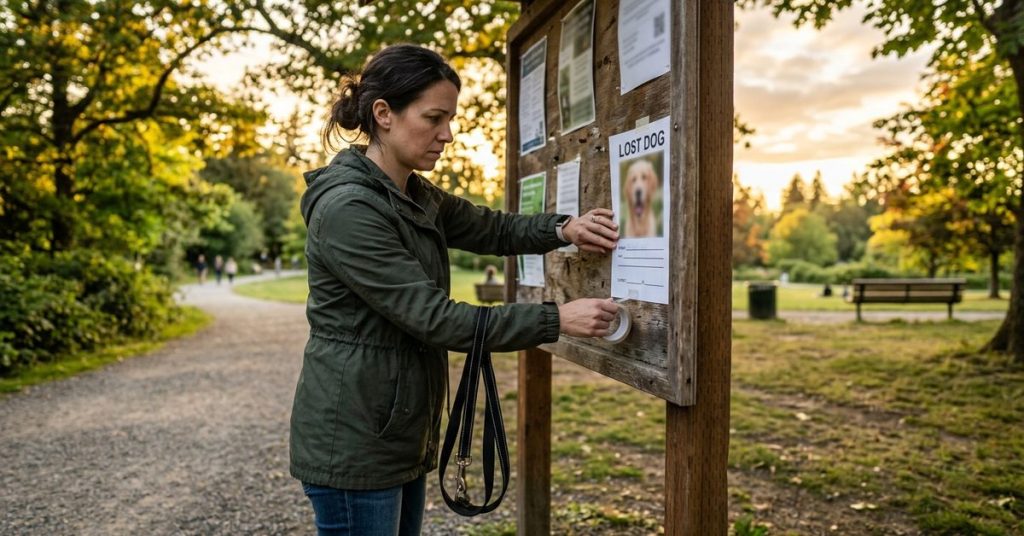
- Put up paper flyers: they still work. Big photo, huge phone number, “LOST DOG” header. Slip them into plastic sleeves against rain and post at intersections, trailheads, parks, and vet offices.
Put “DO NOT CHASE, CALL WITH SIGHTINGS” on every post and flyer. Well-meaning strangers running at your dog is one of the most common reasons lost dogs keep running.
If someone in your network finds a dog while you search, send them who to call if you see a lost dog so the favor can go both ways.
Call Shelters and Vets Within the Hour
Do not wait a day to see if your dog wanders back on their own. Call every shelter, rescue, and animal control office in the area now, then visit in person every two to three days. Kennel staff misidentify breeds, colors, and even sexes over the phone, and stray hold periods are often just a few days. Your own eyes are the only reliable check.
Leave a flyer and your number with every vet clinic within a few miles too. Injured lost dogs get brought to vets, not shelters, and a clinic that knows your dog is missing will scan for a chip and call you immediately.
One more call worth making: your local police non-emergency line. Many departments keep a log of lost and found animals, and officers who spot a loose dog on patrol will check it. If animal control is closed for the night, the non-emergency line is the backup that still gets your dog’s description into the system. It takes two minutes and closes a gap the shelters don’t cover.
When to Call a Professional Pet Detective
If days pass with no sightings, consider a professional. Real pet detectives exist: many trained through the Missing Animal Response Network’s national directory, founded by former police officer Kat Albrecht. These trained search-and-rescue technicians offer phone consultations, on-foot searches, humane trapping, and some work with trained tracking dogs. Even a single consultation early on can sharpen your own search, whether or not you ever hire anyone for the fieldwork.
Set Up a Scent Station at Home
Dogs navigate by nose, and familiar scent can pull a lost dog back from surprising distances. Put your worn clothes, your dog’s bed or favorite blanket, and strong-smelling food and water by the door they know best. Leave the gate or door ajar if you can do it safely.
Some owners also grill something fragrant outside in the evening. It sounds odd, but scent is the strongest beacon you have. Refresh the food and water daily until your dog is home.
Update Your Microchip and ID Right Now
Call your microchip registry today and confirm your phone number is current. A remarkable number of chips point to disconnected numbers, which turns a successful scan into a dead end. A study published in the Journal of the American Veterinary Medical Association found that microchipped dogs were reunited with their owners at more than twice the rate of dogs without chips, but only when the registration details were up to date.
No chip yet? Book the appointment for the week your dog comes home, and keep a flat collar with a current tag on them in the meantime.
If Your Dog Comes Home Hurt
Check paws, pads, and belly for cuts, swelling, or limping the moment your dog returns. Puncture wounds hide under fur and infect fast. If anything looks off, find an open vet near you on DaisyDu’s Live Vet Map →
What NOT to Do When Your Dog Is Lost
- Do not punish your dog when they return. Scolding teaches them that coming home leads to trouble. Celebrate like they just won everything.
- Do not rely on social media alone. Algorithms bury posts. Flyers, shelters, and direct alerts do the actual finding.
- Do not flood the area with shouting searchers. A crowd pressing in pushes a scared dog farther out. A few calm people beat twenty loud ones.
- Do not assume they will just come back. Some dogs do. Most need you to go and get them.
Why Dogs Run in the First Place
It helps to know what pulled your dog out the door, because the trigger shapes the search. Veterinary guidance (WebMD’s pet health editors) lists the big four: boredom and frustration (a lonely, under-exercised dog goes looking for fun), fear (about 1 in 5 lost pets goes missing after a loud noise like fireworks or thunder), mating instinct (unneutered males will travel far on a scent), and prey drive (a squirrel across the street can switch off every recall cue your dog ever learned). None of it means your dog doesn’t love you. It means instinct beat training in one unguarded moment, and knowing which instinct fired tells you where to look first.
Prevent the Next Escape
The final part of what to do if your dog runs away happens before it ever does: prevention.
- Get a real GPS tracker. Bluetooth tags are not GPS. Read our AirTag vs GPS dog collar breakdown before you buy.
- Train a bombproof recall with high-value rewards, practiced on a long line before any off-leash trust.
- Check your gear: martingale collars for dogs that slip out, latched fence gates, and double-clipped leashes on walks.
- Track every walk with DaisyDu’s GPS walk tracker so you always know your dog’s favorite routes. That is exactly where to start searching if it ever happens again.
Keep one recent, clear photo of your dog (standing, side view) saved on your phone at all times. When minutes matter, you do not want to be scrolling through a thousand puppy pictures.
My dog ran away and won’t come back when I call. What should I do?
Your dog is in flight mode, not disobeying you. Stop chasing and calling frantically, which only confirms you are something to run from. Crouch down, turn sideways, and use a happy, excited voice while tossing treats toward you. Let the dog decide to close the distance.
How far can a lost dog travel in a day?
It varies enormously. Small or nervous dogs often hunker down within a few blocks, while fit, confident dogs can cover serious ground. That range is exactly why you search outward in widening circles and push alerts miles wide instead of only canvassing your street.
Should I offer a reward for my lost dog?
A modest reward can motivate searchers, but leave the amount off the flyer and watch for scammers who demand money before returning your dog. Never wire funds or share verification codes. Arrange any meeting in a public place and bring a friend.
What are the chances of finding a lost dog?
Good, if you act fast. Dogs with updated microchips have the best odds by far: a JAVMA-published study found they were reunited at more than twice the rate of dogs without chips. Beyond that, most recoveries come down to owners who searched hard, alerted widely, and refused to stop looking.
Need Local Pet Support or an Open Vet Near You?
Use DaisyDu's free neighborhood tools to find 24/7 open emergency animal hospitals, arrange local playdates, or broadcast a lost pet SOS alert.