
How to find a lost cat outside?
Start searching close to home, because most lost cats hide nearby instead of running far. Search on foot at night with a flashlight, ask neighbors to check garages and sheds, set out familiar scents and food, and spread the word with flyers and online lost-pet alerts. Keep searching. Cats turn up days later when owners do not quit.
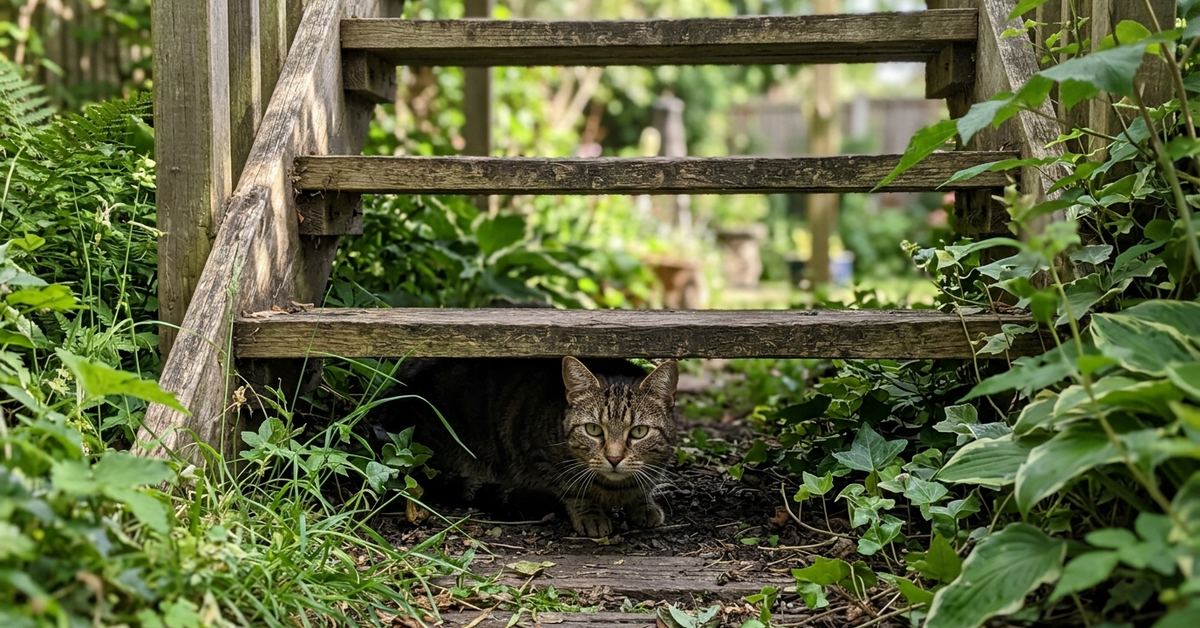
It is past 11 p.m., you are in slippers with a flashlight, and you need to know how to find a lost cat outside right now. Take a breath. Cats are not small dogs. A lost cat rarely runs for miles. It finds the nearest dark, quiet hiding spot and goes silent, sometimes for days. Everything below works with that instinct instead of against it.
First: Make Sure the Cat Is Actually Outside
Before you search the neighborhood, search the house. Cats vanish into box springs, behind appliances, inside recliners, and on top of wardrobes, and a quiet cat gives no sign it never left. If nobody actually saw the escape happen, run both searches at once: a full indoor sweep plus the outdoor plan below. Lost-pet recovery specialist Kat Albrecht advises exactly this dual approach, because a meaningful share of “lost” cats never went outside at all.
Start Close to Home: Your Cat Is Probably Near
This pattern is well documented by Missing Pet Partnership founder Kat Albrecht, who compiled case data on hundreds of lost cats: 92% of 158 escaped indoor-only cats were found within a five-house radius of home (84% for outdoor-access cats). Indoor escapees are overwhelmed, not adventurous. An outdoor-access cat that suddenly vanishes is a different case. Those cats know the territory, so a disappearance usually means the cat is trapped somewhere, injured, or chased out of its range. That is the core insight behind how to find a lost cat outside: search like the cat is close, because it almost certainly is.
As Kat Albrecht, founder of Missing Pet Partnership, puts it: “The majority of indoor-only cats that escape outside don’t travel very far. Cat owners pass out flyers to neighbors and call out loud for their cat, never realizing that their cat is panicked and likely hiding in silence nearby.”
| Your situation | Most likely story | Search here first | Key move |
|---|---|---|---|
| Indoor-only cat slipped out | Terrified and hiding in silence nearby | Under your porch, deck, and bushes, then the two nearest houses | Night search with a flashlight |
| Outdoor-access cat missing | Trapped, injured, or chased from its range | Neighbors’ garages, sheds, and crawl spaces | Door-to-door asks within a few blocks |
| Newly adopted or recently moved cat | Disoriented with no home scent map | The closest hiding spots to the exit point | Scent station plus humane trap |
Search at Night With a Flashlight
Search late in the evening, at night, and at dawn, when the world is quiet. A scared cat will not meow back during the day no matter how loudly you call. After dark, sweep a strong flashlight low along fence lines, under porches, into bushes, and beneath parked cars. You are looking for eyeshine, that green-gold flash that gives a hiding cat away. Move slowly, call in a soft, calm voice, and stop often to listen. Rattling a treat bag or tapping a familiar food can helps more than shouting a name.
Check Every Hiding Spot, Then Ask Neighbors to Check Theirs
Cats compress into spaces that look impossibly small. Work outward from the exit point and check under porches and decks, inside open garages and sheds, behind trash cans, under dense shrubs, in storm drains, and beneath cars. Then knock on doors. Most people will happily check their garage or shed if you ask, and many lost cats are found locked in a neighbor’s outbuilding. Leave your number and a photo with anyone who is not home.
Do not chase a cat you spot. A frightened cat that bolts can run much farther than one that stays hidden. Sit or crouch down, look slightly away, and speak softly. Let the cat decide to come to you, and have treats or food ready when it does.
Set a Scent Station With Food
Cats navigate by nose. Put your worn clothing, your cat’s bedding or favorite blanket, and strong-smelling food and fresh water by the door your cat knows best. Warm, aromatic food like tuna or sardines carries farther on night air. Refresh it daily. One caution from lost-pet recovery specialists: skip putting the entire litter box outside. It can draw territorial neighborhood cats and even predators, which may keep your frightened cat from coming back.
Point a motion-activated camera, or an old phone running a pet-cam app, at the food station. Lost cats often visit food in the dead of night and vanish before morning, so the camera tells you whether your setup is actually working. Recovery specialists use cameras and bait to confirm a cat’s presence before escalating to a humane trap, and you can run the same play with gear you already own.
Set a Humane Live Trap
If days pass with no sightings, borrow or buy a humane live trap from a shelter, rescue, or hardware store. Set it at dusk near the exit point or where the cat was last seen, baited with the smelliest food you have, and cover it with a towel so it feels like a hiding spot. Check it every few hours through the night. A trapped cat is stressed but safe, and a trap often succeeds where searching fails.
Alert Everyone, Fast and Wide
Knowing how to find a lost cat outside means knowing who to mobilize, because one person cannot cover enough ground alone.
- Send a DaisyDu SOS: trigger a one-tap SOS alert to DaisyDu members near you so local pet people start watching immediately.
- Ask nearby members to watch: DaisyDu’s Live Nearby Pet Radar connects you with pet people close by. A neighbor two streets over may spot your cat before you do.
- Post in lost-pet groups: every lost-and-found pets Facebook group for your county, plus Nextdoor and the Ring Neighbors app. Include a clear photo, the exact location and time, and “DO NOT CHASE” in capital letters.
- List on Petco Love Lost: the free national database uses photo matching to pair found-pet listings with lost ones. PawBoost alerts are another solid free option.
- Put up paper flyers: big photo, huge phone number, “LOST CAT” header, slipped into plastic sleeves against rain. Post at intersections, trailheads, parks, and vet offices.
- Call shelters and visit in person: do not rely on a phone description. Kennel staff see dozens of tabbies a week. Go yourself every two to three days, and leave a flyer with every vet clinic nearby.
If a neighbor finds a dog while helping you search, send them who to call if you see a lost dog so the favor goes both ways. And if your household also has a dog that ever bolts, our dog runs away guide covers the canine version of these steps.
One more group worth finding: the people who feed outdoor cats in your area. Every neighborhood has them, and they notice newcomers at their feeding stations before anyone else does. Ask around, check with local TNR or rescue groups, and show them your cat’s photo. A lost cat gravitating to a reliable food source is one of the most common recovery stories there is.
Confirm the Microchip and ID
Call your microchip registry now and confirm your phone number is current. Chips with dead numbers turn a successful scan into a dead end. No chip yet? Book the appointment for the week your cat comes home. A breakaway collar with a current tag is cheap backup that any finder can read without a scanner.
If Your Cat Comes Home Hurt
Check for limping, swelling, bite wounds, and labored breathing the moment your cat returns. Puncture wounds hide under fur and infect fast, and a cat that hides pain can crash quickly. If anything looks off, find a cat-savvy emergency vet near you →
If the Missing Cat Is a Kitten
Search even closer and move faster. Young kittens chill and dehydrate quickly, and they wedge into warm, tight spots, including car engine bays, so knock on the hood and check before starting the car. If you end up sheltering a found kitten while you search for its owner, our kitten feeding guide covers what young kittens can safely eat.
What NOT to Do
- Do not wait a day “to see if she comes back.” The first 24 hours are when your cat is closest and the trail is freshest.
- Do not assume silence means she is gone. Indoor cats in hiding often will not meow even when they hear you. Keep checking the same spots.
- Do not put the whole litter box outside. It can attract territorial cats and predators that scare your cat off for good.
- Do not send a crowd. A few calm searchers beat a noisy group that pushes a scared cat farther out.
- Do not give up after a few days. Cats are routinely found weeks later, often within a few blocks of home.
Prevent the Next Escape
The best version of how to find a lost cat outside is never needing to.
- Keep cats indoors or in a catio. Indoor cats live longer, and you never have to run this search plan again.
- Secure the exits: check window screens, close dryer and garage doors carefully, and put a bell on the collar so you hear movement.
- Train the door dash out: toss a treat away from the door before you open it, every time, until waiting becomes habit.
- Keep one clear, recent photo of your cat saved on your phone. When minutes matter, you do not want to scroll through a thousand pictures.
How long can a lost cat survive outside?
Longer than most owners fear. Cats are skilled hunters and find water in surprising places, and many survive weeks outside. But survival is not the goal. Traffic, predators, weather, and injury stack the odds against them every day, so a cat that could survive a month should still be searched for like every hour matters.
Does putting the litter box outside really bring a lost cat home?
It is one of the most repeated tips online and one of the least supported. No solid evidence shows a litter box guides a lost cat home, while lost-pet recovery specialists warn it can attract territorial neighborhood cats and predators that scare your cat away. Familiar bedding and your worn clothing give the scent benefit without the risk.
Will my lost cat come back on its own?
Sometimes, especially confident outdoor cats that know the territory. But indoor-only cats that slip out usually do the opposite: they hide in silence nearby and wait, sometimes for days, without trying to find the door. Never treat “she will come back” as the plan. Search as if she needs you to find her, because she probably does.
What should I do if I find someone else’s lost cat?
Keep the cat separate from your own pets and take it to any vet or shelter for a free microchip scan. Post a “found cat” notice with a photo in local lost-pet groups, but hold back one identifying detail so the real owner can prove it is theirs. File a found report with nearby shelters too.
Need Local Pet Support or an Open Vet Near You?
Use DaisyDu's free neighborhood tools to find 24/7 open emergency animal hospitals, arrange local playdates, or broadcast a lost pet SOS alert.