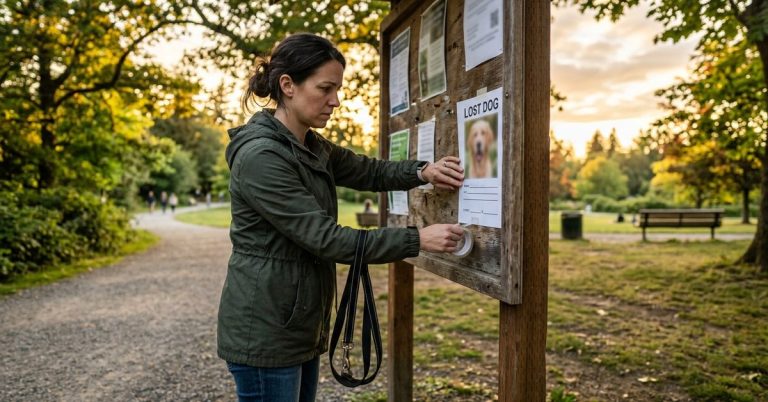
What to Do If You Find a Lost Dog
If you are wondering what to do if you find a lost dog, start with local animal control. They pick up strays and hold them where owners look first. If the dog acts aggressive, call the police non-emergency line. If it looks hurt, call a shelter or emergency vet. Never chase a frightened dog, since panic can send it into traffic.
Picture this: you are driving home when a dog trots out of a neighbor’s hedges and starts wandering down the middle of the road. No owner anywhere. Your gut says to help, but the next thought is the honest one: who do you actually call?
You are not the only one who freezes in that moment. Most people either chase the dog (bad idea) or drive on feeling guilty (understandable, but unnecessary). There is a short, calm playbook for this, and it starts with keeping everyone safe.
First, Keep Yourself and the Dog Safe
A lost dog is a scared dog, and a scared dog does not think the way your couch dog does. The American Humane Society warns against chasing a loose animal, especially near roads, because a panicked dog can bolt straight into traffic. Your safety comes first too. You do not know the dog’s history, health, or how it reacts to strangers, and a frightened animal can bite even if it looks friendly.
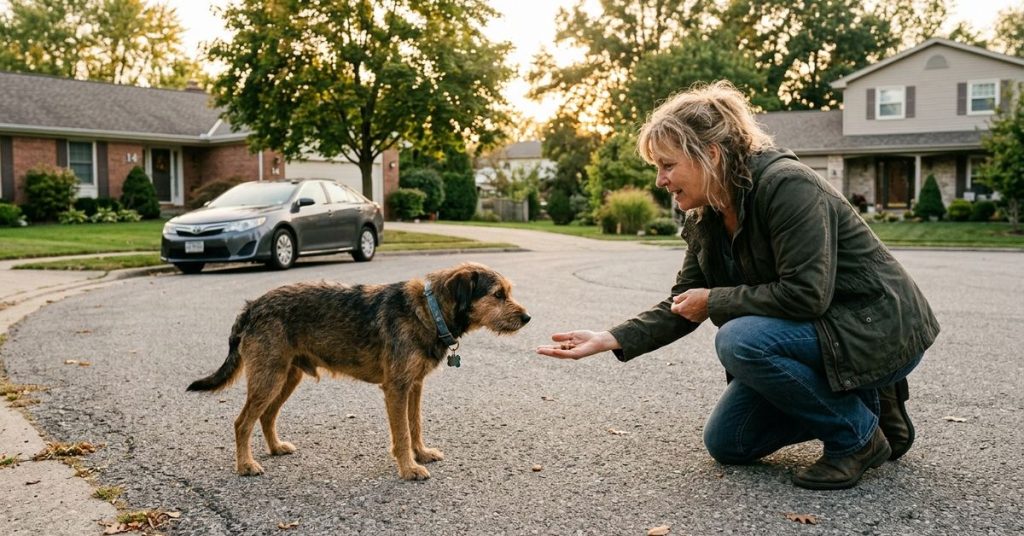
If you decide to approach, do it slowly. Turn your body sideways, avoid direct eye contact, and speak in a calm, low voice. Let the dog come to you. Food helps: a handful of treats or a cracker tossed nearby can convince a wary dog you are safe. If the dog growls, bares its teeth, freezes, or backs into a corner, step back and leave it alone. That is exactly what a professional is for.
Keep children and your own pets away from the dog while you figure out the next move. Even gentle dogs can react badly when they are stressed, and your dog is not wearing a referee jersey.
The Five-Step Rescue (When You Spot a Lost Dog)
1. Stop and take it all in
Pull over safely if you are driving. Note the exact spot, the time, and which direction the dog is heading. If you cannot get close, these details are still gold for whoever responds.
2. Do not chase, lure instead
Chasing is the number-one mistake finders make. Sit or crouch down, turn sideways, and toss food between you and the dog. Open your car door and get in yourself, which the team at a Long Island pet care clinic notes works on more dogs than calling their name ever does.
3. Contain the dog only if it is safe
If the dog walks up to you willingly, loop a spare leash around it, or use a belt or rope as a makeshift slip lead for the short term. A fenced yard or a quiet room works too. Do not grab at a dog that is cowering or snapping.
4. Check for tags and a microchip
Look for a collar with an ID tag and call the owner directly if one is listed. Then get the dog scanned for a microchip at any vet clinic or shelter, which is almost always free.
5. Make the calls
Even if the dog is safely in your yard, call the professionals below and file a found-dog report. Shelters are the first place owners search, and your report may be the thing that gets this dog home tonight.
Who to Call, and When
Knowing exactly what to do if you find a lost dog ahead of time saves real minutes in the moment. Save these numbers in your phone now, before you ever need them.
| Call | When |
|---|---|
| Local animal control | Your default call for any loose or stray dog. They pick up strays and hold them for owners to claim. |
| Non-emergency police line | The dog is in a dangerous roadway, acting aggressive, or it is after hours and animal control is closed. |
| Nearby shelters and rescues | To file a found-dog report, or when animal control cannot respond quickly. Owners check shelters first. |
| Vet clinics and emergency vets | The dog looks injured or ill. Finders often bring found dogs to the nearest vet, so clinics take found reports too. |
Animal control is your first call. Most communities have a local animal control office that picks up stray dogs, checks them for ID, and holds them for a reclaim period while owners search. Call the office for your town, and if you live near a city line, call both, since dogs wander across borders. In some places you are expected by law to report a found dog, so the call protects you as well as the dog.
The non-emergency police line is your backup. Call the regular police line for a dog blocking traffic or showing aggression, and only use 911 if an animal is an immediate threat to people. The AKC also recommends notifying local police when a dog goes missing, because officers do field found-dog reports in many areas.
Shelters and rescues come next. Even if animal control takes the dog, call nearby shelters with a description so the owner has more than one trail to follow. Dogs can travel surprisingly far, so call shelters a few towns over, not just the closest one.
Check the Collar, Then Get a Free Microchip Scan
A collar tag is the fastest reunion ticket in the world: owner name, phone number, dog home tonight. Check the whole collar, since some tags hang under the fur or are engraved on a slide-on plate. If a license tag lists the county or city, that office can look up the owner from the tag number.
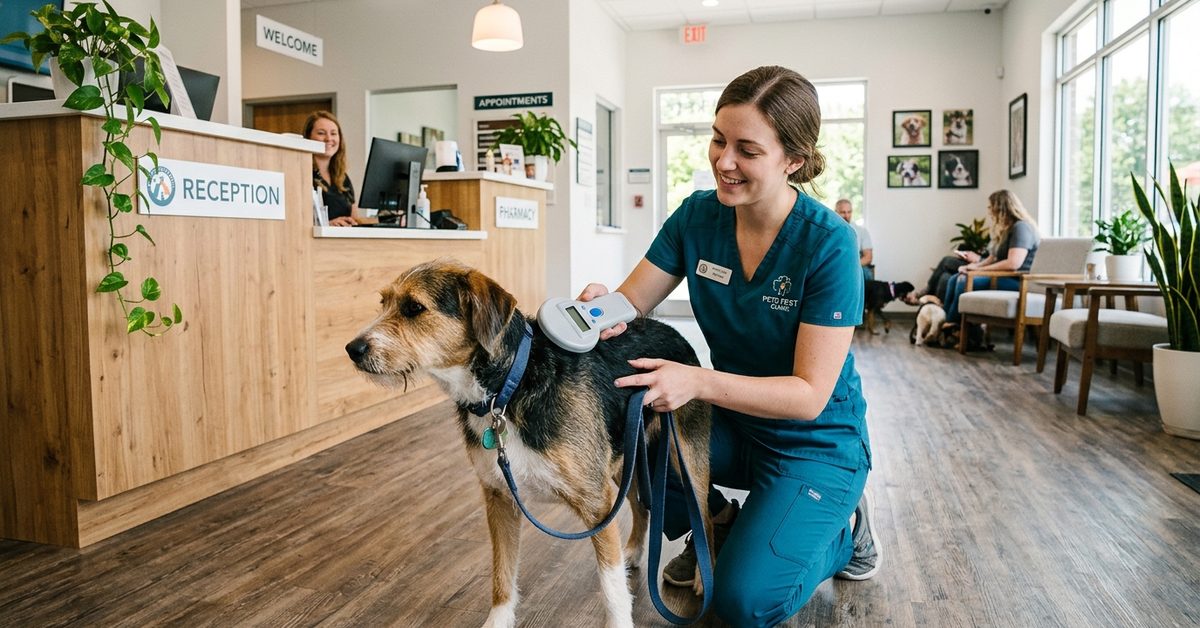
No tag does not mean no owner. Take the dog to any vet clinic or shelter and ask for a microchip scan. Almost every clinic and shelter in the US will scan for free, and the chip number can be traced through the AAHA Universal Pet Microchip Lookup to find which registry holds the owner’s contact details. One free scan resolves a huge share of lost-dog cases.
If you cannot transport the dog, say so when you call animal control. Many offices will send an officer to scan and collect the animal, so you do not have to become a taxi service.
Pro tip: write down what you see
Before you call anyone, jot down the breed or best guess, size, color and markings, collar type, exact location, time, and which way the dog was moving. Snap a photo from a safe distance. Clear details beat a vague “brown dog somewhere on Main Street” every time, and they make found-dog reports and social posts far more useful.
If the Dog Looks Injured
An injured stray needs a vet, not just a phone call
Limping, bleeding, labored breathing, or a dog that will not stand up are all signs to get professional help quickly. Call an emergency vet clinic or animal control and describe what you see so they can prepare. Use DaisyDu’s live vet map to find the nearest emergency clinic right now.
Do not try to treat injuries yourself, and do not move a dog that may have been hit by a car unless it is in immediate danger. Keep the dog still and warm, and let the professionals handle the rest.
Ways to Help Without Getting Close
Sometimes the safest thing you can do is be a good witness. If the dog will not let you near it, take a photo, note the location and time, and call animal control with those details. A report with a photo has helped reunite plenty of dogs whose finders never touched them.
You can also post the sighting where owners look. Neighborhood groups, local lost-and-found pet pages, and free tools like Petco Love Lost let you upload a photo and search shelter listings. Knowing what to do if you find a lost dog covers the online crowd too: a single shared post can reach the owner before a shelter even opens. DaisyDu’s SOS lost-pet alerts work the same way, pushing sightings out fast so nearby pet lovers can keep an eye out.
Prevention matters too. If this experience makes you think about your own dog’s safety net, compare GPS tracker collars and AirTags for dogs so your pup carries a way home. And if it is a cat you keep spotting instead of a dog, our guide on how to find a lost cat outside covers the feline version of this playbook. If your own dog is the one missing, start with what to do if your dog runs away.
Different owners phrase the same moment differently. Whether you searched i found a dog what do i do, wondered where to take a found dog, or asked what to do with a stray dog, the order stays the same: keep everyone safe, check for tags and a microchip, and call animal control first. A found a lost dog report filed the same day is what connects a finder with an owner who is already searching, and the who to call for stray dog answer is animal control first, shelters second, police only for danger or traffic.
Frequently Asked Questions
Should I call 911 about a stray dog?
Only if the dog is an immediate threat to people, for example actively attacking someone. For a loose dog in traffic, an aggressive stray, or after-hours help, use the police non-emergency line instead. For a calm stray, skip the police entirely and call animal control.
Can I keep the dog if no owner comes forward?
Not right away. Most areas require a stray hold period, often several days, during which the shelter must give the owner a chance to claim the dog, and in some places you must report a found dog by law. After the hold expires unclaimed, you can usually apply to adopt the dog through the shelter.
What if the dog runs off before I can catch it?
Report the sighting anyway. Call animal control with the exact location, the time you saw it, which direction it was heading, and a photo if you got one. Officers prioritize recent, specific sightings, and your report may match a lost-dog report the owner already filed.
Does animal control charge me for picking up a found dog?
No. There is no fee to the finder for reporting or turning in a stray. The costs fall on the owner at reclaim time: many shelters charge a collection or kenneling fee before returning the dog, which is one more reason an ID tag or microchip matters.
Need Local Pet Support or an Open Vet Near You?
Use DaisyDu's free neighborhood tools to find 24/7 open emergency animal hospitals, arrange local playdates, or broadcast a lost pet SOS alert.