What Do Kittens Eat?
What do kittens eat changes with age: mother’s milk or kitten milk replacer for the first 3 to 4 weeks, then a weaning gruel of milk replacer mixed with wet kitten food, then wet kitten food, and finally wet plus dry kitten food from about 8 to 10 weeks. Kitten food, not adult food, until about 12 months.
What should be in the bowl for a kitten that is four weeks old, and is it the same bowl you will use at four months? No, and that is the whole point of this guide. A kitten’s diet changes roughly every few weeks in the early months, and each stage has a clear food, a clear texture, and a clear reason. Get the stages right and feeding a kitten is straightforward. Get them mixed up and you risk a hungry, dehydrated, or upset kitten that cannot tell you what went wrong.
Kitten Feeding Chart by Age
Parents asking what do kittens eat at each stage can use this kitten feeding chart by age, which gives the shape of the first year. Ages are guides, not deadlines, and individual kittens vary by a week or two.
| Age | What kittens eat | How often |
|---|---|---|
| 0 to 3 weeks | Mother’s milk, or kitten milk replacer if orphaned | Every 2 to 3 hours, day and night |
| 3 to 4 weeks | Milk plus first tastes of weaning gruel | Milk feeds continue, gruel offered several times a day |
| 4 to 6 weeks | Weaning gruel, thickening gradually to wet kitten food | 4 to 5 small meals a day |
| 6 to 8 weeks | Wet kitten food, with moistened dry food introduced | 3 to 4 meals a day |
| 8 to 12 weeks | Wet plus dry kitten food | 3 to 4 meals a day |
| 3 to 6 months | Kitten food, wet plus dry | 3 to 4 meals a day |
| 6 to 12 months | Kitten food, moving toward adult portions | 2 to 3 meals a day |
Kittens grow fast and eat often because their stomachs are small and their energy needs are high. Frequent small meals suit them far better than one or two large ones. Fresh water should be available at every stage once weaning starts, in a shallow dish that a small kitten can reach safely.
Bottle Feeding Kittens: The First Weeks
Bottle feeding kittens is the job that falls to foster carers and owners of orphaned kittens, and it is the most demanding stage of kitten feeding. Newborn kittens eat only milk: their mother’s milk if she is available, or a commercial kitten milk replacer if she is not. They cannot digest cow’s milk, and they cannot handle solid food, so do not improvise with either.
Kitten milk replacement is made to match the nutrition of a mother cat’s milk, and it is different from the “cat milk” sold as a treat for adult cats. Check the label: you need a formula made for kittens, not a complementary adult cat drink. Feed with a kitten nursing bottle, following the replacer pack’s guide for amount and frequency, and keep the kitten warm during feeds, since a chilled kitten cannot digest properly. Very young kittens also need help to urinate and defecate after feeds, which a mother cat normally does by licking. Your vet or a rescue can show you the gentle technique if you are fostering for the first time.
If you find orphaned kittens, contact a vet or rescue quickly, especially for kittens under 3 weeks, since they need feeding every few hours around the clock and can dehydrate fast. For a kitten with breathing trouble or other emergency signs, our cat vet finder covers cat vets near you. Do not wait for a feeding guide to solve a medical emergency.
Weaning: From Milk to Solid Food
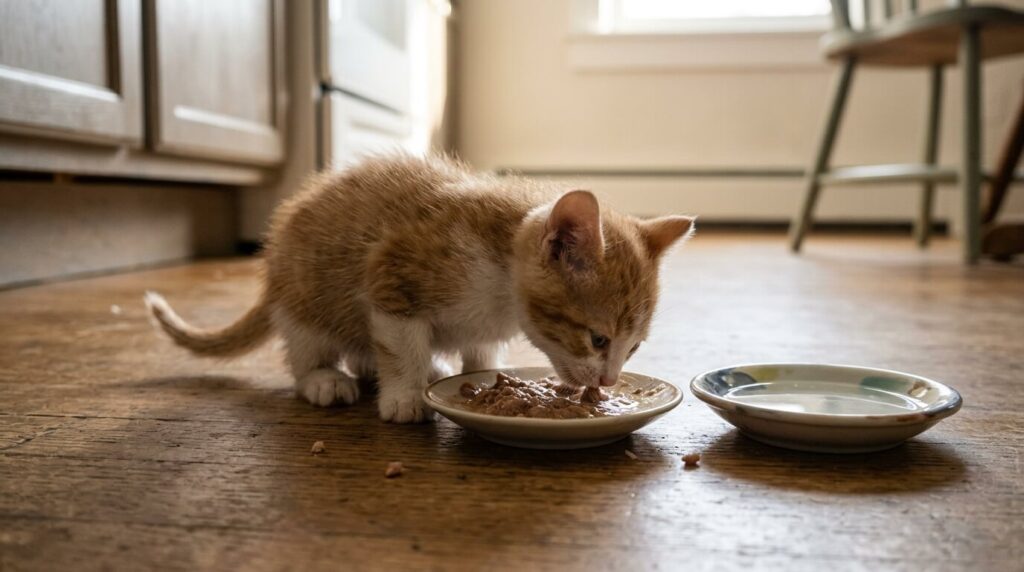
At about 3 to 4 weeks, kittens start showing interest in solid food, sniffing and licking at their mother’s bowl. That is the cue to offer weaning gruel: wet kitten food blended smooth with warm kitten milk replacer. Offer it in a shallow dish several times a day, and expect mess. Kittens walk through gruel, sit in it, and wear it, and that is normal.
Thicken the gruel gradually over the next two weeks as the kittens learn to lap and then to bite. By 6 weeks, most kittens are eating wet kitten food with less added liquid, and by 8 weeks they are usually fully weaned. Weaning is a process, not a single day, and a kitten that is slower than its littermates should be given extra time on thinner gruel rather than pushed onto solids it cannot manage.
When Can a Kitten Eat Dry Food?
When can a kitten eat dry food is the question this guide was originally built around, and it deserves a clear answer. Dry food enters the picture during weaning, but in stages. First, dry kitten food is moistened with warm water or milk replacer until soft, usually from about 6 weeks, alongside wet food. Then, as teeth and chewing skills develop, the soaking is reduced. Most kittens handle dry kitten food on its own from about 8 to 10 weeks, once they are fully weaned and chewing confidently.
That does not mean dry food should replace wet food entirely. Wet food adds moisture to the diet, which supports urinary health in cats, and many vets recommend a mix of wet and dry kitten food through the first year. Dry food brings convenience and a crunch that suits grazing, while wet food brings hydration and a strong smell that tempts picky kittens. A mix gives you both advantages, and it also keeps your kitten used to both textures, which helps if you ever need to change diet later.
One rule applies to both textures: the food must say kitten food, not adult cat food. Kitten food carries higher protein and calorie levels and the nutrient balance growing cats need, including taurine, an amino acid cats must get from food. Adult cat food does not match a kitten’s growth needs, and kittens stay on kitten food until about 12 months, when your vet can confirm the switch to adult food.
What Else Kittens Can Eat, and What to Avoid
Once a kitten is eating solid food, small amounts of plain cooked meat or cooked egg can be offered as treats, but treats should stay a small share of daily intake so they do not unbalance the main diet. Plain, well cooked meat with no seasoning, salt, or bones is the safe pattern. Raw meat carries bacteria and parasite risks and is not recommended for young kittens.
Some foods must stay out of the bowl entirely. Onion, garlic, and chives are toxic to cats. Grapes and citrus fruit are unsafe. Cow’s milk often causes diarrhea in kittens, since many cats are lactose intolerant, so do not use it as a milk substitute. Chocolate, lilies, and any food seasoned for humans should never be given to kittens. If a kitten eats something toxic, contact your vet at once rather than searching for a home remedy.
That changing menu is the full answer to what do kittens eat: milk, then gruel, then kitten food in wet and dry forms. Feeding a kitten well comes down to a short list: milk first, gruel next, wet kitten food after that, dry kitten food added gradually from about 8 to 10 weeks, and kitten food, not adult food, until about a year old. Follow the chart, keep the water fresh, weigh your kitten at vet visits, and ask your vet when anything looks off. The bowl changes as the kitten grows, and that changing bowl is exactly what healthy growth looks like.
How much should a kitten eat per day?
Follow the feeding guide on your kitten food pack as a starting point, then adjust by weight and growth with your vet. Kittens eat far more per body weight than adult cats because they are growing fast. Split the daily amount into frequent small meals, and weigh your kitten at vet visits to confirm it is on track.
Can kittens drink cow’s milk?
No, cow’s milk is not a substitute for mother’s milk or kitten milk replacer, and it often causes diarrhea because many cats cannot digest lactose well. Use a commercial kitten milk replacer for orphaned kittens, and give fresh water once weaning starts. Adult cat milk drinks sold as treats are not kitten formula either, so check labels carefully.
When do kittens switch to adult cat food?
Most kittens switch to adult cat food at about 12 months old, when growth slows and their nutritional needs change. Make the switch gradually over about a week, mixing increasing amounts of adult food into the kitten food. Your vet can confirm the timing for your kitten, since breed and growth rate affect it.
What if my kitten refuses dry food?
Try moistening the dry food with warm water first, then reducing the soaking gradually, and keep offering wet food alongside so the kitten still eats well. Some kittens prefer wet food long term, and a wet only kitten diet is fine provided the food is complete kitten food. If a kitten refuses all food, call your vet promptly.
Need Local Pet Support or an Open Vet Near You?
Use DaisyDu's free neighborhood tools to find 24/7 open emergency animal hospitals, arrange local playdates, or broadcast a lost pet SOS alert.