Dog walking at night safety
Yes, with the right setup. Night walks are safe when you and your dog are visible from a distance, you stick to familiar well-lit routes, and you keep the leash short. Add a light, reflective gear, and a charged phone, and the dark becomes just another good time to walk.
Dog walking at night safety comes down to one thing: being seen. Night doesn’t make the walk dangerous. Invisibility does. Once drivers, cyclists, and other walkers can spot you and your dog from a block away, the dark becomes just another time of day.
Be Seen Before Anything Else
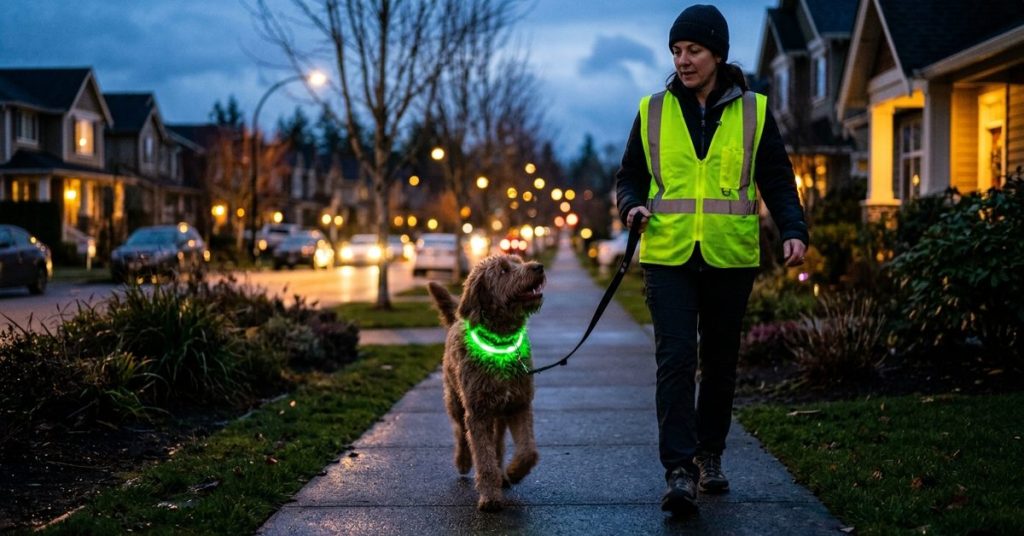
Reflective gear for night dog walks is the single highest-value purchase you can make for after-dark outings. An LED collar or a clip-on light makes your dog visible from hundreds of feet, which matters more than anything else when cars are involved. Pair it with a reflective vest or harness on your dog and one on yourself. Drivers see the moving glow long before headlights catch you.
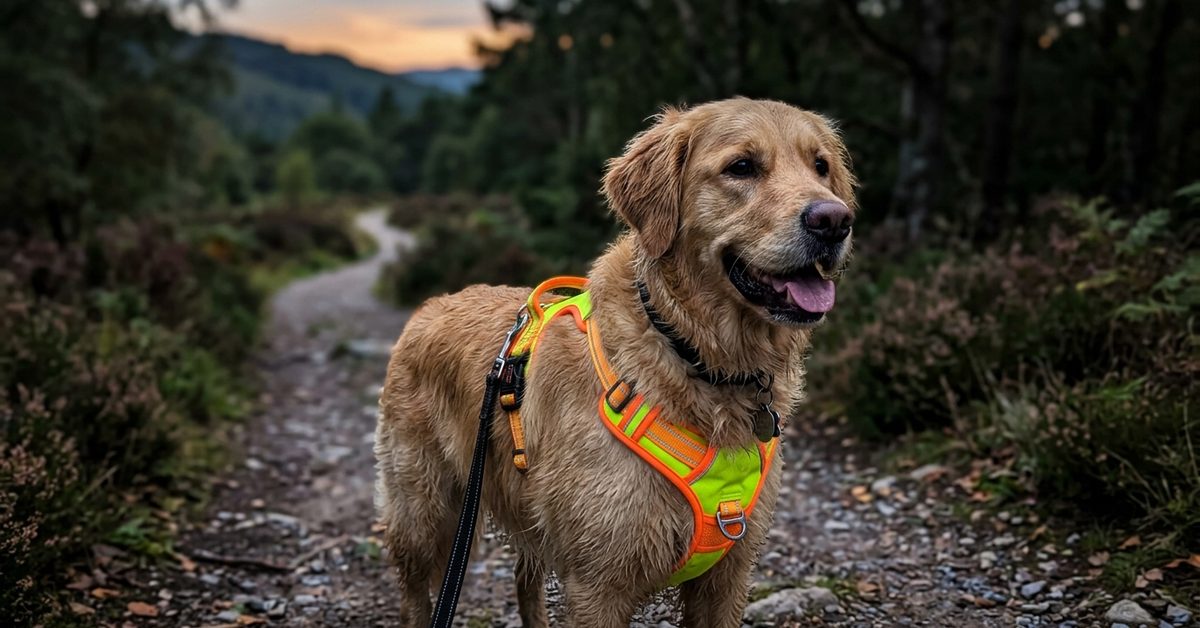
Don’t stop at the collar. A reflective leash adds a second moving line of visibility, and a small clip-on light on your own jacket or shoe tells drivers there’s a person attached to that glowing dog. Test the whole setup in your driveway before the first real walk: if you can read your dog’s silhouette at 100 feet, you’re ready.
Night-Walking Gear Worth Buying
Heads up: the links below go to Amazon product pages. We may earn a commission if you buy through them, at no extra cost to you.
BSEEN LED Dog Collar
A rechargeable LED collar with steady and flashing modes plus reflective trim for backup. Light, simple, and the single most visible thing you can put on your dog after dark.
Noxgear LightHound LED Harness
An illuminated vest-harness with fiber-optic glow and reflective piping, visible from hundreds of feet. The step-up pick for dogs walked nightly on trafficked streets.
Nite Ize SpotLit Collar Light
A tiny carabiner LED that clips to any collar, harness, or leash. The cheap redundancy every night walker should own: if the main collar dies mid-walk, this keeps your dog visible.
Carry Your Own Light
A headlamp beats a handheld flashlight because your hands stay free for the leash. Use it to sweep the ground ahead for broken glass, holes, discarded food, and anything your dog is about to eat. Angle it down at the path, not into oncoming eyes. A cheap headlamp plus your phone flashlight as backup covers every night walk you’ll ever take.
Plan Your Route Before Dark
Route planning is half of dog walking at night safety. Walk routes you know well, on streets with working streetlights and sidewalks. Skip the wooded shortcut, the construction zone, and the unlit park path, even if they’re fine at noon. If you want to try a new route, walk it once in daylight first so there are no surprises.
Keep night walks a little shorter than daytime ones, especially while you and your dog adjust. Here’s how far to walk your dog by age and breed so you can scale the route sensibly. And tell someone where you’re going, or better, share your live location (more on that below).
Shorten the Leash, Sharpen Control
Use a standard 4 to 6 foot leash at night and skip the retractable. That thin cord is nearly invisible in the dark, which means cyclists and other walkers can ride straight into it, and your dog can be 20 feet into the road before you react. Keep your dog close at crossings and practice a solid recall in the yard, because voice control is your backup when visibility drops.
Wildlife and Off-Leash Dogs After Dark
Night belongs to wildlife. Depending on where you live, that means coyotes, raccoons, skunks, deer, or all of the above. Most want nothing to do with you, but never let your dog chase. A skunk encounter at 10 p.m. ruins the whole week. Make a little noise as you walk, give rustling bushes a wide berth, and carry a small flashlight bright enough to startle.
Off-leash dogs are harder to read at night too. You can’t see body language at 50 feet in the dark, so give unknown dogs extra space and be ready to cross the street. If an off-leash dog approaches, keep your dog behind you, stay calm, and keep moving.
Skunk country? Keep a bottle of hydrogen peroxide, baking soda, and dish soap in the house before you ever need it. The classic deskunking mix only works fresh, and stores are closed at midnight.
Walk Against Traffic
On roads without sidewalks, walk on the left side facing oncoming traffic. You see cars coming, drivers see your lights and reflective gear head-on, and nobody gets surprised. Cross only at lit crosswalks or intersections, and pause before stepping out even when you have the right of way. At night, assume the driver hasn’t seen you until their headlights clearly slow.
Protect the Walker, Too
Every night-walking guide talks about the dog. Here is the part about you. Tell someone your route and when you expect to be back, or share your live location before you leave. Keep one ear free, so skip the noise-cancelling headphones on dark streets. Carry your phone charged, not at 4 percent. Trust your gut about a street that feels wrong and pick the busier road instead. You are part of the safety equation, not just your dog’s escort.
And while you are at it, make sure your dog can be identified if you ever get separated: a flat collar with a current ID tag plus a registered microchip. The tag gets your dog home tonight. The chip gets them home if the collar comes off.
Track Every Night Walk With DaisyDu
Here’s the easiest dog walking at night safety upgrade: track your night walks with DaisyDu’s GPS walk tracker. Your route is recorded in real time, so a partner or family member always knows exactly where you are. If you ever take a wrong turn or your phone dies mid-walk, someone knows your last position. It also logs your distance and pace, so those shorter night routes stay consistent.
One more night-walk perk worth knowing: hot pavement is a non-issue after dark. Summer evenings are often the kindest walking hours of the day.
Make the post-walk check a habit: paws for cuts or thorns, collar and leash for wear, a quick once-over for ticks in warm months. Two minutes at the door catches the small stuff before it becomes a vet visit.
What time is too late to walk a dog?
There is no universal cutoff. A walk at 11 p.m. on a lit suburban street is fine, while midnight in an unlit park is not. Judge by lighting, foot traffic, and how well you know the area rather than the clock. If the route feels empty and you can’t see 50 feet ahead, pick a busier street or go earlier.
Do dogs see well in the dark?
Better than you, but not as well as people assume. Dogs have more rod cells and a reflective tapetum lucidum, so they navigate dim light far better than humans. In true darkness, though, they’re nearly as blind as you are. Your light still matters: it reveals ground hazards your dog can’t see coming.
Should I walk my dog at night in winter?
Yes, and for many owners it’s unavoidable since the sun sets before work ends. Layer the visibility gear over a warm coat for short-haired breeds, watch for ice on paths, and wipe paws after walks where sidewalks are salted. Shorter, well-lit loops beat long dark adventures in January.
What should I do if a coyote approaches us at night?
Don’t run. Make yourself big: stand tall, wave your arms, and make loud, firm noise. Pick up a small dog if you can do it without turning your back. Back away slowly while facing the coyote, keeping your dog close behind you. Most coyotes are testing, not attacking, and bold behavior sends them looking elsewhere.
Need Local Pet Support or an Open Vet Near You?
Use DaisyDu's free neighborhood tools to find 24/7 open emergency animal hospitals, arrange local playdates, or broadcast a lost pet SOS alert.