What is the best hands free dog leash?
The Tuff Mutt Hands Free Dog Leash is the best hands free dog leash for most owners: a shock-absorbing bungee, dual control handles, and a sliding belt clip at a fair price. Runners who want storage should look at the Ruffwear Trail Runner Belt, and budget shoppers at SparklyPets. Compare all four below.
Finding the best hands free dog leash usually starts the moment your arms give out: juggling a coffee, a phone, and a pulling dog was never the plan. A good waist leash moves the pulling force to your core, frees both hands, and turns chaotic walks into actual exercise. Here are the four worth buying, and how to pick between them.
Heads up: the links below go to Amazon product pages. We may earn a commission if you buy through them, at no extra cost to you.
Our Picks at a Glance
| Leash | Style | Bungee | Best for |
|---|---|---|---|
| Tuff Mutt Hands Free | Waist belt + leash | Yes, 4–5 ft | Most owners |
| Ruffwear Trail Runner Belt | Belt (use your leash) | Depends on leash | Runners needing storage |
| SparklyPets Hands Free | Waist belt + leash | No | Budget shoppers |
| SparklyPets (Small Dogs) | Waist belt + leash | No | Small breeds |
Tuff Mutt Hands Free Dog Leash: Best Overall
Tuff Mutt Hands Free Dog Leash
The Tuff Mutt is the complete package: an adjustable waist belt, a 4-foot bungee leash that stretches to 5 feet, and two handles (one at the hip, one near the collar) for instant control. The belt clip slides so your dog can switch sides without tangling your legs, and reflective stitching keeps you visible after dark.
- Shock-absorbing bungee eases pulling
- Dual handles for quick control
- Sliding clip prevents tangles
- Reflective thread for night walks
- Best for medium and large dogs; small dogs may not engage the bungee
- No storage pockets
Ruffwear Trail Runner Belt: Best for Runners
Ruffwear Trail Runner Belt
Ruffwear’s Trail Runner is a belt, not a leash: clip any handled leash to its side-release buckle and run. Two stretch zippered pockets swallow keys, a phone, pickup bags, and a soft flask, and the padded design stays bounce-free. Pair it with a bungee leash for the full shock-absorbing setup.
- Two zippered pockets for essentials
- Bounce-free padded fit
- Works with leashes you already own
- Reflective trim
- Leash sold separately
- Costs more than all-in-one options
SparklyPets Hands Free: Best Budget
SparklyPets Hands Free Dog Leash
SparklyPets keeps it simple and affordable: an adjustable waist belt with reflective stitching and a fixed-length leash. No bungee, no pockets, but it does the core job (hands-free walking) for a fraction of the price. A solid first waist leash if you’re not sure the style suits you yet.
- Very affordable entry point
- Reflective stitching included
- Adjustable belt fit
- No shock-absorbing bungee
- No storage
SparklyPets (Small Dogs): Best for Small Breeds
SparklyPets Hands Free: Small Dog Version
Most waist leashes are built for medium and large dogs. SparklyPets makes a small-dog version with a lighter belt and appropriately scaled leash, so little dogs get the hands-free treatment without being dragged by oversized hardware.
- Sized for small breeds
- Same budget-friendly price
- Reflective stitching
- Not suited to strong pullers
- No bungee
What to Look For in a Hands Free Leash
The best hands free dog leash for you depends on how you move. Runners need a bungee to absorb lunges and a belt that doesn’t bounce. Casual walkers need comfort and an easy clip. Everyone benefits from reflective trim for low-light walks (see our night walking safety guide) and a handle near the collar for tight spots like trailheads and crosswalks.
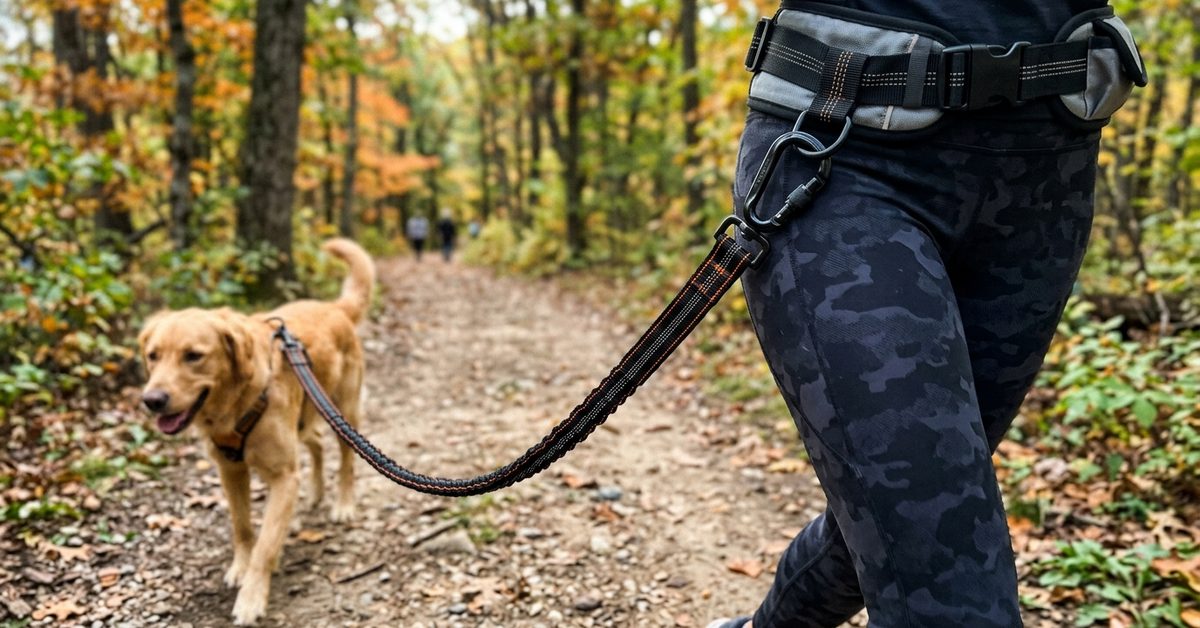
New to waist leashes? Practice in a quiet area first. The pulling force sits on your hips, not your arm, and it feels strange for the first ten minutes. Most people never go back.
Bungee or Fixed Length?
A bungee section stretches to absorb the shock when your dog lunges, which spares your hips and your dog’s neck. It is the default choice for runners and strong pullers, and the reason most running-specific leashes include one. A fixed-length leash gives you more precise control and usually costs less, which suits calm dogs on relaxed walks. If your dog pulls at all, the bungee earns its keep on the first outing.
Getting the Fit Right
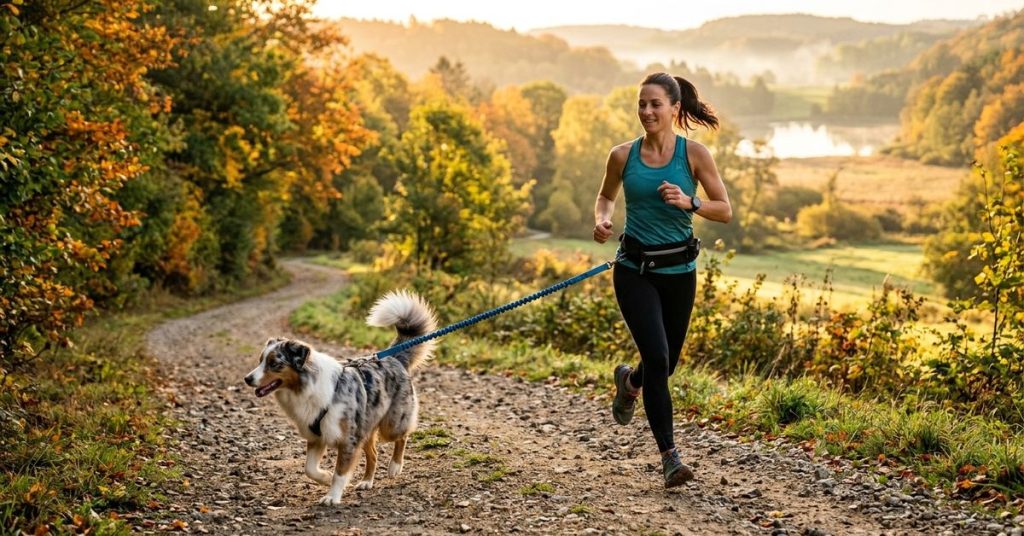
The belt should sit on your hips, not your waist, with the leash clipped at the front or side. A sliding clip lets your dog switch sides without tangling your legs, and the whole setup should feel snug without digging in when your dog hits the end of the leash. Match the belt to your dog: lighter webbing for small dogs, wide padded belts for strong pullers. Two things to avoid: clipping a retractable leash to a waist belt (you lose the close control a traffic handle gives you), and a belt with no reflectivity if you ever walk after dark. Once the fit is right, the best hands free dog leash feels like an extension of your stride, not a tug-of-war.
Pair your new setup with good walking habits: our guide on how far to walk your dog covers distance by age and breed. And if you run with a group, find local dog walking groups on DaisyDu.
Are hands free leashes safe for dogs that pull?
Yes, with the right design. A bungee leash absorbs the shock of lunges instead of jerking your dog’s neck, and the force lands on your hips rather than your shoulder. For strong pullers, pair the waist leash with a front-clip harness and use the collar handle for close control in traffic.
Can I run with a hands free leash?
That is exactly what they are made for. Canicross and trail runners have used waist leashes for years. Choose one with a bungee section and a non-bouncing belt, start with short easy runs, and build distance the same way you would for yourself.
Waist leash vs. shoulder sling: which is better?
Waist belts win for running and strong dogs because your core handles the force. Shoulder slings work for calm small dogs on relaxed walks but give you less control. If your dog pulls at all, choose the waist belt.
Will a hands free leash work for two dogs?
Yes with a coupler or a dual-leash model, but master one dog first. Two dogs on a waist belt multiply every lunge, so this setup suits trained pairs. Until then, walk the stronger puller on a regular leash.
Need Local Pet Support or an Open Vet Near You?
Use DaisyDu's free neighborhood tools to find 24/7 open emergency animal hospitals, arrange local playdates, or broadcast a lost pet SOS alert.