How to Remove Pet Hair From Carpet: The Quick Answer
The fastest way to learn how to remove pet hair from carpet is to loosen the hair first, then vacuum it up. Rake the pile with a rubber broom to roll hair into clumps, lift the clumps by hand, then vacuum slowly in two directions. Vacuuming first just pushes woven hair deeper.
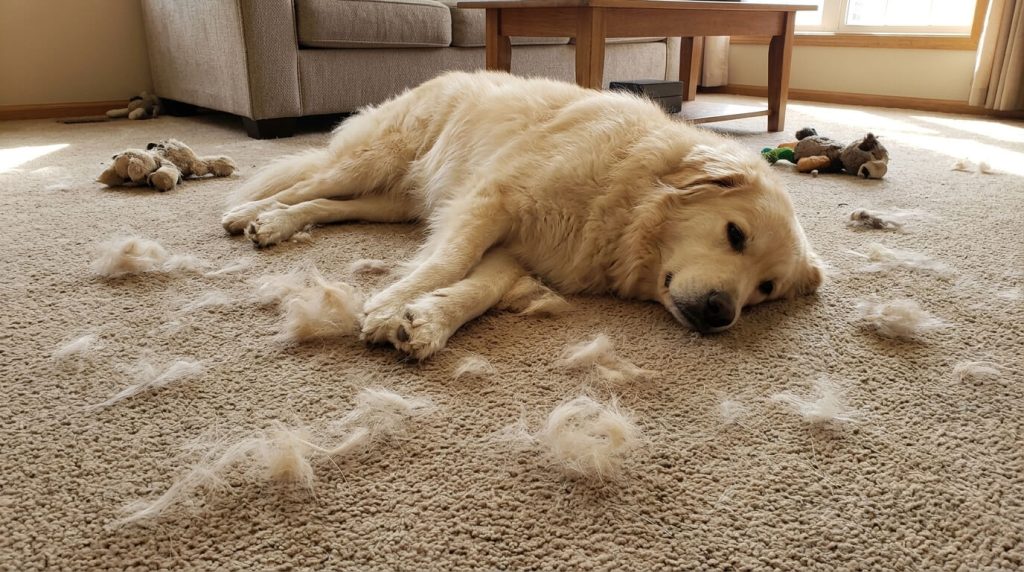
You vacuum on Saturday, the carpet looks clean, and by Sunday night there are pale tufts along the baseboards again. The hair was never gone. Most of it was sitting below the surface, wrapped around the carpet fibers where suction alone cannot reach it. This guide fixes that order of work: loosen, lift, then vacuum.
Why a Vacuum Alone Leaves Hair Behind
Carpet pile is not a flat surface. Each fiber twists and leans, and a shed hair that lands on top works its way down between fibers every time someone walks over it. Foot traffic presses the hair in, static helps it cling, and skin oils make it stick to the fiber instead of floating free.
A standard vacuum pass mostly collects what sits on top. The brush roll can even flick loose hair sideways into the pile rather than lifting it. That is why a room can look tidy right after vacuuming and still release a cloud of hair the moment you drag a shoe across it. Loosening the hair before you vacuum is the step that changes the result. (Evidence-informed: this matches Carpet and Rug Institute guidance that slow, repeated vacuum passes lift more embedded soil and debris than one fast pass.)
How to Remove Pet Hair From Carpet, Step by Step
This rake-then-vacuum routine is the main method in this guide, and the one to use for a full room. Later sections adapt the same loosen-first idea for rooms where you cannot vacuum, for stairs and rugs that need smaller tools, and for weekly upkeep.
Step 1: Rake the whole room first
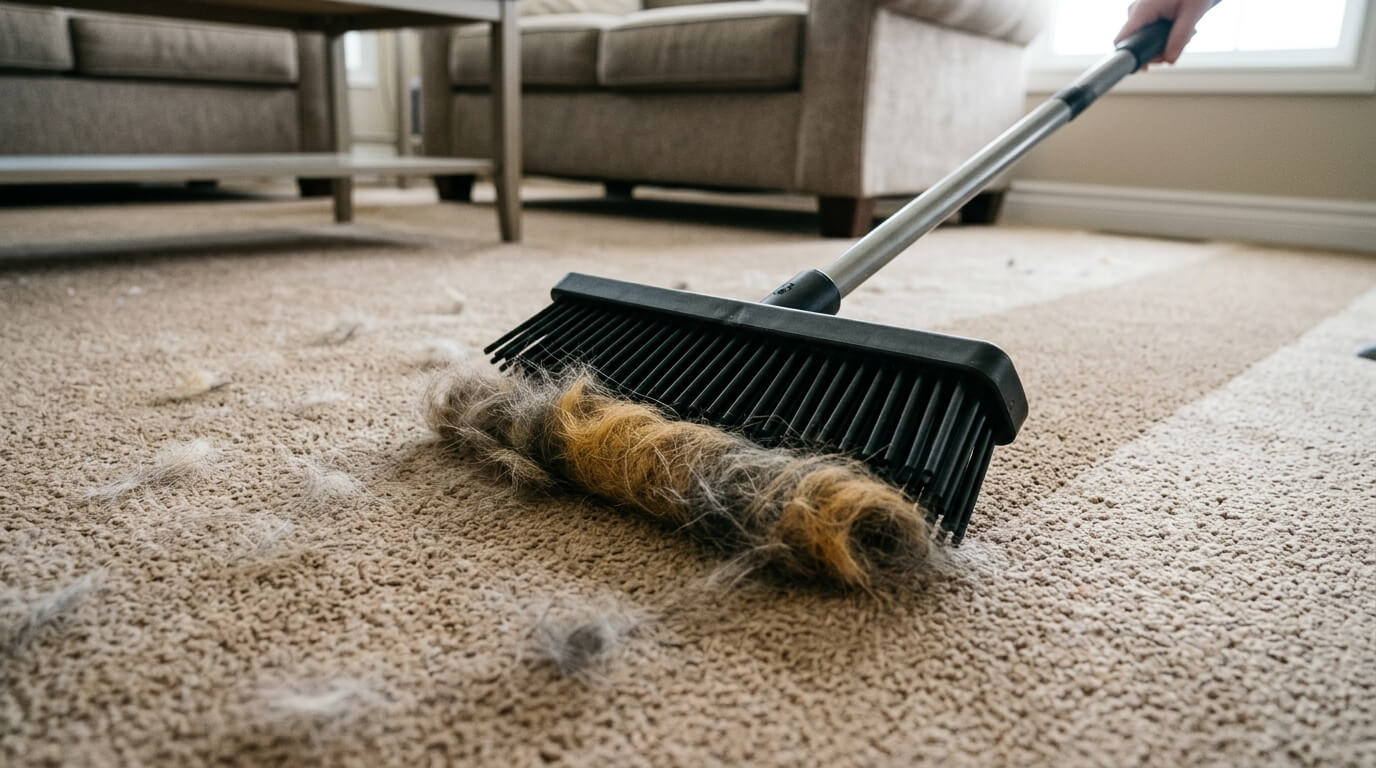
Work in sections about an arm’s length wide. Pull a rubber broom or carpet rake toward you in short, firm strokes. The rubber bristles grip the pile and drag trapped hair up and out, rolling it into ropes and clumps you can see. Keep your strokes in one direction per section so the freed hair collects in lines instead of scattering. Corners and the strip along the baseboards hold the most hair, so give them extra passes.
Step 2: Pick up the clumps by hand
Grab the ropes and clumps of hair and drop them straight in a bin. Do not vacuum this bulk up first. A large wad can wrap around the brush roll or block the hose, and pulling it out by hand takes seconds. What is left behind after this step is the fine hair still sitting in the pile, and that is the vacuum’s job.
Step 3: Vacuum slowly, in two directions
Now vacuum the section, moving slowly enough that the brush roll has time to work the pile. Run the full section north to south, then again east to west. The second direction lifts fibers that leaned over and sheltered hair during the first pass. Check the bin or bag when you finish a room. A full bin cuts suction hard, and a clogged filter does the same, so empty and check before you blame the method.
Pick the Right Tool for Your Carpet Type
Pile type changes how to remove pet hair from carpet more than the brand of vacuum does. A stiff rake that works wonders on one carpet can snag another, so match the first tool to the pile before you start.
| Carpet type | Best first tool | Why, and what to watch |
|---|---|---|
| Low-pile and flat-weave | Rubber broom or window squeegee | Hair sits close to the surface, so short strokes clear it fast. Easy carpet for every method in this guide. |
| Medium cut pile | Rubber broom or carpet rake | The standard case. Rake in sections, then vacuum in two directions as in the steps above. |
| High-pile, plush, and shag | Rubber broom, used gently | Hair sinks deep here. Rake lightly so you lift hair without tearing long fibers, then vacuum on a high-pile setting with suction doing most of the work. |
| Loop pile and Berber | Damp rubber glove or rubber broom | Skip stiff and metal rakes. Tines can catch a loop and pull a snag across the row. Soft rubber grips hair without hooking the loops. |
| Delicate and wool rugs | Damp rubber glove or squeegee | Work by hand with light pressure. No stiff rakes and no hard scrubbing, which can fuzz or distort natural fibers. |
The same table logic applies when you need to remove pet hair from carpets in a rental or a guest room you do not know well. Start with the gentlest tool in the row that fits, test it on a hidden corner under furniture, and only move up in force if the hair is not shifting.
How to Get Pet Hair Out of Carpet Without a Vacuum
A broken vacuum, a sleeping baby, or a vacation rental with no machine in the closet all call for the same routine. This is the without-vacuum method, and it gets a room presentable on its own.
- Rubber broom, full pass. Rake the whole room exactly as in Step 1 above. On its own, this clears the bulk of the visible hair.
- Damp rubber glove for edges. Put on a rubber glove, dampen it slightly, and run your hand along baseboards, corners, and furniture legs. Hair sticks to the damp rubber and balls up where you can pick it off. Rinse the glove and repeat.
- Window squeegee for small patches. A handheld squeegee dragged in short strokes works like a mini rake on low-pile carpet and rugs. It is the best hand tool for a single bad patch.
- Lint roller for the last specks. Save the roller for tiny finishing spots and upholstery edges. It is too slow and wasteful for a whole room.
- Shake and sweep. Any rug small enough to carry goes outside for a hard shake before you treat it. Loose hair leaves for free that way.
What you skip in this routine matters too. Dry sweeping with a normal broom mostly moves hair around and throws the fine part into the air, where it settles again. Stick to rubber tools that grip.
Carpeted Stairs and Rugs Need a Smaller Tool
Carpeted stairs collect a dense line of hair along the inner edge of each step, where feet pivot and grind hair into the pile. A full-size broom is clumsy here. Work one step at a time with a damp rubber glove or a handheld squeegee, starting at the top step and working down so the hair you free lands on a step you have not cleaned yet. Finish with a handheld vacuum or a lint roller on the step edges.
Rugs have one extra trick available. Before you rake the top, flip the rug over and vacuum or shake the underside well. Vibration and gravity loosen hair that is woven through, and some of it simply drops out. Then flip it back, rake the top as normal, and vacuum. For a washable rug, follow the maker’s wash directions after the dry hair is off, since washing a rug that is still full of hair just moves wet clumps around the drum.
Work your way toward the door. Clean the far side of the room first and finish at the doorway, so you never walk back across a finished section in socks that are quietly replanting hair with every step.
Keep Hair From Weaving Back In
Once you know how to remove pet hair from carpet, the cheaper win is slowing the rebuild. Three habits do most of that work.
- Brush the pet, not just the floor. A five-minute brush on a hard floor or outside catches hair before it ever reaches the carpet. It is the one habit that cuts every cleaning job in this guide down to size.
- Put a washable throw where your pet actually sleeps. Dogs and cats pick a favorite carpet spot. A throw laid over that spot collects most of the shed, and you can wash it instead of deep-cleaning the room. When you wash pet bedding and throws, our guide to the best pet hair remover for laundry covers the products that keep that hair from spreading through the wash.
- Do short upkeep passes. A quick rubber-broom pass over traffic lanes once or twice a week takes minutes and stops hair from getting walked deep into the pile, which is the stage that makes a full deep clean necessary.
Pet Hair on Other Surfaces
Carpet is usually one room of a whole-house problem. The same loosen-first logic applies elsewhere, but the tools change. For fabric, our pillar guide on how to remove dog hair from clothes covers the wash, dryer, and lint-roller order that works on clothing and bedding. For the rest of the house, see how to remove dog hair from car seats and mats, and how to remove dog hair from couch cushions and upholstery.
When Carpet Cleaners Are the Problem
Scented carpet powders, strong deodorizers, and essential oil sprays can irritate paws and skin, and pets pick up residue when they groom. Choose unscented, pet-safe products, follow the label, and keep pets off the carpet until it is fully dry. If your pet is licking their paws a lot, sneezing, drooling, or vomiting after a product has been used, stop using it and contact a vet. Find an open vet near you on DaisyDu’s Live Vet Map →
Does baking soda help remove pet hair from carpet?
No. Baking soda is a deodorizer, so a light sprinkle left for 20 to 30 minutes before vacuuming can freshen a room, but it does not loosen hair woven into the pile. The claim that it releases trapped hair is Unsupported. Rake first, use it for smell only, and keep pets out until you have vacuumed it up.
How often should I do a full rake on my carpet?
During a heavy shed, usually spring and fall for double-coated dogs, a full rake once a week keeps up. The rest of the year, every 2 to 3 weeks is enough for most homes if you do quick upkeep passes in between. Judge by the baseboard line: once a pale edge builds up, you are due.
Will a robot vacuum keep carpet hair under control on its own?
It helps with surface hair on low-pile carpet if it runs often and you empty the small bin regularly, since a full bin ends the cleaning early. It cannot pull woven hair out of medium pile or shag, because it has no loosening step. Treat it as upkeep between rake sessions, not a replacement for them.
Should I rake before or after steam cleaning a carpet?
Always rake first. Steam cleaning wets hair still in the pile, and wet hair mats together, clings harder, and can work deeper as the machine passes over it. Rake and vacuum until dry hair stops coming up, then steam clean for soil and odor. Let the carpet dry fully before pets walk on it.
Need Local Pet Support or an Open Vet Near You?
Use DaisyDu's free neighborhood tools to find 24/7 open emergency animal hospitals, arrange local playdates, or broadcast a lost pet SOS alert.