How to remove dog hair from clothes?
Shake each item outside, then tumble it dry for 10 minutes on a no-heat setting so loose hair lands in the lint trap. Clean the trap, wash a small load with half a cup of white vinegar in the rinse, then dry normally and clean the trap again.
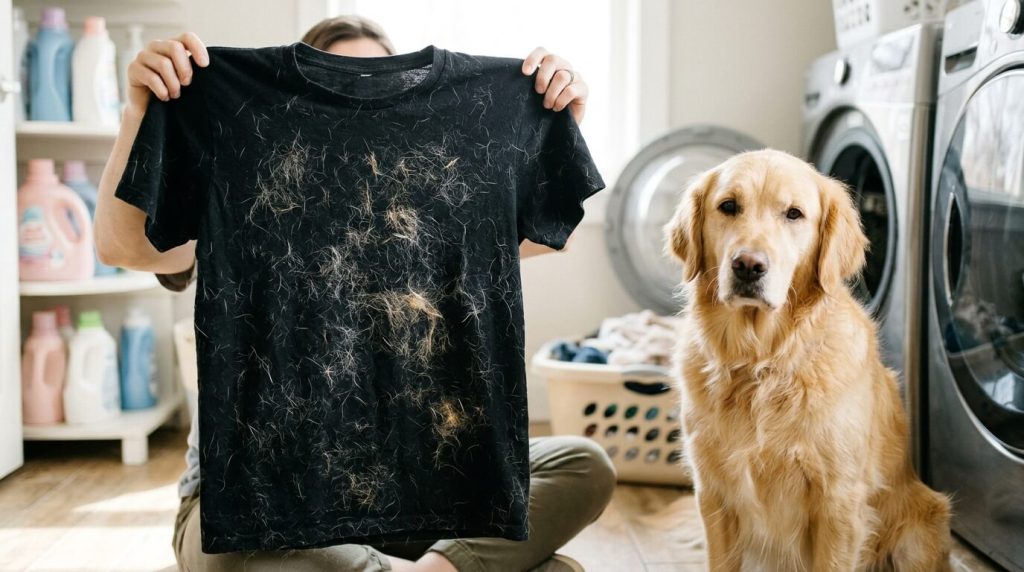
Learning how to remove dog hair from clothes starts with one rule that feels backwards: never wash a hairy load first. You pull on a clean black shirt, kneel down for one cuddle with your retriever, and you are suddenly wearing a second, furrier shirt. Water is not the fix at that point. Wet hair clumps, sinks into the weave, and redeposits on everything else in the drum. Dry removal first is what changes the result.
Why Dog Hair Sticks to Clothes So Stubbornly
Hair clings for two reasons. The first is static. Tumbling, friction, and dry indoor air build a charge that pulls loose strands onto fabric and holds them there. The second is shape. Each strand is tapered and slightly barbed, so it hooks into woven fibers instead of shaking free.
Fabric decides how hard the fight is. Knits, fleece, flannel, and corduroy act almost like hook-and-loop tape for fur. Smooth, tightly woven fabrics such as dress shirts and many polyester blends release hair far more easily. That is why the same dog can leave one outfit spotless and another looking felted.
There is one more trap. Hair you do not remove before washing does not vanish. It floats in the wash water and settles back onto the load, which is why a shirt can come out of the machine clean and still hairy.
The Dryer-First System, Step by Step
Most guides hand you a pile of unrelated tricks. Order matters more than tricks. This sequence is how to remove dog hair from clothes reliably: work through the four steps in order and each one makes the next one easier.
Step 1: Shake and Strip the Loose Hair Outside
Take the load outside or over a hard floor you can sweep. Shake every item hard, several snaps per garment. Then strip what is left on the surface with a lint roller, a pet hair brush, or a slightly damp rubber glove run flat over the fabric. Two minutes here saves you a second wash later.
Step 2: Tumble Dry for 10 Minutes Before Washing
This is the step most people skip, and it does the heavy lifting. Put the dry clothes in the dryer on a no-heat or air-fluff setting for 10 minutes. The tumbling loosens hair that brushing missed, and the airflow carries it to the lint trap. Take the clothes out, shake them once more, and clean the trap before you wash. Appliance makers back this order: both Speed Queen and Maytag publish the same dryer-first advice in their pet hair laundry guides (Verified).
Step 3: Wash a Small Load With Vinegar in the Rinse
Wash the hairy items on their own, and keep the drum no more than two-thirds full so clothes can move and rinse clean. Add half a cup of white vinegar to the rinse cycle, through the fabric softener dispenser if your machine has one. Vinegar relaxes fibers and cuts static, so trapped hair releases instead of resettling. Speed Queen publishes the same half-cup rinse measure for pet hair loads (Verified). Finish with an extra rinse if your machine offers one.
Step 4: Dry, Then Clean the Trap Again
Dry the load as the care labels allow. Wool dryer balls help separate items so air reaches every surface and more hair works loose. When the cycle ends, take each item out one at a time and give it a quick shake before folding. Then clean the lint trap again. A trap left full of hair blows loose strands back onto the next load.
Keep a second lint roller wherever you actually get dressed, not in the laundry room. A 20-second pass on your way out the door catches the hair that sofas, car seats, and one last goodbye hug transfer right back onto you.
Pick the Method by the Job in Front of You
Not every hairy item needs the full system. Match the method to the moment:
| Method | Best for | When to use it | Watch out |
|---|---|---|---|
| Lint roller or tape | Light surface hair on smooth fabrics | Quick touch-ups before you leave | Sheets fill fast on heavy shedding |
| Damp rubber glove | Clumps and larger areas | Before washing, on sturdy fabrics | Use light pressure on loose knits |
| Pet hair brush | Hair worked into fleece and knits | Pre-wash pass on stubborn items | Test a hidden spot on delicates first |
| 10-minute no-heat tumble | Whole loads at once | Before washing, every hairy load | Only if the care label allows tumble drying |
| Vinegar rinse | Hair that survives the wash | In the rinse, half a cup per load | Skip it on silk and specialty coatings |
| Wool dryer balls | Reducing static in the final dry | During the drying cycle | They loosen hair, they do not trap it |
If you want tools built for the wash itself, our roundup of the best pet hair remover for laundry loads covers what actually collects hair in the machine, and what is not worth your money.
How to Remove Dog Hair From Clothes in the Washing Machine
Plenty of readers search for how to get dog hair out of clothes using the washer alone, usually after a load came out still furry. The honest answer is that the machine finishes the job, it does not start it. If you skipped the dryer-first step, run it now on the damp load, then wash again using the settings below.
- Sort by hair level, not just color. The hairiest items, dog blankets, beds, and the jeans your dog naps against, wash alone. Mixing them with lightly worn clothes spreads hair across everything.
- Leave room to move. Hair rinses away only when water can flow through the load. A packed drum presses hair deeper into the fabric.
- Pick a longer cycle with an extra rinse. More rinse water means more loosened hair flushed out instead of settling back.
- Wipe the drum and door seal afterward. Hair collects in the rubber seal folds. A quick wipe with a damp cloth stops it hitching a ride on the next load.
How to Get Hair Off Clothes Without a Lint Roller
No roller in the house is not a dead end. Your kitchen drawer already holds most of the toolkit:
- Damp rubber glove: the strongest roller substitute. Lightly wet a cleaning glove, run your hand down the garment in one direction, and hair rolls into clumps you can lift off. Rinse the glove and repeat.
- Tape wrapped around your hand: packing tape works best. Wrap it sticky side out, pat and lift rather than dragging, and refresh the tape as it fills.
- Damp sponge: wring a clean sponge until it is just damp, then wipe downward. Hair gathers at the edge of each stroke.
- A used dryer sheet: wipe it over the fabric to cut static so hair brushes off with your hand. A fresh sheet works too, but save those for the dryer.
- A window squeegee: short strokes pull hair into a line you can pick up. It shines on coats, upholstery-weight fabrics, and car seats.
That last tool crosses over. When the same hair takes over your vehicle, the full routine in our guide to removing dog hair from your car picks up where the squeegee leaves off.
Blankets and Bedding: The Heavy-Hair Load
Blankets are where clothes methods get stress-tested, because a dog blanket can carry ten times the hair of a shirt. The question of how to get dog hair out of blankets, and its twin, how do you get dog hair out of a blanket, comes down to scale, not new tricks.
Shake the blanket outside first, harder than feels reasonable. Run the dryer-first step before washing, and check the lint trap halfway through that tumble, because a packed trap stops catching anything. Wash the blanket on its own so it has room to move, use the vinegar rinse and an extra rinse, then dry it fully and clean the trap again before anything else goes in.
Fleece blankets hold the most hair and may need the glove pass after drying as well. Woven throws release hair faster. Either way, never wash a dog blanket in the same load as your work clothes unless you enjoy wearing the evidence.
Black Clothes, Fleece, and Delicates
Black fabric does not attract more hair. It advertises it. Light strands on a dark background show at a distance, which is why black leggings and tees feel like the worst offenders in a shedding household. For black clothes, add one habit: lint-roll after you get dressed, not before, because chairs and car seats reapply hair in minutes.
Fleece and soft knits are the true traps, since their raised fibers grip strands below the surface. A brush pass before the dryer step matters more for these than for anything else you own.
Delicates play by different rules. If a label says do not tumble dry, skip Step 2 and lean on the glove and roller instead, then wash in a mesh laundry bag on a gentle cycle. The bag also keeps one very hairy item from sharing its load with the rest of the wash.
What Changes With Cat Hair
Cat owners land on this page too, and the system holds, with one adjustment. Cat hair is finer and shorter than most dog hair, so it works deeper into threads, especially wool and knitwear, and can look woven in rather than sitting on top (Evidence-informed: pet laundry guides, including the PetLovers laundry guide, note the same dog versus cat difference).
Move faster. A cat-hair pass with a glove or brush works best the same day, before strands settle in. Add a second dryer-first tumble for knitwear, and expect the lint trap to fill sooner. Everything else, the small load, the vinegar rinse, the trap cleaning, stays identical.
Clean the Machines, or the Hair Comes Back
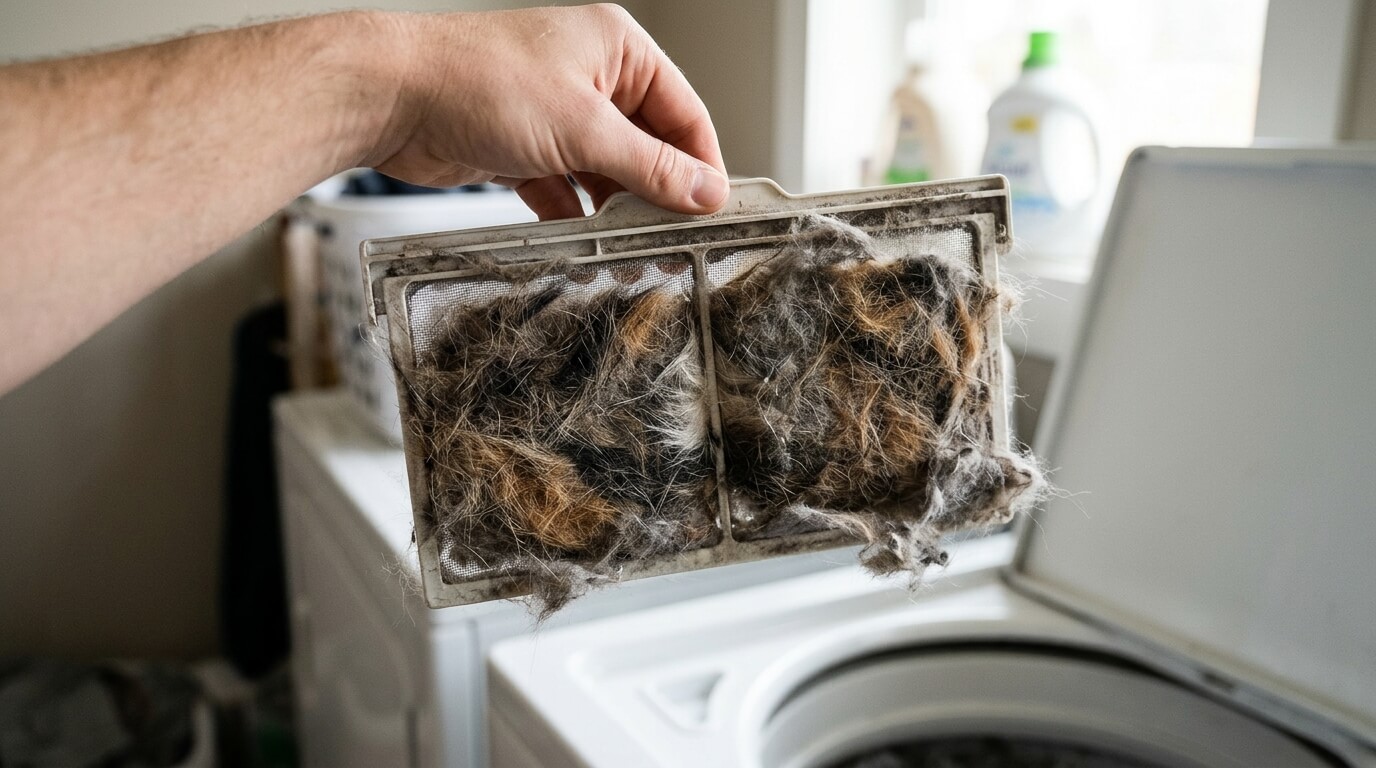
That filter is what a heavy shedding week actually looks like. Machines store hair and hand it back. After a very hairy load, wipe the washer drum and door seal, leave the door open to dry, and run an empty hot cycle or the machine cleaning cycle if yours has one.
In the dryer, clean the lint trap after every load, not just hairy ones, and wash the trap screen with warm soapy water every month or two. A film from dryer sheets builds up on the screen and blocks airflow, so hair and lint stop getting caught even when the trap looks clean.
Stop the Hair Before It Reaches Your Shirt
Laundry tricks manage the hair that lands. Grooming cuts how much lands in the first place. Regular brushing removes loose coat before it sheds onto your clothes and furniture, and the AKC grooming guidance treats brushing as the base habit for coat care at home (Verified). During heavy shedding seasons, a few extra brush sessions a week will show up as a visibly emptier lint trap.
Two household habits help as well. Keep a washable throw where your dog actually naps, and wash dog bedding on its own cycle instead of letting it share with your clothes. And when guests are coming and the sofa needs work first, our guide on how to remove dog hair from a couch covers fabric, leather, and cushions.
When the Hair Is Not on Your Clothes
Clothes are one surface in a shedding house, and the methods above only partly transfer. Floors need a different approach, because strands work down between carpet fibers where no roller reaches, so work through our guide on how to remove pet hair from carpet for the squeegee, vacuum, and damp-mop order that actually lifts it. Treat this page as the laundry hub: once how to remove dog hair from clothes becomes a routine instead of a rescue mission, take the same dry-first thinking to the car, the couch, and the carpet, one surface at a time.
What actually dissolves pet hair in the washing machine?
Nothing you can safely pour in truly dissolves pet hair. Keratin, the protein hair is made of, resists water, detergent, and vinegar alike. Products and home remedies work by loosening, lifting, and trapping hair so the rinse can flush it away, not by melting it. Anyone promising a liquid that dissolves hair in the drum is selling you a myth.
How do you get dog hair off clothes if you do not own a dryer?
Work the dry steps harder. Shake everything outside, do two glove or brush passes instead of one, and let the washer run a longer cycle with an extra rinse. At a laundromat, use their dryer for the 10-minute tumble if you can. It is the cheapest cycle in the building and it does most of the work.
Should you wash dog blankets in the same load as your clothes?
No. A dog blanket sheds far more hair in the wash than your clothes pick up protection from being together, and the loose hair redeposits across the whole load. Wash pet bedding alone, wipe the drum and seal afterward, and run your clothes as the next load, not the same one. Your black work shirt will thank you.
Why do clean clothes come out of the closet with hair on them again?
Closets and drawers are transfer zones. Hairy and clean items share shelves, hangers, and laundry baskets, and loose strands migrate every time fabrics rub. Store your most worn outfits in a closed drawer or garment bag during peak shedding, keep the laundry basket away from the dog bed, and do the final lint-roll pass after dressing.
Need Local Pet Support or an Open Vet Near You?
Use DaisyDu's free neighborhood tools to find 24/7 open emergency animal hospitals, arrange local playdates, or broadcast a lost pet SOS alert.