How to remove dog hair from couch: it depends on the material
Start by gathering, not vacuuming. Work a damp rubber glove or a window squeegee over the surface to pull hair into clumps, pick those up, then vacuum slowly with an upholstery tool. Leather is the exception: skip the squeegee and wipe hair away with a dry microfiber cloth instead.
How to remove dog hair from couch cushions is mostly a material question, not a strength contest. The vacuum pass that disappoints on a woven fabric couch works fine minutes later on leather, and the scrubbing that lifts hair out of fabric can dull a leather finish. Match the method to the surface and the job gets much shorter.
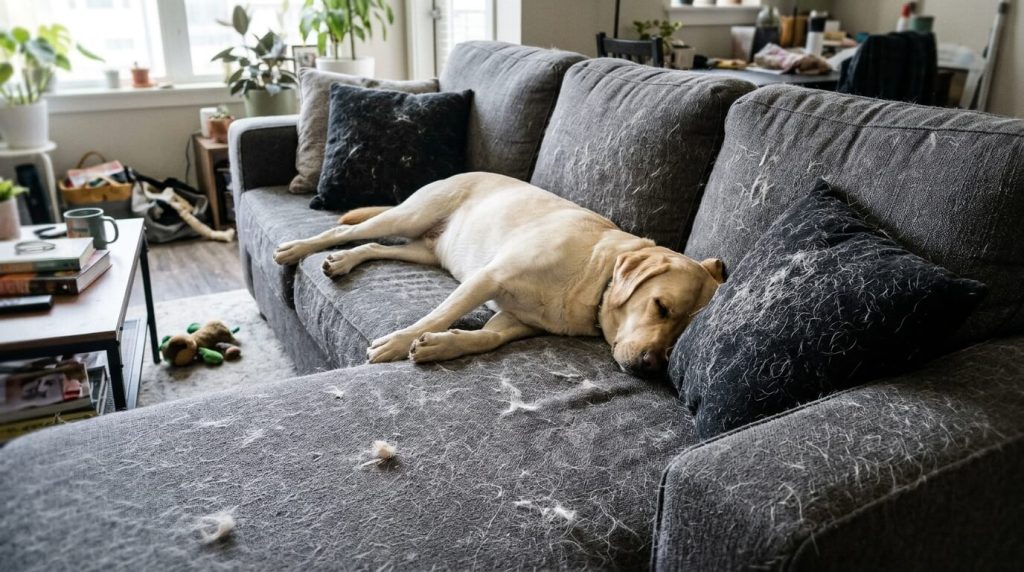
Your dog has a favorite seat. That seat has a visible outline of your dog. The three material guides below fix the seat you actually own, and the routine before them handles the loose hair sitting on top of all three.
How to get dog hair off couch: the gather-first routine
Most advice on how to remove dog hair from couch cushions starts with the vacuum, which is why it underwhelms. A vacuum pulls at loose surface hair, but it skates over hair that is clinging or woven in. Gather that hair into clumps first and the vacuum suddenly has something it can finish.
Step 1: Take removable cushions outside and shake them
Carry loose cushions and throw pillows outside and give each one a firm shake and a few flat-hand beats. This drops the top layer of hair outdoors instead of into the room air, where it lands back on the couch you are about to clean.
Step 2: Gather hair into clumps
Put on a rubber cleaning glove, dampen it lightly, and wipe the surface in short strokes toward you. Hair rolls into ropes and clumps you can pick up by hand. A dry window squeegee does the same job on larger flat areas. Re-dampen the glove when hair stops gathering.
Step 3: Vacuum slowly with the upholstery tool
Fit the upholstery attachment, not the bare hose, and move slowly enough for the suction to lift what the gathering pass loosened. Empty or check the bin after a heavily coated couch. A full bin drops suction fast, and the last cushion ends up half as clean as the first.
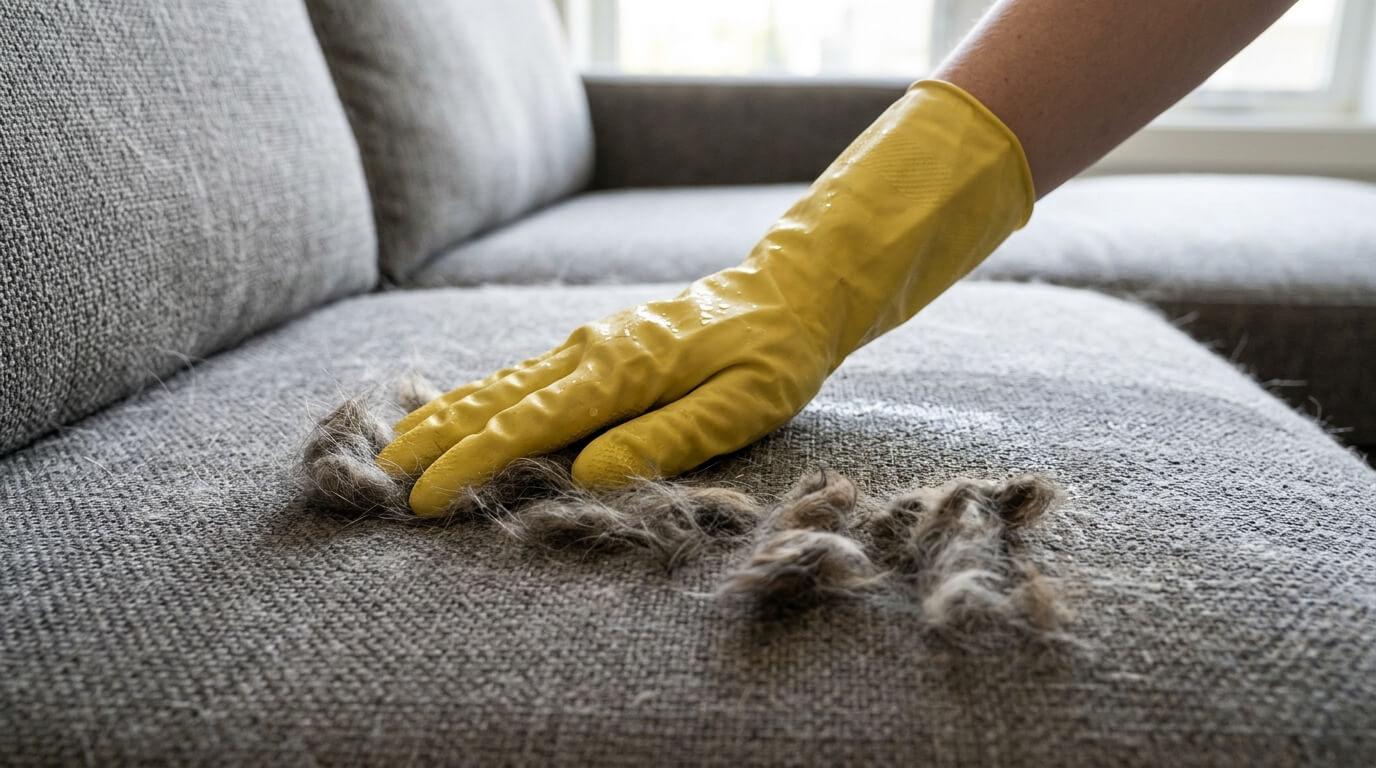
Keep a spare rubber glove in the basket or side table where you sit. A twenty-second glove pass while you watch TV stops hair building into the woven-in layer that takes real work, and it is the one habit heavy-shedding households tend to stick with.
Fabric couches: how to get dog hair off woven upholstery
Woven fabrics like cotton, linen, and polyester blends are the hardest case because hair threads itself between the fibers and locks in. One vacuum direction leaves the hairs lying the other way untouched, so work the upholstery tool in two directions, north to south, then east to west, after your gathering pass.
Repeat the glove or squeegee pass once more after vacuuming. The vacuum lifts the weave slightly, and a second short gather often pulls out a surprising extra pile. Finish seat backs and arms with a lint roller or a washable reusable roller, since those are the spots your clothes actually touch.
Keep the fabric dry until the hair is off. Wetting a hairy woven couch first turns loose hair into a felted mat that clings harder. Check the cleaning code on the sewn-in tag before any damp cleaning after that: W means water-based cleaners are fine, S means solvent only, WS allows either, and X means vacuum only.
Microfiber couches: beat the static cling
Microfiber is a tight, flat weave, so hair cannot bury itself the way it does in loose fabric. It sits on top and clings with static instead. That makes microfiber the fastest couch to clear once you stop fighting the cling head-on.
Use the same damp glove or dry squeegee, but work in short strokes in one direction across a whole cushion before moving on. Long random wiping just moves the static charge, and the hair, from one side to the other. Follow with a slow vacuum pass over each cushion.
Do not soak microfiber to loosen hair. Too much water can leave drying rings on some microfiber finishes, and it is not needed when the hair is only sitting on the surface. Spot clean marks separately, following the W or S code on the tag, and brush the nap back in one direction with a dry soft brush when you finish.
Leather couches: wipe, do not scrub
Leather and faux leather are the easy win. The smooth surface gives hair nothing to weave into, so most of it wipes straight off. Skip the squeegee and the stiff brush entirely. Dragging hard edges or bristles across leather can scuff the finish you are trying to protect.
Wipe the whole surface with a dry microfiber cloth, pushing hair toward the seams as you go. Then run the vacuum crevice tool, or a soft brush attachment, along the seams, button tufts, and the gap where the back meets the seat. That is where leather couches hide nearly all of their hair.
If you use a leather cleaner or conditioner, apply it only after the hair is gone, and follow the couch maker’s care directions for your finish. Hair left under a conditioning pass gets wiped in circles instead of off the couch.
| Couch material | Gather with | Vacuum pass | Avoid |
|---|---|---|---|
| Fabric (woven) | Damp rubber glove or squeegee, then repeat once | Upholstery tool in two directions | Wetting the fabric before the hair is off |
| Microfiber | Damp rubber glove or squeegee, short strokes in one direction | Upholstery tool, slow pass per cushion | Soaking the surface |
| Leather and faux leather | Dry microfiber cloth, wiping toward the seams | Crevice tool or soft brush along seams | Squeegees and stiff brushes |
Cushions, seams, and throw pillows
If how to remove dog hair from couch seats still feels frustrating after the surface looks clean, check underneath. Cushions collect a second, hidden layer. Unzip removable covers and shake them outside, vacuum the bare cushion underneath on both sides, and run the crevice tool around piping and zips before the covers go back on. Hair trapped under a clean cover works its way back through the weave within days.
If the covers are machine washable, vacuum or glove the worst of the hair off before washing, so it goes in the bin instead of coating everything else in the load. Our guide to the best pet hair remover for laundry options covers what actually helps once washable covers and throws are in the machine.
Throw pillows need thirty seconds each: glove pass on both faces, crevice tool around the piping, done. Pillows get squeezed against clothes and faces, so they are worth the small extra pass even when the couch itself looks finished.
How to keep dog hair off couch between deep cleans
Prevention is what turns how to remove dog hair from couch into a two-minute job instead of a Saturday project. Three habits do nearly all of the work.
- Give the favorite spot a washable throw. Dogs return to the same seat. A throw or light blanket parked there catches most of the shed, and a weekly wash resets it. The washing methods in our pillar guide on how to remove dog hair from clothes work the same for throws and cushion covers.
- Brush the dog, not just the couch. Regular brushing removes loose coat before it sheds onto furniture (Evidence-informed: the American Kennel Club’s grooming guidance recommends routine brushing to remove loose fur and cut down shedding around the home). Two short sessions a week suit most coats.
- Do quick passes twice a week. One glove pass over the favorite seat and one fast vacuum of the cushions, twice a week, keeps hair in the easy surface layer where it lifts off in minutes.
Hair that leaves the couch lands somewhere. When you are done here, the same gather-first thinking applies to the dog hair worked into your carpet and to dog hair in the car, where it weaves into seat fabric the same way it does into a fabric couch.
Can I use a damp sponge instead of a rubber glove?
Yes. A lightly dampened kitchen sponge works on the same friction idea and suits small areas like armrests and single cushions. Wring it out well, wipe in short strokes, and rinse it often, because a sponge loads up with hair faster than a glove and starts spreading hair again once it is full.
How do I remove dog hair from a velvet couch?
Velvet needs a gentler version of the fabric method. Brush the pile in one direction only with a soft clothes brush to lift hair without crushing the nap, then vacuum on low suction. Hold a piece of mesh or an old stocking over the nozzle if the pile pulls upward, and never use a squeegee on velvet.
Do dryer sheets help get dog hair off a couch?
A dryer sheet rubbed over fabric or microfiber can cut static and loosen a light surface layer, so it works as a quick tidy between proper cleans. It is not a deep-clean method. Keep sheets stored away from your dog, wash your hands after handling them, and skip scented sheets on seats where your dog licks the fabric.
How often should I wash removable couch covers?
Wash them when vacuuming stops bringing the fabric back, rather than on a fixed schedule. Shake and vacuum the covers outside first so loose hair goes in the bin, not the machine. Zip covers closed before washing, wash them apart from clothes, and check and clear the lint filter partway through the drying cycle.
Need Local Pet Support or an Open Vet Near You?
Use DaisyDu's free neighborhood tools to find 24/7 open emergency animal hospitals, arrange local playdates, or broadcast a lost pet SOS alert.