Cat breathing fast
A cat breathing fast at rest may be stressed, hot, or in pain, or it may have asthma, heart disease, or fluid around the lungs. Count breaths while your cat sleeps: a calm resting rate is normally 15 to 30 breaths per minute. Open mouth breathing, blue gums, or great effort to breathe are emergencies, not watch and wait signs.
Cat breathing fast is frightening to watch, especially because cats hide illness well and often show no other sign until a problem is advanced. The good news is that a simple resting breath count, done while your cat sleeps, gives you real information to take to the vet. This guide explains how to count, what counts as an emergency, and the main causes vets investigate.
Emergency Signs: Go Now, Do Not Wait
Get emergency vet care at once if your cat breathes with its mouth open, gasps, has blue or very pale gums, collapses, or labors hard with every breath. Cats do not normally pant like dogs, so open mouth breathing in a cat is a red flag. Find an open emergency vet near you on DaisyDu’s Live Vet Map →
How to Count Your Cat’s Resting Breathing Rate
Count only when your cat is calm, resting, or asleep, and not purring, since purring shakes the chest and ruins the count. Watch the chest rise and fall. One rise plus one fall is one breath. Count for 30 seconds and double the number to get breaths per minute, or count a full minute if your cat stays still.
VCA Animal Hospitals puts the normal resting or sleeping range at 15 to 30 breaths per minute for healthy cats, and treats a sustained resting rate above 30 as abnormal. That figure describes a calm cat. An awake, playing, or stressed cat can breathe much faster for short stretches and still be normal. The number that matters is the sleeping or resting rate, measured when nothing is stirring your cat up. Repeat the count on another day before worrying over a single high reading, unless emergency signs are present.
Emergency vs Watch and Wait: The Decision Table
| What you see | What it usually means | What to do |
|---|---|---|
| Fast breathing after play or heat, settles quickly | Normal recovery | Let your cat rest in a cool room and recheck when calm |
| Fast breathing at rest, mouth closed, cat otherwise well | Needs prompt vet assessment | Count the resting rate, note other symptoms, call your vet soon |
| Fast breathing plus hiding, not eating, or lethargy | Possible illness, do not dismiss as stress | Call your vet the same day |
| Open mouth breathing, blue gums, hard effort, collapse | Emergency | Go to an emergency vet at once, call ahead if you can |
Why is my cat breathing fast is the question owners ask when the count stays high at rest. The honest answer is that fast breathing is a sign, not a diagnosis. Many different problems raise the rate, and they can look alike at home. A vet visit with an exam, and often chest imaging or bloodwork, is what separates them.
The Main Causes Vets Investigate
Heart disease and heart failure top the serious list. Cats with heart disease may breathe faster at rest, tire easily, hide more, eat less, or show weakness, and many do not cough, which surprises owners who expect a cough. Fluid collecting around the lungs or inside the chest also restricts breathing and produces shallow, effortful breaths.
Whatever the cause, cat breathing fast at rest is the sign that brings most owners to the vet in the first place. Airway and lung disease come next. Feline asthma symptoms include coughing, wheezing, crouching low with the neck stretched out, and breathing with visible effort, and a flare can worsen quickly. Respiratory infections and pneumonia bring fever, lethargy, nasal discharge, and poor appetite alongside fast breathing. Anemia, pain, fever, overheating, and metabolic illness can also raise the rate even when the lungs are not the main problem. Trauma, toxins, tumors in the chest, and fluid or air around the lungs are less common but serious, which is why persistent fast breathing always earns a vet visit.
Cat Wheezing: How It Differs From Fast Breathing
Cat wheezing is a sound, not a rate. It is a high pitched whistling or musical noise as air moves through narrowed airways, and it points most often toward asthma or airway inflammation. A cat can wheeze without breathing especially fast, and can breathe fast without wheezing, so note both separately for your vet: the rate, and any sound.
Do not confuse wheezing with hairball coughing. Hairball retching is a repeated gagging motion that usually ends with a hairball, while asthma coughing is a dry, hacking cough with a crouched posture and extended neck. If coughing or wheezing happens often, film it. A short video helps your vet far more than a description of a sound.
Measure the sleeping breathing rate once a week for a healthy cat, and write it down. A personal baseline makes a change obvious months later, when memory alone would miss a slow creep from the low 20s into the high 30s.
Feline Asthma in More Detail
Feline asthma symptoms tend to come in episodes: coughing fits, wheeze, labored breathing, and a crouched, neck stretched posture, followed by periods that look normal. Triggers can include dust, smoke, strong scents, pollen, and household sprays. Because cats mask symptoms, owners sometimes first notice only that play stops sooner or the cat hides more.
Asthma is diagnosed by your vet, often with chest imaging and by ruling out infection, heart disease, and parasites. Treatment is vet prescribed and long term for most cats, and it works best when flare triggers are reduced at home: no smoking indoors, unscented litter and cleaners, and good ventilation. Never give a cat a human inhaler or medicine without vet instruction.
What Happens at the Vet Visit
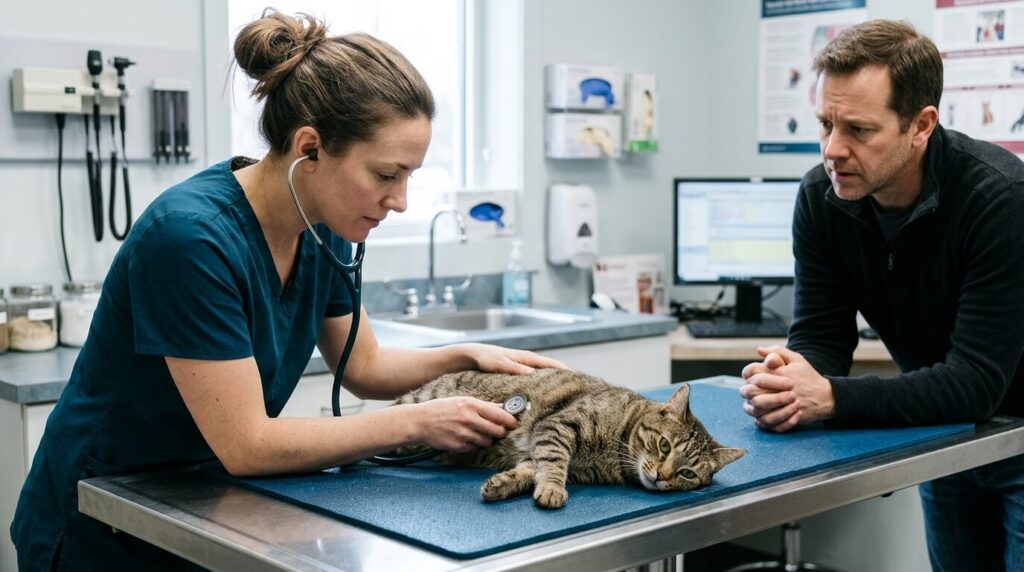
Expect questions about when the fast breathing started, whether it happens at rest or only after activity, coughing or wheezing, appetite, and any heart or lung history. For cat specific urgent care, see exotic and cat vets on the Live Vet Map, and if cost is a worry, our guide to emergency vet visit costs explains what to expect. The exam focuses on breathing effort, heart sounds, gum color, and temperature. Chest X-rays, bloodwork, oxygen measurement, or heart ultrasound may follow, depending on what the exam finds. Bring your resting rate counts, dates, and any video of coughing or labored breathing.
Heavy breathing cat episodes that keep recurring, even without emergency signs, still need that visit. Cats compensate quietly until a disease is advanced, so a persistent change in resting breathing is one of the earliest warnings you will get. Trust the count, trust the pattern, and let your vet find the cause.
Why is my cat breathing heavy at rest?
Heavy breathing at rest can come from heart disease, fluid around the lungs, asthma, infection, pain, or anemia. The resting rate and effort help your vet narrow it down, but home observation cannot separate these causes reliably. A resting rate above 30, or breathing that looks labored, warrants a prompt vet visit even if your cat eats and moves around.
Do cats pant like dogs when they are hot?
Cats rarely pant. A cat may breathe faster after play or in heat, but sustained open mouth panting is abnormal and can signal heat stress, pain, or respiratory or heart disease. Move the cat to a cool room and offer water, but do not delay vet advice if panting continues, gums look blue or pale, or the cat seems distressed.
Can stress alone make a cat breathe fast?
Yes, for a short while. A vet visit, a new pet, fireworks, or a car ride can raise a cat’s breathing rate until the cat settles. Stress breathing should ease as the cat relaxes. Fast breathing that persists at rest, returns often, or comes with hiding or appetite loss should be assessed rather than blamed on stress.
What should I do while waiting for the vet?
Keep your cat calm in a cool, quiet room, with water nearby and little handling. Do not give human medicines, do not try ice baths, and do not delay care if emergency signs appear. Note the resting rate, any coughing or wheezing, appetite, and litter box habits, since those details shape the vet’s first decisions.
Need Local Pet Support or an Open Vet Near You?
Use DaisyDu's free neighborhood tools to find 24/7 open emergency animal hospitals, arrange local playdates, or broadcast a lost pet SOS alert.