What is the best crate for separation anxiety?
The Diggs Revol is our top pick: its sturdy aluminum frame, chew-resistant mesh, and three access points make it secure without feeling like a cage, which matters for anxious dogs. The MidWest iCrate is the best budget alternative. But remember: no crate cures separation anxiety on its own. Details, two more picks, and positive training steps below.
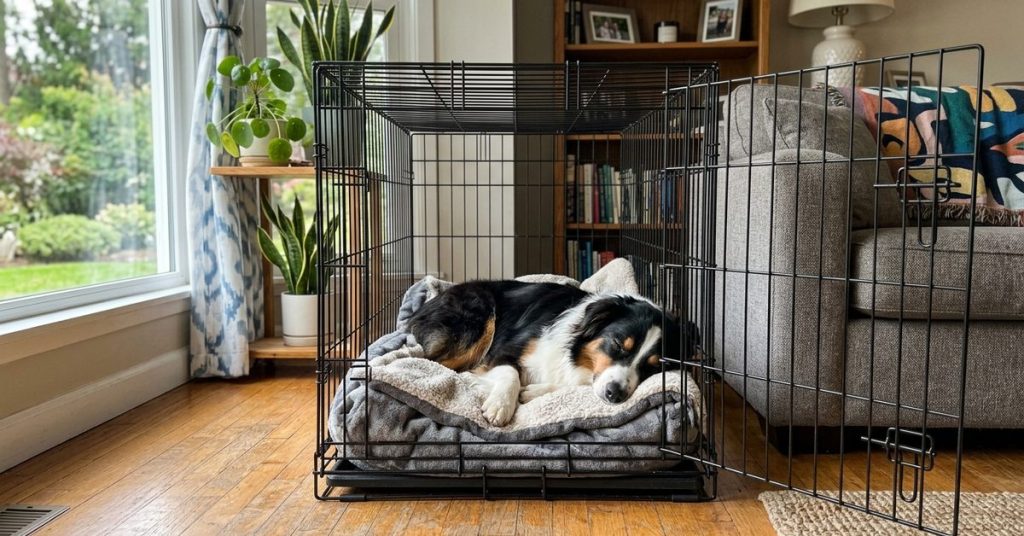
A crate is not a cage, and the best crate for separation anxiety proves it: introduced properly, the crate becomes the one place your anxious dog chooses to relax. The wrong crate, though, becomes a panic room your dog tries to destroy, sometimes injuring themselves in the process. We compared crates on sturdiness, den-like feel, and safety features, using spec analysis and verified buyer feedback, to find four that actually help.
As an Amazon Associate I earn from qualifying purchases.
Our Top Pick: Diggs Revol
The Revol earns the top spot because it solves the two big problems anxious dogs have with crates: it is genuinely hard to break out of, and it does not look or feel like a jail cell. The aluminum frame with diamond-pattern mesh resists chewing and pawing, dual latches stay shut from the inside, and three access points (front door, side door, top hatch) let you comfort or treat your dog without a dramatic door opening. It collapses with built-in wheels for storage, and the modern design blends into a living room instead of screaming “kennel.”
Crates Compared
| Product | Type | Standout feature | Best for |
|---|---|---|---|
| Diggs Revol | Collapsible aluminum | 3 access points, chew-resistant mesh | Best overall |
| MidWest iCrate | Folding wire | Double doors, divider panel, low price | Best value |
| EliteField 3-Door Soft Crate | Soft-sided | Lightweight, 3 mesh doors, washable | Travel and calm dogs |
| Petmate Vari Kennel | Hard plastic | Enclosed den feel, airline-friendly | Dogs that prefer enclosed dens |
The 4 Best Dog Crates for Anxious Dogs, Reviewed
Our picks below are based on spec analysis and verified buyer feedback. We have not personally tested these products.
1. Diggs Revol Collapsible Dog Crate
The premium pick for a reason. The high-grade aluminum frame and steel-reinforced mesh stand up to determined scratching and chewing far better than standard wire, and the diamond mesh pattern prevents pinched paws and jaws, a real hazard with cheap crates. The garage-style side door and ceiling hatch make training less confrontational: you can reach in to reward calm behavior without swinging a big door open. It sets up in under a minute and folds flat on wheels.
- Very sturdy; hard for anxious dogs to break out of
- Three access points ease training and comforting
- Modern look that suits a living room
- Premium price tier
- Heavier than wire crates (32 lbs in medium)
- Check sizing carefully for large breeds
2. MidWest Homes for Pets iCrate
The classic wire crate, and still the smartest budget buy. The double-door 30-inch version gives flexible placement, the divider panel lets the crate grow with a puppy, and the newer models add a patented Paw Block plus locking slide-bolt latches for extra security. It folds flat in seconds with no tools and includes a leak-proof tray. For mild anxiety with proper training, it does the job at a fraction of the premium price.
- Excellent value for the features
- Double doors and divider panel included
- Folds flat; easy to move and store
- Wire construction can be bent by determined escape artists
- Institutional look; benefits from a cover for den feel
- Can be noisy when a dog paws at the wire
3. EliteField 3-Door Folding Soft Dog Crate
A soft-sided option for dogs whose anxiety is mild and who are already crate-comfortable. The steel-tube frame keeps its shape, three mesh doors (top, front, side) give great airflow and easy access, and it folds to just a few inches thick with a carrying bag included. The washable fleece bed and 2-year warranty round out a genuinely useful travel crate.
- Lightweight and genuinely portable
- Three doors for flexible access
- 2-year warranty, rare in this category
- Not for escape artists or heavy chewers; fabric loses to teeth
- Zipper closures are less secure than latches
4. Petmate Vari Kennel
Some anxious dogs do better in an enclosed plastic kennel than an open wire crate: the solid walls feel more like a den and block the visual stimulation that feeds panic. The Vari Kennel’s sturdy plastic shell, wire door, and four-sided ventilation hit that balance, and it is airline-friendly for travel. Made in the USA from largely recycled materials, with a stay-dry moat that keeps pets dry during accidents.
- Enclosed design calms dogs that dislike open wire
- Airline-friendly for travel
- Easy to wipe clean; stay-dry floor design
- Less airflow and visibility than wire or mesh crates
- Size up; the 24-inch suits small dogs and puppies
An Honest Note: A Crate Is a Tool, Not a Cure
No crate, however well built, treats separation anxiety by itself. The best crate for separation anxiety is the one your dog enters voluntarily, which only happens when the crate consistently predicts good things like meals, chews, and naps. A crate manages the symptoms: it keeps your dog and your house safe while you work on the actual problem, which is your dog’s panic at being alone. That work means gradual desensitization training, and for moderate to severe cases, guidance from a certified trainer or veterinary behaviorist. If your dog injures themselves trying to escape confinement, stop crating and get professional help: a stronger crate is not the answer to panic.
And one rule with no exceptions: the crate is never punishment. A dog sent to the crate for misbehaving learns to fear it, which is the exact opposite of what an anxious dog needs. For the training side of this, see our separation anxiety training guide.
How to Crate-Train an Anxious Dog (the Positive Way)
Crate training for separation anxiety follows the same positive steps as any crate training, just slower. Rushing is how crates become scary.
Step 1: Make the crate pay rent
Leave the door open and feed every meal inside the crate for a week. Toss high-value treats in randomly so your dog keeps “discovering” good things there. No closed doors yet.
Step 2: Close the door for seconds, not hours
Once your dog walks in happily, close the door for 30 seconds while you sit nearby, then open it before any whining starts. Build up gradually: minutes first, then tens of minutes, always ending on a calm note.
Step 3: Practice your departures
Pair closed-door time with your leaving cues: pick up keys, put on shoes, step outside for a minute, return calmly. Keep arrivals and departures boring. Big emotional goodbyes teach your dog that departures are a big deal.
Step 4: Extend alone time in tiny increments
Increase solo crate time by a few minutes per session, watching for stress signals (drooling, panting, pawing). If anxiety spikes, drop back to the last comfortable duration. Progress is not linear, and that is normal.
Setting Up a Calming Crate
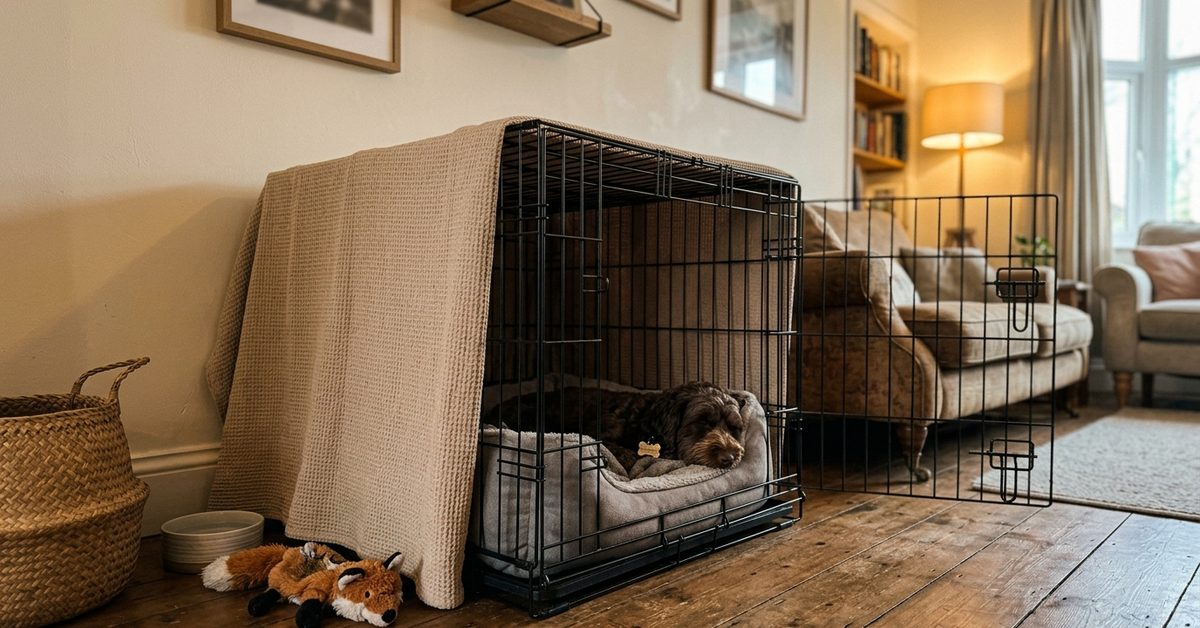
A calming dog crate is more about setup than spending. Drape a breathable blanket over the top and three sides to create a den, leaving the door end open for airflow. Put the crate where your dog already likes to rest, ideally near family activity rather than isolated in a back room. Add a worn t-shirt that smells like you, a safe chew, and a snuffle mat or frozen Kong for departures. Skip anything with small parts an anxious chewer could swallow. Get the setup right and even a budget wire crate can become the best crate for separation anxiety for your dog: den-like, predictable, and calm.
White noise helps more than silence. A fan, a white-noise machine, or calm background audio masks the outside sounds (car doors, footsteps) that spike anxiety when you are gone.
One more safety note: dogs that gnaw metal bars can crack teeth or wear them down. If yours is a bar-chewer, learn what causes dogs’ teeth to fall out or break and switch to a crate style they cannot get their jaws around.
When to Call the Vet Instead
Broken nails, bleeding paws, cracked teeth, or raw skin from escape attempts are injuries, not training problems. Stop crating and get your dog checked. Find an emergency vet near you on DaisyDu’s Live Vet Map →
Should I crate my dog if they have separation anxiety?
For mild anxiety, yes, with patient positive training: the crate becomes a safe den that prevents destructive panic. For severe anxiety with escape attempts or self-injury, no: confinement can make panic worse and cause real harm. In those cases, work with a trainer or veterinary behaviorist on desensitization first, and revisit the crate later.
How long can an anxious dog stay in a crate?
Build up to it; don’t start there. Adult dogs generally handle 4 to 6 hours once fully trained, but anxious dogs need a slower ramp and many do better with a midday break. Puppies need much shorter stretches. If your dog panics at 30 minutes, the answer is more training at 20 minutes, not forcing an 8-hour day.
My dog destroys every crate. What now?
Stop buying stronger crates and address the anxiety itself. A dog that destroys crates is telling you confinement is not the right tool right now. Talk to your vet about the severity, consider a certified separation-anxiety trainer, and explore alternatives like a dog-proofed room, daycare, or a sitter while you work on gradual alone-time training.
Should I leave the crate door open or closed when I’m home?
Open. An always-open crate that your dog can wander into for naps builds the positive association that makes closed-door time tolerable later. Dogs that only see the crate door close when the owner leaves quickly learn that closed door means abandonment. Let the crate be furniture first, and a container second.
Need Local Pet Support or an Open Vet Near You?
Use DaisyDu's free neighborhood tools to find 24/7 open emergency animal hospitals, arrange local playdates, or broadcast a lost pet SOS alert.