What is dog separation anxiety training?
A step-by-step program that teaches your dog being alone is safe. You desensitize departures in tiny increments, build positive alone-time associations with food puzzles and a cozy crate, and never punish panic behavior. Most dogs improve markedly within weeks.
Dog separation anxiety training starts with one uncomfortable truth: the shredded blinds aren’t revenge. Your dog isn’t angry that you left. They’re terrified because you left, and punishment only teaches them to dread your return too. Here’s how to fix it with patience instead of punishment.
Anxiety or Just Boredom? How to Tell
Not every chewed shoe is separation anxiety. True anxiety strikes around departures and targets exit points: drooling, panting, or howling that starts within minutes of you leaving; scratching at doors and windows; escape attempts; accidents in a house-trained dog. A cheap camera tells the truth fast. Boredom, by contrast, is random mischief spread through the day, not panic timed to your keys.
Rule out medical causes before you train. Excessive drooling or sudden house soiling can signal dental pain, urinary issues, or other problems. A quick vet check first saves weeks of training the wrong thing.
Desensitize Departures in Tiny Steps
The core of dog separation anxiety training is teaching your dog that departure cues predict nothing scary. Break leaving into pieces so small your dog barely notices.
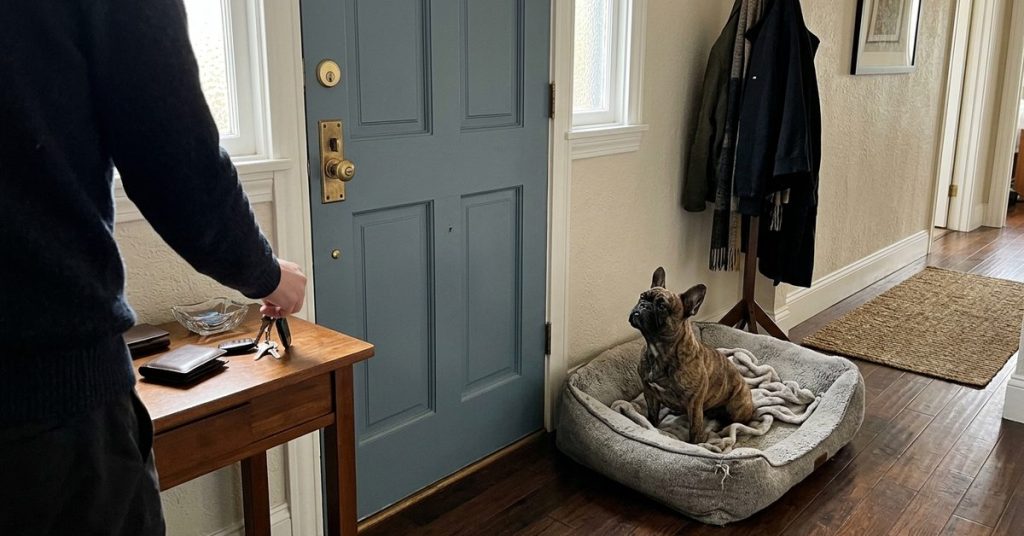
Step 1: Pick up your keys, then sit back down
Repeat until keys mean nothing. Do the same with shoes, coat, and bag: trigger the cue, then don’t leave. You’re defusing the alarm one cue at a time.
Step 2: Step out for five seconds
Walk out the door, count to five, and come back before any panic starts. Calm return, no fanfare. Repeat until five seconds is boring.
Step 3: Stretch the absence gradually
Five seconds becomes thirty, then two minutes, then ten. Only increase when the current duration is completely calm. If panic appears, drop back to the last easy step and rebuild.
Step 4: Add real-life randomness
Vary the duration and the routine so departures stay unpredictable and uneventful. Drive around the block. Come home, ignore the dog for a minute, then greet calmly. Normal is the goal.
Make the Crate a Safe Haven, Never a Prison
A crate should feel like a bedroom, not a cell. Feed meals inside it, toss treats in randomly through the day, and leave the door open at first. Only close the door once your dog chooses to nap there voluntarily. For the right setup, see our best crates for separation anxiety guide.
Never use the crate as punishment, and never lock an already panicking dog inside for hours hoping they’ll “get used to it.” Flooding an anxious dog with the thing they fear makes anxiety worse, not better.
Tire the Body Before You Leave
A dog who’s been properly exercised settles faster. A solid walk or play session before departures burns off the nervous energy that fuels panic. Use our walk distance guide to match exercise to your dog’s age and breed, then leave while they’re pleasantly tired.
Keep Hellos and Goodbyes Boring
Big emotional farewells teach your dog that departures are a big deal. Keep exits and entrances dull: no long goodbyes, no excited reunions. A calm “be right back” on the way out and a quiet greeting on return say louder than words that leaving is normal.
When to Call a Professional
If dog separation anxiety training stalls after a month of consistent work, or your dog injures themselves trying to escape, bring in help: a veterinary behaviorist or a certified separation anxiety trainer. Severe anxiety is a medical-grade problem, and the combination of training plus medication resolves cases that training alone cannot.
While you work the program, daytime support helps enormously. A trusted sitter or daycare breaks up long absences so your dog never has to white-knuckle through eight alone hours. DaisyDu’s community app hub connects you with local sitters. And if fear runs deeper than departures, read why your dog is scared and how to fix it.
Ask your vet about anti-anxiety medication as a training aid, not a replacement for it. The right prescription lowers panic enough for learning to happen, then often tapers off once the new habits stick.
What NOT to Do
- Don’t punish destruction or accidents. Your dog won’t connect it to the act. They’ll just learn to fear your return.
- Don’t get a second dog as a cure. See the FAQ below: it usually doubles the problem.
- Don’t use shock, prong, or citronella collars for anxiety. Aversive tools suppress symptoms while the underlying panic keeps growing. Fear-free methods only.
- Don’t crate for a full workday and call it training. A crate is a resting spot, not eight-hour storage.
How long does dog separation anxiety training take?
Weeks to months, not days. Most dogs show real progress within four to eight weeks of consistent desensitization work, but severe cases can take several months. Anyone promising a fix in a weekend is selling something. Slow, steady practice is what rewires the panic response.
Will getting a second dog cure separation anxiety?
Usually not, and it can double your problem. Most anxious dogs are bonded to their person, not just lonely for company, so a new dog changes nothing about the panic when you leave. Some dogs do settle with a companion, but that’s a gamble, not a treatment plan. Train the anxiety first.
Do calming treats or anxiety vests work?
They can take the edge off for mild cases, but they don’t treat the underlying panic. Think of them as background support while desensitization training does the real work. If a product claims to cure separation anxiety on its own, be skeptical and keep training.
Can I crate my dog all day while I’m at work?
No. A crate is a safe resting spot, not all-day storage. Most adult dogs shouldn’t be crated more than four to six hours without a break for exercise, water, and a bathroom trip. For long workdays, combine shorter crate time with a midday dog walker or daycare instead.
Need Local Pet Support or an Open Vet Near You?
Use DaisyDu's free neighborhood tools to find 24/7 open emergency animal hospitals, arrange local playdates, or broadcast a lost pet SOS alert.