My dog is scared of me
If your dog flinches, hides, or avoids you, give it space, stop reaching over it, and let it come to you. Toss treats nearby without eye contact, keep your body sideways and low, and build short positive routines. Most dogs rebuild trust in weeks when every interaction feels safe and predictable.
If the words my dog is scared of me are running through your head, you are usually describing a dog you have lived with for a while, a dog whose behavior changed or never quite settled. That moment, flinching when you reach for it, or leaving the room when you walk in, hurts, and it is also useful information. This guide covers the signs, the likely causes, and a trust rebuilding plan for an established dog, not a brand new rescue still learning your home.
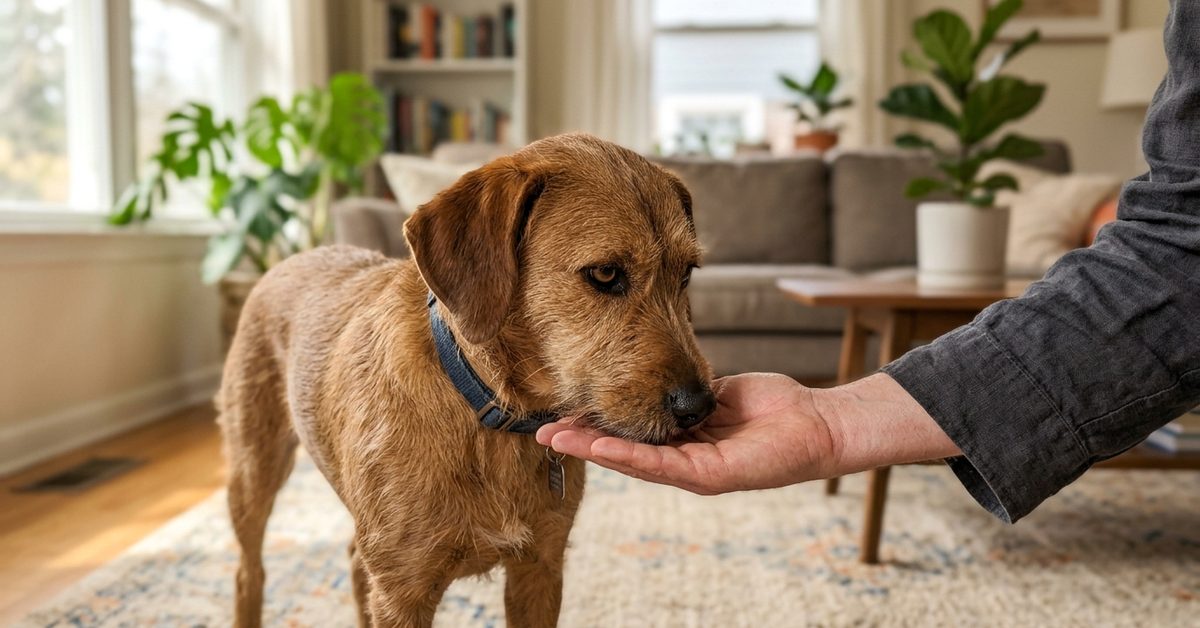
Signs Your Dog Is Scared of You
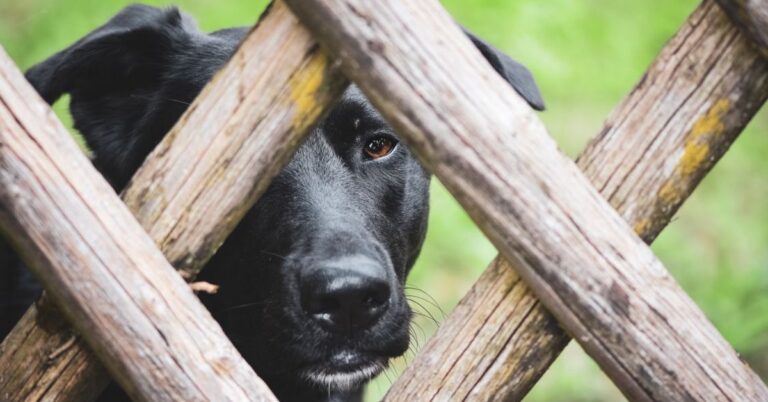
Fear rarely looks like one dramatic behavior. It usually shows up as a cluster of small avoidance signals. VCA Animal Hospitals describes fearful body language as crouching, a tucked tail, ears back, a lowered head, and avoidance, and those are the signs to watch for (Verified). Look for this pattern around you specifically, not just around strangers:
- Flinching, ducking, or moving away when you raise a hand or reach overhead.
- Leaving the room, hiding behind furniture, or going to another room when you enter.
- A tucked tail, lowered body, ears pinned back, or averted eyes when you approach.
- Lip licking, yawning, or panting when nothing else explains it.
- Freezing in place, or rolling over with a stiff body rather than a loose, wiggly one.
- Submissive urination, trembling, or refusing to come when called.
- Growling or snapping when cornered, which is a fear warning, not defiance.
One sign alone proves little, and answering whether my dog is scared of me needs a pattern, not a single moment. A dog that yawns after a nap is just waking up. A dog that yawns, tucks its tail, and leaves the room every time you stand up is telling you something consistent. Note when it happens: with one person, in one room, during one activity, or all the time. The pattern points to the cause.
Why an Established Dog Becomes Scared of Its Owner
Is my dog scared of me because of something I did? Sometimes yes, but often the cause is smaller and more accidental than owners fear. A dog can link fear to a person after a single startling event: being stepped on, a loud scolding, a bath it hated, a grooming session that hurt, or a medical procedure. Dogs do not reason about intent. They remember the association.
Other causes have nothing to do with a single incident. Pain is a major one. A dog with a sore back, ear infection, dental pain, or arthritis may flinch at handling it once tolerated. If fear appeared suddenly in a previously confident dog, book a vet check before you start training, and ask about pain. Sudden behavior change is a medical flag first and a training question second.
Changes in the household matter too. A move, a new baby, a new pet, a partner moving in or out, or a change in your schedule can unsettle a sensitive dog. So can a change in you: a new cologne, a hat, a walking boot, a louder voice when you are stressed. Dogs read small details we forget we changed. Finally, some dogs are simply genetically more fearful or were under socialized as puppies, which means fear was always there and a stressor has just brought it forward.
What Not to Do When Your Dog Is Afraid
The fastest way to slow trust rebuilding is to chase the fear away. Do not corner your dog to prove you are safe, do not force cuddles, do not punish growling, and do not flood your dog with the scary thing until it stops reacting. A growl is information. Punishing it removes the warning and can leave a bite as the next signal.
Also avoid looming over your dog, reaching over its head, staring into its eyes, or approaching head on. All of those read as threatening in dog body language, even when you mean affection. The same goes for grabbing: if your dog flinches at hands, every grab confirms the fear, even a gentle one. Let approach be your dog’s choice for a while.
How to Rebuild Trust, Step by Step
Trust rebuilding is slow, boring, and effective. The core idea is simple: make yourself predictable, make good things happen near you, and never take away your dog’s escape route. How to help a fearful dog gain confidence starts with that safety, then adds small challenges your dog can win.
Step 1: Become safe and boring
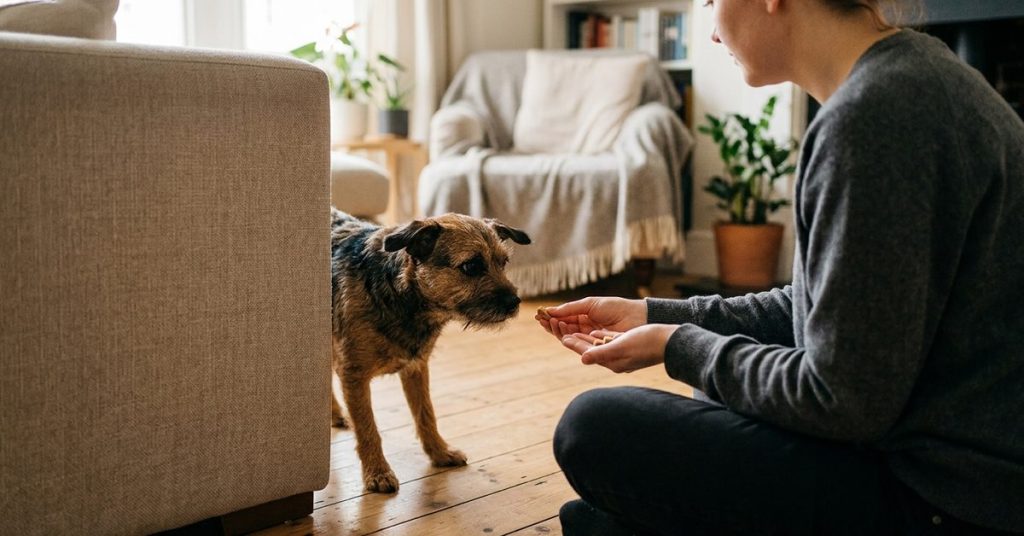
For the first week, move slowly around your dog, speak softly, and avoid direct approaches. Walk past at an angle instead of toward your dog. Sit on the floor sideways, reading or watching television, and let your dog investigate you. Drop treats near you without asking for anything in return.
Step 2: Let your dog set the distance
Toss treats in a trail leading gradually closer to you over days, not minutes. When your dog takes a treat near you, stay still. Do not reach out yet. The first time your dog chooses to come close, that choice is the win. Repeat it until it is routine before you add touch.
Step 3: Add touch on your dog’s terms
Offer a hand low and to the side, and let your dog sniff it. Pet under the chin or on the chest, not over the head, and keep sessions to a few seconds. Stop before your dog asks you to stop. Short, pleasant touch that your dog can end builds more trust than long cuddles it endures.
Step 4: Build confidence through easy wins
Teach simple, rewarding skills your dog can succeed at, such as touch targeting (nose to hand), finding treats in a snuffle mat, or short puzzle feeder games. Success builds confidence, and a confident dog is a less fearful dog. Keep training sessions to five minutes, end on a success, and use only rewards, never corrections, during this phase.
Make yourself the source of the best things in your dog’s day, on a schedule. Be the person who feeds meals, delivers the highest value treats, and opens the door for walks. Predictability is trust fuel: same person, same routine, same calm voice, day after day. If someone else in the household is the scary person, that person should take over feeding and treat delivery too.
When Fear Comes With Shaking
Shaking can be fear, but it can also be cold, pain, nausea, or a neurological problem, so do not assume every trembling dog is simply scared. If your dog is shaking and acting scared, read our guide to why dogs shake and tremble to sort fear from medical causes, and call your vet if shaking is new, persistent, or comes with vomiting, collapse, or disorientation.
A useful test: does the shaking stop when the scary thing leaves, and does your dog relax, eat, and play normally afterward? Fear shaking usually tracks the trigger. Shaking that continues at rest, or appears without any trigger, deserves a vet visit sooner rather than later.
When to Get Professional Help
Most mild fear improves in a few weeks of consistent trust work, which is good news for any owner asking if my dog is scared of me and whether trust can return. Get professional help sooner if your dog is biting or threatening to bite, if fear is getting worse instead of better, if your dog will not eat or leave a hiding place, or if fear appeared suddenly with no clear cause. Start with your vet to rule out pain, then ask for a referral to a certified trainer or veterinary behaviorist experienced with fear. Severe fear sometimes needs medication alongside training, and only your vet can judge that.
One boundary worth stating plainly: you do not need to fix this alone, and you do not need to feel guilty to fix it. Dogs forgive faster than people expect when the environment changes. The work is not dramatic. It is showing up calmly, every day, and letting your dog discover that you are safe.
| Instead of this | Try this | Why it helps |
|---|---|---|
| Walking straight at your dog | Approaching at an angle, or letting your dog come to you | Head-on approach reads as a threat |
| Reaching over the head to pet | Petting under the chin or on the chest | Hands overhead feel trapping to a fearful dog |
| Staring into the eyes | Soft glances, looking away often | Direct eye contact is confrontational |
| Forcing cuddles | Short touch your dog can end | Choice builds trust faster than restraint |
| Punishing a growl | Calmly increasing distance | The growl is a warning worth keeping |
My dog is scared of me is a painful search to type, but it is also the search of an owner who wants to do better. Give your dog space, make every interaction predictable and rewarding, check for pain if the change was sudden, and measure progress in weeks. Trust returns quietly: a dog that stops leaving the room, then stays nearby, then chooses to lean against you. That lean is the whole point.
Why is my dog scared of everything, not just me?
General fearfulness usually points to under socialization, genetics, or a stressful background rather than one person. The trust plan still applies, but widen it: keep the whole household calm and predictable, introduce new things one at a time at low intensity, and get professional guidance if your dog is afraid of most everyday sights and sounds.
Can a dog that was abused learn to trust a new owner?
Yes, in most cases, though the timeline varies and some dogs stay cautious with certain triggers for life. Progress depends on consistency, not intensity: safe routines, rewards, and choice beat dramatic gestures. Dogs with a history of mistreatment often bond deeply once they learn that good outcomes near people are reliable.
Should I ignore my dog when it is scared of me?
Do not ignore it completely, and do not smother it either. Stay nearby and calm, offer treats without demanding interaction, and let your dog approach. Comfort that your dog can walk away from is helpful; comfort that traps it, such as holding it still while it struggles, usually increases fear.
How long does it take a scared dog to trust you again?
Mild cases often improve noticeably within two to four weeks of consistent trust work, while deeper fear can take months. Track small markers instead of waiting for a single breakthrough: shorter hiding times, voluntary approaches, a looser body, and willingness to take treats near you are all real progress.
Need Local Pet Support or an Open Vet Near You?
Use DaisyDu's free neighborhood tools to find 24/7 open emergency animal hospitals, arrange local playdates, or broadcast a lost pet SOS alert.