How to stop a puppy from crying
First rule out hunger, toilet needs, pain, and cold, then build short alone-time wins: tire your puppy out, settle it in a safe space, leave for seconds, and return before it cries. Lengthen absences gradually, reward quiet, and keep nights boring and predictable. Most puppy crying fades in a few weeks.
How to stop a puppy from crying is not about winning a power struggle or silencing a puppy that is trying to tell you something. Crying is a puppy’s only way to call for its litter, its mother, and safety, and your new puppy has just lost all three. The fix is not to silence the call, but to teach your puppy, gently and gradually, that being alone is safe and that quiet brings good things.
Why Puppies Cry
Puppies cry for a short list of reasons, and checking them in order solves many cases before training even starts. Run this checklist every time crying spikes: is it hungry or thirsty, does it need to toilet, is it cold, hot, or in pain, is it overtired, or is it simply lonely and unsure? Young puppies need to toilet often, sometimes every hour or two when awake, and a puppy that cries at night often just needs a boring toilet trip.
Two kinds of crying need different responses. Distress crying is urgent, escalating, or paired with shaking, vomiting, diarrhea, or lethargy, and that needs a vet, not training. Attention or alone-time crying is whining that starts when you leave the room, pauses when you return, and fades as the puppy learns the routine. This guide is for the second kind, with a clear warning: if crying is new, sudden, or comes with any sign of illness, call your vet first.
The First Nights: A Boring, Predictable Routine
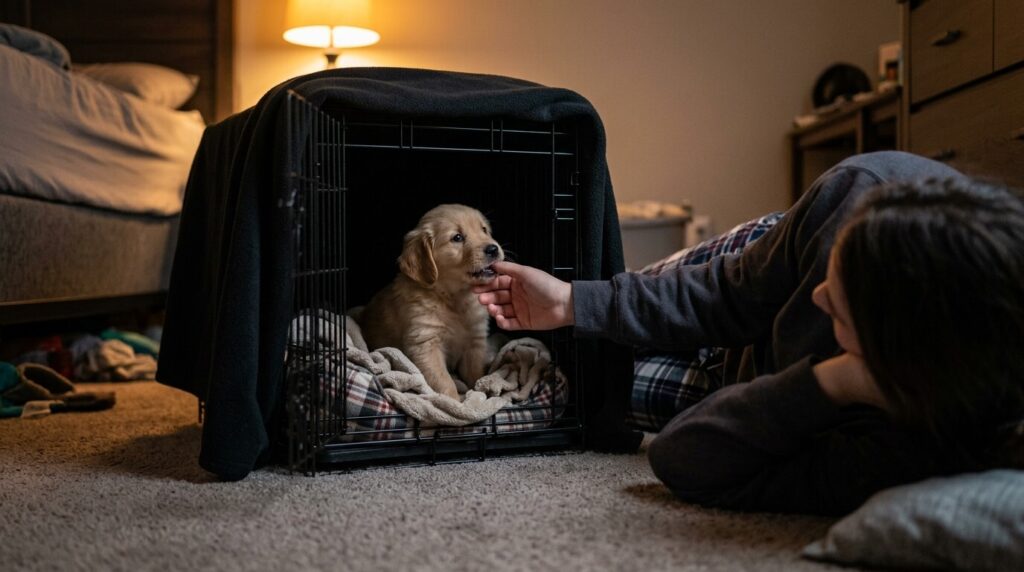
How to stop a puppy from crying at night is mostly a routine problem. Puppies sleep in short cycles and wake often, so expect night waking for the first weeks. Make nights deliberately dull: keep lights low, speak softly, take your puppy out for a toilet break without play, and settle it back down with minimal fuss. A warm bed, a safe chew, and a ticking clock or soft background noise can help some puppies, though no gadget replaces routine.
Where your puppy sleeps matters. For the first weeks, keep the crate or bed in your bedroom, close enough that your puppy can hear and smell you. That closeness prevents panic without creating a habit you cannot keep: you can move the bed gradually farther away over weeks, once nights are calm. A puppy that sleeps near you and learns that nights are safe cries less than a puppy left alone in a distant room on night one.
Alone-Time Training: The Core Skill
Puppy separation anxiety training, in its prevention form, is simply alone-time training done early: teach your puppy that your departures are short, predictable, and always end with your return. This section is prevention and crying reduction, not a treatment plan for a diagnosed adult anxiety disorder. If an older dog panics destructively when left alone, that needs the full guide in our dog separation anxiety training guide, plus vet input.
Step 1: Tire the body and mind first
A puppy that has played, trained, and toileted before alone time settles far faster than a wired puppy left with nothing to do. Keep pre-departure play calm at the end, not wild, so your puppy is ready to rest. A short walk matched to age helps too; our guide to how far to walk your dog keeps exercise age appropriate.
Step 2: Make the space a good place
Use a puppy-proof room or crate your puppy already likes, with water, a safe chew or food puzzle, and a comfortable bed. Introduce the space with meals and treats over days, door open, before you ever close it and leave. A space your puppy chose is a space it can rest in.
Step 3: Leave for seconds, return before crying
Step out of the room for five seconds, return calmly, and reward quiet. Repeat until five seconds is boring, then try ten, then thirty, then a minute. The rule is simple: return before your puppy cries whenever you can, so your puppy learns that departures end and quiet works. If crying starts, wait for a brief pause, then return quietly, and next time make the absence shorter.
Step 4: Lengthen absences gradually
Build from minutes to a half hour, then longer, mixing short and long absences so your puppy cannot predict a pattern of ever longer departures. Leave a food puzzle or frozen chew for longer absences, and keep departures and arrivals low key: no long goodbyes, no excited reunions. Calm exits teach calm alone time.
Reward the quiet, not the crying. When your puppy settles, even for ten seconds, drop a treat quietly or praise softly. When it cries, do not rush in with excitement, but do not ignore distress either: check needs, wait for a pause, and return calmly. The balance PetMD recommends for crate crying is similar: brief reassurance if crying escalates, but the real fix is shorter, more gradual alone time (Evidence-informed).
Puppy Crying When Left Alone: Troubleshooting
Puppy crying when left alone usually has one of a few fixes. If crying starts the moment you pick up your keys, your puppy has learned departure cues, so practice picking up keys and sitting back down, putting on shoes and staying home, until those cues stop predicting departure. If crying only happens in the crate, the crate itself may need slower introduction, or your puppy may need a larger puppy-proof room instead.
If crying happens only at a certain time, look at the schedule: a puppy left too long between toilet breaks, a puppy that missed a meal, or a puppy that had a wild play session right before being left will all cry more. Puppies under about four months generally cannot hold their bladder for long stretches, so plan breaks accordingly and use a sitter, family member, or neighbor for midday breaks when you are out.
| Crying pattern | Likely cause | First fix |
|---|---|---|
| Cries at night, settles after toilet trip | Needs to toilet | Boring night toilet routine, bed near you |
| Cries the moment you leave the room | Alone-time skill not yet learned | Seconds-long absences, build gradually |
| Cries only in the crate | Crate not yet a safe place | Meals and treats in crate, door open first |
| Cries, pants, drools, or destroys things | Distress beyond normal adjustment | Vet check, then professional guidance |
| Sudden crying with illness signs | Pain or sickness | Vet visit, not training |
What Not to Do
Do not punish crying, yell at a crying puppy, or use spray bottles or other startling corrections. Punishment teaches a puppy that being alone is scary and that calling for help is dangerous, which makes crying worse over time. Do not give in to every cry with instant play and excitement either, since that teaches crying as a reliable way to start fun. The middle path works: meet needs calmly, reward quiet, and build alone time gradually.
Also avoid the two common traps: leaving a young puppy alone for a full workday with no breaks, and expecting a puppy to sleep through the night in week one. Both set your puppy up to fail, and failure rehearses crying. Short, successful absences, repeated daily, beat one long, distressing absence every time.
How to stop a puppy from crying is a weeks-long project, not a weekend fix. Most puppies improve noticeably within two to four weeks of consistent routine and gradual alone-time training, and continue improving as bladder control and confidence grow. Keep the routine steady, keep departures boring, and remember what the crying means: a small dog asking whether it is safe. Every calm return you make answers yes.
Should I let my puppy cry it out?
Short fussing that settles within a few minutes is different from escalating distress. For brief fussing, wait for a pause before returning so you reward quiet. For crying that escalates or comes with shaking or illness signs, go to your puppy, check its needs, and shorten the next absence. Prolonged distress teaches fear, not independence.
How long will my puppy cry at night?
Most puppies cry less each week as the routine settles, with real improvement often visible within two to four weeks. Night waking itself lasts longer, since young puppies need toilet breaks, but the crying around those breaks should shorten. If night crying is getting worse after a month of consistent routine, ask your vet to rule out pain or illness.
Does a crate help or hurt a crying puppy?
A crate helps when it is introduced slowly as a den with meals and treats, and your puppy chooses to rest there. It hurts when a puppy is shut in cold, for long stretches, or as punishment. If your puppy panics despite slow introduction, switch to a puppy-proof room and revisit crate training later.
When is puppy crying a vet problem?
Call your vet if crying is sudden, persistent, or paired with vomiting, diarrhea, loss of appetite, lethargy, limping, or any sign of pain. Puppies hide illness well, and crying can be the first visible sign. A vet check is cheap insurance before you spend weeks training a problem that was medical all along.
Need Local Pet Support or an Open Vet Near You?
Use DaisyDu's free neighborhood tools to find 24/7 open emergency animal hospitals, arrange local playdates, or broadcast a lost pet SOS alert.